Sign up with Google
 Sign in with Zoho

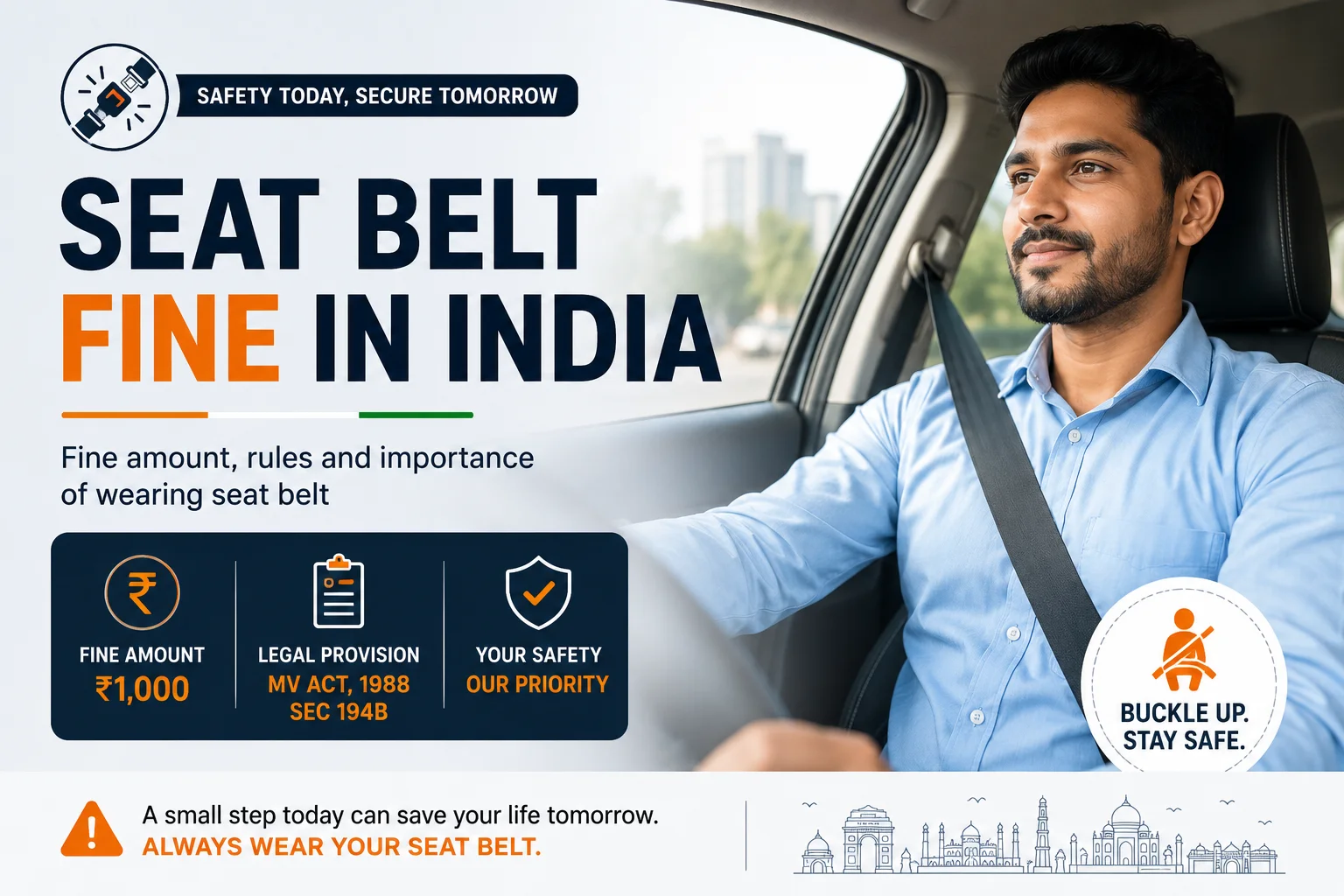
Road safety regulations in India have become significantly stricter in recent years, and seat belt compliance is now one of the most actively enforced traffic rules. While most drivers are aware that they must wear a seat belt, many vehicle occupants still overlook an equally important requirement—rear-seat passengers must also wear seat belts where they are provided.
With increasing use of AI-powered traffic cameras, automated e-challan systems, and stricter enforcement by traffic authorities, understanding the latest seat belt rules can help motorists avoid penalties and ensure safer journeys.
In this blog, we'll explain the seat belt fine in India in 2026, the rear seat belt law, and the penalties you may face for non-compliance.
Is Wearing a Seat Belt Mandatory in India?
Yes. Under Indian traffic regulations, seat belts are mandatory for:
- Drivers
- Front-seat passengers
- Rear-seat passengers (in vehicles equipped with rear seat belts)
The objective of the law is simple: reduce fatalities and serious injuries during road accidents. Seat belts significantly lower the risk of being thrown from the vehicle or suffering severe impact injuries during collisions.
Ignoring this requirement can result in traffic penalties and, more importantly, increase the risk of life-threatening injuries.
Rear Seat Belt Law in India: What You Need to Know
One of the biggest misconceptions among motorists is that rear passengers are exempt from seat belt requirements. However, this is not true.
Key Points About the Rear Seat Belt Rule
✔ Rear-seat passengers must wear seat belts if the vehicle is equipped with them.
✔ The rule applies to both private vehicles and many commercial passenger vehicles.
✔ Traffic authorities can issue challans for rear-seat belt violations.
✔ The responsibility often falls on the driver to ensure passengers comply with safety regulations.
Following several high-profile road accidents in recent years, enforcement of rear seat belt rules has become a priority across multiple states and cities.
Seat Belt Fine in India 2026
The penalty for not wearing a seat belt remains one of the most commonly issued traffic challans in India.
Current Penalty
Fine Amount: ₹1,000
The fine may be imposed for:
- Driver not wearing a seat belt
- Front passenger not wearing a seat belt
- Rear passenger not wearing a seat belt (where applicable)
Depending on local enforcement practices, the challan may be issued to the driver, vehicle owner, or both. If you've received one, you can check and pay your traffic challan online to verify the violation details, outstanding amount, and payment status.
How Authorities Detect Seat Belt Violations
Traffic enforcement is no longer limited to physical inspections. Modern monitoring systems can detect violations through:
1. AI-Powered Traffic Cameras
Advanced cameras can identify:
- Drivers without seat belts
- Front-seat passengers without seat belts
- In some locations, rear-seat belt violations
2. CCTV-Based Monitoring
Urban traffic networks increasingly rely on surveillance systems to identify traffic rule violations.
3. Highway Enforcement Drives
Traffic police regularly conduct surprise checks on highways and major roads.
4. Automated E-Challan Systems
Violations detected through cameras can result in digital challans being issued directly to vehicle owners.
Why Rear Seat Belts Are Important
Many people assume that sitting in the back seat automatically makes them safer. Unfortunately, accident investigations and road safety studies suggest otherwise.
When a rear passenger does not wear a seat belt:
- They can be thrown forward during a collision.
- They may collide with front-seat occupants.
- The risk of fatal head and chest injuries increases significantly.
- Front-seat passengers can also suffer injuries caused by unrestrained rear occupants.
Benefits of Wearing a Rear Seat Belt
- Reduces impact force during crashes
- Prevents ejection from the vehicle
- Minimizes head and spinal injuries
- Improves overall passenger safety
- Increases survival chances in serious accidents
Simply put, rear seat belts are not just a legal requirement—they are a critical safety feature.
Common Myths About Seat Belt Rules
Myth #1: Rear Passengers Don't Need Seat Belts
Reality: Rear-seat belt use is mandatory where seat belts are installed.
Myth #2: Short City Trips Don't Require Seat Belts
Reality: Most accidents occur close to home and during routine journeys.
Myth #3: Airbags Are Enough Protection
Reality: Airbags are designed to work alongside seat belts, not replace them.
Myth #4: I Won't Be Fined Unless a Police Officer Stops Me
Reality: AI-based cameras and automated monitoring systems can issue e-challans without physical intervention.
What Should You Do If You Receive a Seat Belt Challan?
Receiving a traffic challan doesn't always mean the violation was correctly recorded. In some cases, motorists may:
- Want clarification on traffic rules
- Need help understanding the challan process
- Wish to challenge an incorrectly issued penalty
- Require legal guidance regarding traffic violations
In such situations, seeking professional legal advice can help you understand your rights and available options. You can connect with a legal expert for quick guidance on traffic and motor vehicle-related matters.
Tips to Avoid Seat Belt Penalties
Follow these simple practices every time you travel:
Before Starting Your Journey
✅ Wear your seat belt before moving the vehicle
✅ Ensure front passengers are buckled up
✅ Ask rear passengers to fasten their seat belts
✅ Check that children's safety restraints are properly secured
During Travel
✅ Keep seat belts fastened throughout the journey
✅ Avoid removing seat belts for comfort or convenience