Sign up with Google
 Sign in with Zoho
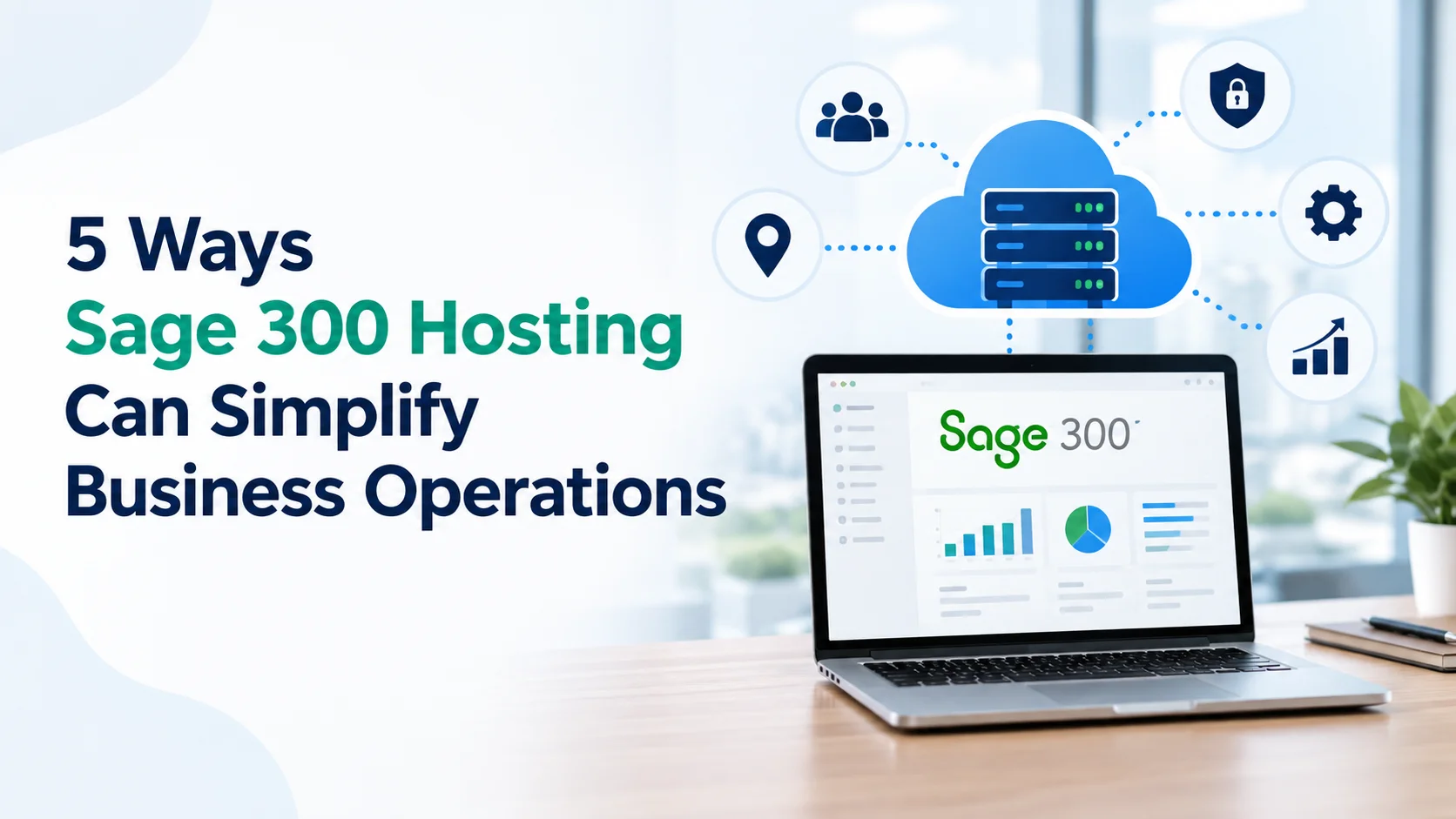
Running an ERP system on in-house servers requires ongoing work, from maintaining hardware and installing software updates to managing security and backups. As your business grows, these IT responsibilities can take valuable time and resources away from daily operations. Sage 300 hosting addresses these challenges by moving your accounting and ERP environment to professionally managed cloud infrastructure, allowing your team to focus on core business activities rather than server management.
Below are five practical ways Sage 300 hosting can simplify your day-to-day operations.
1. Access Your ERP Anywhere, on Any Device
With on-premises Sage 300, access usually depends on being in the office or connecting through a clunky VPN. Sage 300 hosting changes that. Your finance team, sales reps, and managers can log in securely from a laptop, tablet, or phone, whether they're at home, traveling, or at a client site.
This flexibility matters most for:
- Remote and hybrid teams that need real-time access to financial data
- Multi-location businesses that want one consistent system across branches
- Executives and auditors who need quick, on-demand reporting
Everyone works from the same live data, which removes version confusion and delays.
2. Reduce IT Costs and Hardware Burden
Buying servers, storage, backup systems, and licenses for supporting software is a major upfront expense, and that hardware is outdated within a few years. Hosting converts this capital expense into a predictable monthly operating cost.
With Sage 300 hosting, you avoid:
- Purchasing and replacing physical servers
- Power, cooling, and server room maintenance
- Hiring or retaining specialized IT staff just to keep the ERP running
You pay for the resources you use, and you can scale users, storage, and computing power up or down as your business changes. That makes budgeting simpler and keeps cash available for growth.
3. Stronger Security and Reliable Data Protection
Your financial data is among your most sensitive assets. Small and mid-sized businesses often lack the resources to protect it against ransomware, unauthorized access, or hardware failure. A quality Sage 300 hosting provider invests heavily in enterprise-grade protection, including:
- Firewalls, intrusion detection, and DDoS protection
- Data encryption in transit and at rest
- Multi-factor authentication and role-based access controls
- Regular, automated backups stored in separate locations
Hosted environments are typically housed in professionally managed data centers with physical security and redundant power and networking, which are safeguards most in-house setups can't match.
4. Minimal Downtime with Managed Maintenance
Every hour your ERP is unavailable, invoices stall, orders wait, and reporting grinds to a halt. Hosting providers monitor servers around the clock, apply patches and updates, and resolve issues before they disrupt your work.
Key operational benefits include:
- High uptime guarantees backed by service-level agreements (SLAs)
- Proactive monitoring that catches performance problems early
- Disaster recovery plans that restore your system quickly after an outage
Instead of scrambling to fix a failed server or a botched update, your team continues working while experts handle the technical side.
5. Easier Integration, Scalability, and Collaboration
Sage 300 rarely works alone. Most businesses connect it to CRM tools, payroll systems, e-commerce platforms, reporting tools, and Microsoft Office. A hosted environment makes these integrations smoother because everything lives in a centralized, well-configured cloud setup.
It also makes growth easier:
- Add users or new entities quickly without buying more hardware
- Share data securely with accountants, auditors, and partners
- Support seasonal peaks by temporarily increasing resources
As your company expands into new markets or adds departments, your ERP environment grows with you, with no major re-implementation required.
Choosing the Right Sage 300 Hosting Provider
Not all providers are equal. When evaluating options, look for:
- Proven experience hosting Sage applications
- Transparent pricing with no hidden fees
- Guaranteed uptime and 24/7 technical support
- Strong security and compliance practices
- Flexible plans that scale with your needs
Take time to ask about migration support, backup frequency, and how quickly support responds to issues. These details determine how smooth your experience will be.
Conclusion
Sage 300 hosting removes the complexity of managing ERP infrastructure by giving your business access from anywhere, lower IT costs, stronger security, dependable uptime, and room to scale. Instead of maintaining servers, your team can concentrate on decisions that drive growth.
If you're ready to make the move, Apps4Rent offers Sage 300 hosting backed by 24/7 support, secure data centers, and flexible plans tailored to businesses of different sizes. With expert migration assistance and a team experienced in cloud-hosted ERP, Apps4Rent can help you transition smoothly and start enjoying a simpler, more efficient way to run your operations.