Sign up with Google
 Sign in with Zoho

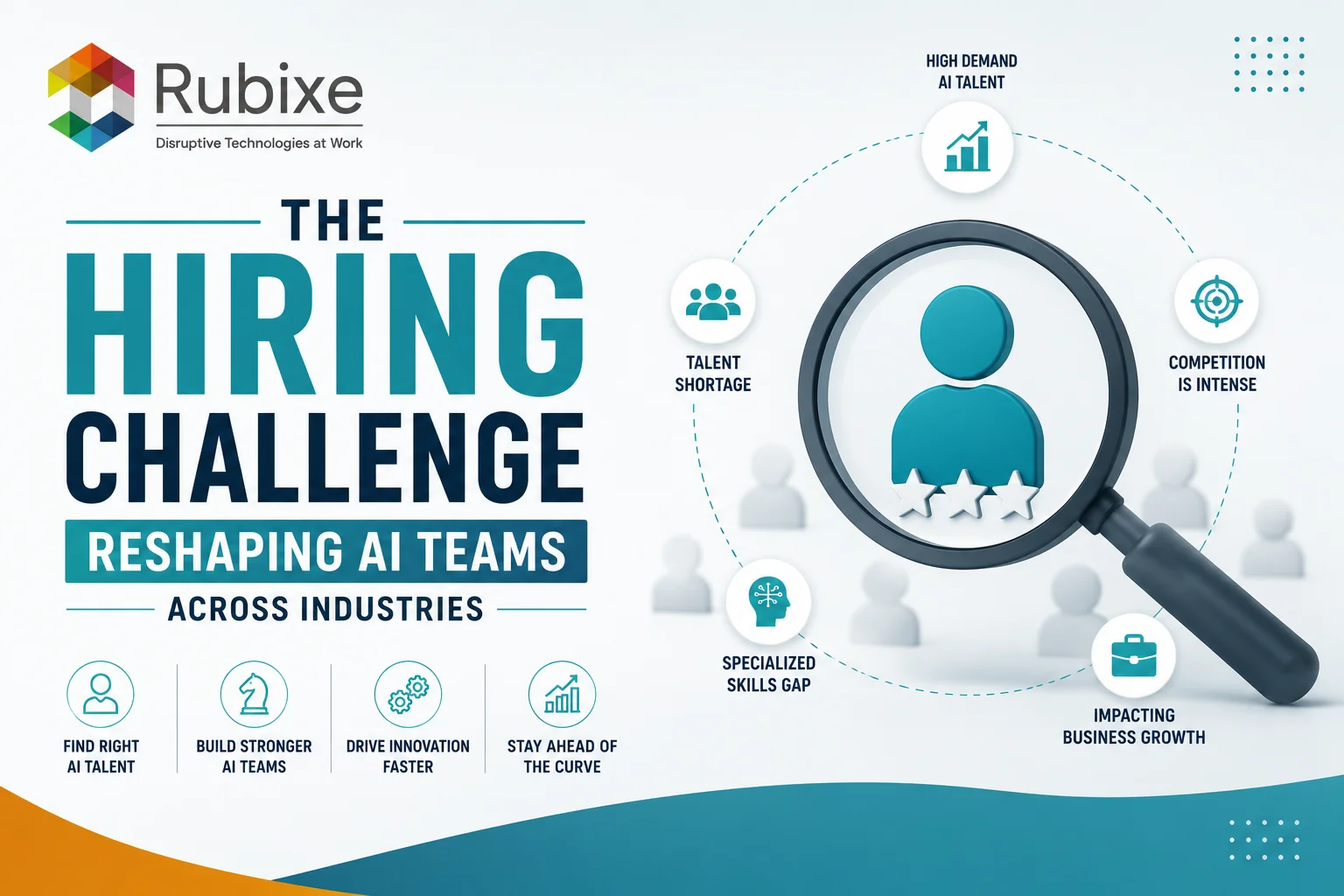
A few years ago, an "AI team" mostly meant a handful of data scientists tucked inside an engineering department, often at a large tech company with the budget to attract that talent. That structure barely exists anymore. Retailers, banks, hospitals, and manufacturers are all trying to build AI capability now, and none of them have the luxury of waiting for a perfect, fully-staffed team before getting started. This pressure has quietly reshaped what AI teams actually look like, and much of that reshaping traces directly back to how difficult artificial intelligence recruitment has become across nearly every industry, not just tech, forcing companies to rethink assumptions that went largely unquestioned only a few years ago.
The shift isn't just about struggling to fill roles. It's changing team structure, reporting lines, and even how companies define what an "AI role" actually is, since the traditional model of a centralized, specialist-only team simply doesn't scale to current demand.
From Centralized Teams to Distributed Capability
The traditional model — a single, centralized AI or data science team serving the entire company — is giving way to something more distributed. A few patterns showing up across industries:
- Embedded AI specialists within business units, rather than a single central team fielding requests from every department
- Hybrid roles combining domain expertise with applied AI skills, such as a financial analyst who's also fluent in building forecasting models
- Smaller core teams supported by external partners, using consulting or contract expertise to supplement limited internal headcount
- Rotational programs, moving engineers through AI-focused projects temporarily rather than requiring permanent specialist hires for every initiative
This shift is a direct response to talent scarcity. When a company can't hire five specialized AI engineers, distributing capability more thinly across the organization becomes the more realistic path forward.
How Different Industries Are Adapting
The hiring challenge plays out differently depending on the industry, since each brings its own constraints and priorities:
- Financial services often prioritize candidates with both technical skill and regulatory fluency, narrowing an already limited pool further
- Healthcare organizations face similar compounding constraints, needing AI expertise combined with an understanding of clinical workflows and compliance requirements
- Retail and e-commerce companies frequently compete directly with tech companies for the same recommendation-systems and personalization talent
- Manufacturing and industrial companies often struggle simply to make AI roles attractive, competing against more visibly "cutting-edge" industries for the same candidates
Each of these constraints pushes companies toward similar adaptations — training existing staff, restructuring teams, and rethinking what qualifications a role genuinely requires versus what's simply been assumed necessary.
Traditional AI Team Structure vs Emerging Structures
This comparison explains why so many companies are shifting structure even when they'd prefer, in principle, to build a traditional centralized team if the talent were readily available. It's a direct, structural response to a artificial intelligence recruitment market that simply hasn't kept pace with demand across nearly every sector.
Measuring Whether the New Structure Is Working
Shifting to a distributed model doesn't automatically guarantee better outcomes, so companies making this transition benefit from tracking a few specific indicators:
- Time-to-productivity for embedded staff, measuring how quickly someone transitioning into an applied AI role becomes genuinely effective, not just technically credentialed
- Project throughput across business units, comparing output before and after distributing capability more broadly
- Retention of upskilled staff, since losing employees shortly after investing in their AI training undermines the entire strategy
- Quality and consistency of output across embedded teams, ensuring decentralization hasn't sacrificed technical rigor for speed
- Reduction in unfilled AI-related roles over time, indicating whether the broader ai recruitment and internal development strategy is genuinely closing the gap rather than just redistributing it
Rethinking Roles and Job Descriptions
Part of adapting to this hiring challenge involves rethinking what roles actually need to look like. Overly rigid job descriptions modeled on big tech company postings often filter out otherwise strong candidates. A few adjustments companies are making:
- Splitting broad "AI engineer" listings into narrower, more realistic roles, matched to the actual work involved rather than an idealized combination of skills
- Valuing demonstrated project experience over specific academic credentials, since strong practical skills increasingly come from varied, non-traditional backgrounds
- Building clearer career paths for internal transitions, so existing engineers see a realistic route into applied AI roles rather than assuming it's closed off to them
- Adjusting compensation structures, benchmarking specifically against current AI talent market data rather than legacy internal bands built for different roles
Where AI Hiring Practices Are Actually Changing
Beyond team structure, the mechanics of the hiring process itself are shifting in response to this pressure. Companies making real progress on ai hiring tend to have adjusted several parts of their process simultaneously — involving actual practitioners in interviews, evaluating real project work instead of relying purely on credentials, and compressing decision timelines since strong candidates are rarely available to wait weeks for a final answer.
Sourcing Beyond Traditional Channels
Given how competitive the market has become, sourcing strategy for ai recruitment increasingly extends beyond traditional job boards. More effective channels tend to include:
- Technical community involvement and open-source contribution histories
- Referrals from existing AI-focused staff, who typically maintain strong professional networks
- Specialized recruiting partners who understand the distinctions between different AI sub-specialties
- Targeted outreach to candidates transitioning from adjacent technical fields, such as data engineering or software development
Rubixe is one example of a firm working specifically with companies across these varied industries, helping build sourcing and team-structure strategies suited to each organization's actual constraints rather than applying an identical playbook regardless of industry context.
What This Means for Companies Building AI Capability Now
For businesses navigating this shift, a few practical takeaways matter most:
- Don't assume a traditional, fully centralized team is realistic given current hiring conditions
- Invest in internal upskilling as a genuine complement to external hiring, not just a stopgap
- Reconsider job descriptions and interview processes that may be filtering out otherwise qualified candidates
- Build sourcing strategies specific to your industry's actual talent constraints, rather than copying a generic tech-company approach
- Revisit team structure periodically as the talent market evolves, rather than treating today's distributed model as a permanent, unchangeable arrangement
These adjustments won't eliminate the underlying scarcity driving this shift, but they consistently help companies make meaningfully more progress than those still waiting for hiring conditions to improve before acting.
Frequently Asked Questions
Q: Is the shift toward distributed AI teams a temporary response to talent scarcity, or a lasting structural change?
Many industry observers view it as a lasting shift, since distributed structures often provide genuine advantages in domain relevance and scalability beyond simply addressing hiring constraints.
Q: Which industries are struggling most with this hiring challenge right now? Highly regulated industries like financial services and healthcare face particularly compounded challenges, since they need candidates with both technical AI skills and deep domain or compliance knowledge.
Q: Does internal upskilling really work as a substitute for external hiring?
For many applied roles, yes, particularly when existing staff already have strong foundational technical skills. Highly specialized research-oriented roles remain harder to fill this way.
Q: How long does it typically take to build a functioning AI capability under current hiring conditions?
This varies significantly by industry and existing internal skill levels, but many companies now plan for a multi-quarter timeline rather than expecting a fully staffed team within a few months.
Q: Should smaller companies with limited budgets even attempt to build internal AI capability?
Often yes, through a smaller, distributed model supplemented by external partners, rather than assuming AI capability requires a large, fully staffed internal team from the outset.
The difficulty of artificial intelligence recruitment hasn't just slowed hiring timelines — it's fundamentally reshaping how companies across industries structure their AI teams, define roles, and source talent in the first place. Businesses that adapt their team structure and hiring approach, rather than waiting for a more favorable talent market to eventually arrive, are the ones actually building working AI capability today. The companies still trying to replicate a traditional, centralized specialist team are likely to keep watching open roles sit unfilled while competitors move forward with a more realistic, distributed approach.