Sign up with Google
 Sign in with Zoho
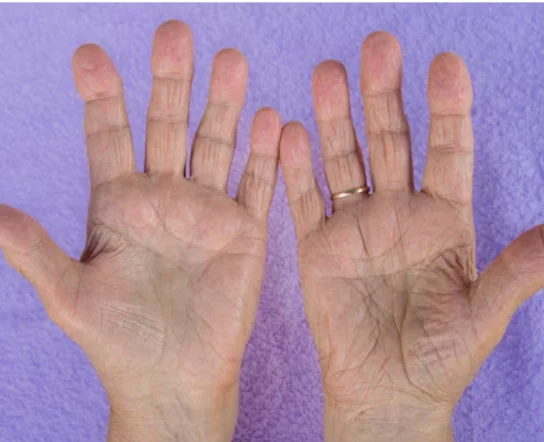
Ask ten people what a certain mark on the hand means and you’ll probably get ten different answers. That’s because palm line meanings have been passed down through many traditions, and the details vary. This guide pulls together the most commonly shared interpretations so you have a clear, practical reference.
Bookmark it, come back to it, and always remember: these are tendencies, not guarantees.
How Palm Line Meanings Work
In palmistry, every line is thought to describe a different area of life. The depth, length, curve and clarity of a line change how it’s interpreted. As a rule of thumb:
- Deep and clear lines are read as strong, steady themes.
- Faint lines are read as softer or more flexible themes.
- Broken, forked or chained lines are read as changes or complexity.
- Long lines suggest more of that quality, short lines a more focused version of it.
Keep this framework in mind as we walk through the palm line meanings below.
The Four Major Lines
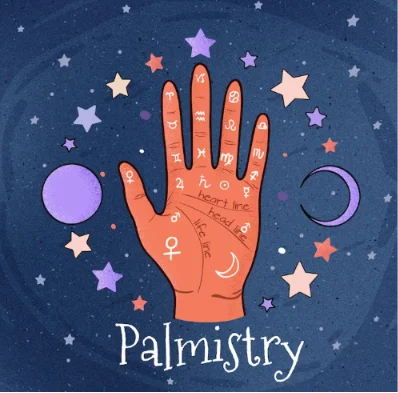
Heart Line
Located across the upper palm, below the fingers. It’s tied to emotions, relationships and how you give and receive affection. A curved end is often read as expressive. A straight one as more measured.
Head Line
Runs across the middle of the palm. It speaks about thinking style, curiosity and concentration. A gentle slope suggests creative thinking, while a straight line suggests analytical thinking.
Life Line
Wraps around the thumb’s base. It reflects vitality, resilience and your relationship with change. It does not measure lifespan.
Fate Line
Runs vertically through the palm’s center. It’s connected to career, responsibility and a sense of direction. Missing or faint? Many readers see that as a sign of a self-made, adaptable path.
The Minor Lines
Once you’re comfortable with the main four, these palm line meanings add more detail.
- Sun line (Apollo line): Runs toward the ring finger. Linked with creativity, recognition and fulfillment.
- Mercury line: Runs toward the little finger. Associated with communication, business sense and well-being.
- Intuition line: A faint curve along the outer palm. Connected with a sensitive, instinctive nature.
- Relationship lines: Small horizontal lines on the edge of the palm under the little finger. Traditionally linked with significant bonds.
- Girdle of Venus: A semi-circular line above the heart line. Often tied to emotional depth and sensitivity.
The Mounts
Mounts are the fleshy pads on your palm, each traditionally named after a planet. A well-rounded mount is said to indicate a healthy expression of that quality. A flat one suggests the quality is quieter. A very prominent one suggests it’s strongly present.
Special Markings
Some small shapes get a lot of attention:
- Stars: Often read as moments of sudden change or special attention.
- Crosses: Sometimes seen as a challenge or a test.
- Triangles: Associated with skill and balance.
- Islands: Short oval shapes on a line, traditionally read as a period of low energy or uncertainty.
- Grilles: Crisscrossed lines often linked with scattered energy.
I’d urge a bit of caution here. A tiny mark can easily be a normal crease. Never panic over a single symbol. Look at the whole palm.
Putting Palm Line Meanings Into Practice
Knowing definitions is one thing. Reading a real hand is another. Here’s a tidy approach:
- Start with the overall shape and feel of the hand.
- Identify the four major lines and note their depth and length.
- Add the minor lines you can see clearly.
- Check the mounts for fullness or flatness.
- Look for patterns that repeat. If three features point to the same trait, that theme probably matters.
- Write a short summary in your own words.
When You Want a Second Opinion
Sometimes you stare at your palm and can’t tell whether a line is a fork or just a crease. This is where technology can help. TaraTok lets you upload a palm photo and get an analysis of your lines, mounts and finger patterns using its Hasta Intelligence feature. The results are explained in simple language, and you can even combine them with your Vedic birth chart for a combined Hastagraha reading.
It supports over 50 languages and offers a free first reading, so it’s an easy way to compare your own observations with a detailed report.
Why Context Matters
The same line can mean something slightly different depending on your age, the rest of your palm and the tradition being used. Indian Samudrika Shastra, Western chiromancy and Chinese hand analysis all share common ground but differ in the finer points. That’s why a good reader, or a good platform, looks at the full picture rather than any single feature.
If you find two sources that disagree, that’s normal. Go with the interpretation that resonates and feels useful to you.
Final Thoughts
Learning palm line meanings is a bit like learning the basics of a new language. At first the symbols feel random. With a little patience, they start to form sentences. Use this guide as your cheat sheet, trust your own observations, and enjoy the process of getting to know your hands.
For a more detailed, personalized interpretation, try a free reading with TaraTok.
FAQs
1. What are the most important palm lines? The heart, head, life and fate lines are considered the four major lines.
2. What does a broken line mean? Traditionally it points to a change or transition, not something negative.
3. Are palm line meanings the same in every culture? No. Traditions share many ideas but differ in details.
4. What are mounts in palmistry? Mounts are the raised pads on the palm, each linked with a planet and a set of qualities.
5. Should I worry about unusual marks? No. Small marks are common and shouldn’t be taken as warnings.