Sign up with Google
 Sign in with Zoho
Vedic astrology has always been about more than simply knowing your zodiac sign. A complete reading looks at the relationship between planets, houses, signs, Nakshatras, planetary periods, and the exact circumstances of a person's birth. Today, technology is making this traditional system easier to explore through AI Vedic astrology.
Instead of spending hours trying to understand complicated charts and Sanskrit terminology, people can now use AI-powered platforms to explore their birth information in a simpler, more conversational way.
One platform bringing these ideas together is TaraTok, an AI-powered Vedic Science and Hasta Intelligence platform that combines birth-chart analysis, palm insights, and personalized AI guidance. TaraTok calculates a user's Vedic birth chart from their date, time, and place of birth and uses those details as the foundation for personalized interpretations.
What Is AI Vedic Astrology?
AI Vedic astrology combines traditional Vedic astrology principles with artificial intelligence to make chart-based information easier to understand and explore.
Traditional Vedic astrology can involve detailed calculations and terminology that may feel overwhelming to someone seeing a birth chart for the first time. An AI system can organize this information and present it in a conversational format.
The important distinction is that AI does not replace the underlying astrological framework. Instead, it can make the information more accessible.
For example, a person may want to understand:
- What is my Moon sign?
- What does my Ascendant mean?
- Which planets influence my career?
- What does my current Dasha period represent?
- Why do certain relationship patterns appear repeatedly?
- What does my Nakshatra indicate?
- What does my birth chart suggest about the next stage of my life?
Rather than searching through separate sources for every answer, an AI astrology platform can connect these questions to the individual's birth information.
TaraTok describes its approach as combining ancient Vedic wisdom with modern AI. Its Tara Yogi AI is designed specifically for personalized guidance based on a user's Vedic birth chart, palm analysis, or both.
Why Your Vedic Birth Chart Is More Important Than Your Sun Sign
One of the most common misunderstandings about astrology is that your zodiac or Sun sign tells the complete story.
It does not.
Your Sun sign is only one part of a much larger astrological picture.
A Vedic birth chart is calculated using your exact date, time, and location of birth. It provides information about planetary positions at the time you were born and helps determine important components such as the Ascendant, Moon sign, Nakshatra, houses, and planetary placements.
This is why two people born under the same zodiac sign can have very different personalities, experiences, strengths, and challenges.
TaraTok's birth-chart system includes the Lagna, Moon sign, Nakshatra, Tithi, Karana, Yoga, planetary positions, houses, and planetary periods.
The more precise the birth information, the more specific the resulting chart can be.
Why Exact Birth Time Matters
Birth time is particularly important because it helps determine the Ascendant and house placements.
Even a difference in birth time can affect the Ascendant and the distribution of planets across houses. This can change the way certain areas of life are interpreted.
TaraTok notes that an exact birth time provides greater precision for calculating the rising sign, planetary houses, Dasha periods, and transit effects. When the exact time is unavailable, the platform can still provide more general insights based on the available birth information.
Understanding Vedic Birth Chart Interpretation
Vedic birth chart interpretation is essentially the process of understanding what the different components of a birth chart represent and how they interact.
A useful interpretation does not focus on one planet or one sign in isolation. Instead, it considers the broader picture.
1. The Ascendant or Lagna
The Ascendant represents the sign rising on the eastern horizon at the time of birth.
It is an important starting point because it establishes the structure of the houses in the birth chart.
In practical terms, the Ascendant can help provide insight into personality, approach to life, physical expression, and the way a person interacts with the world.
2. The Moon Sign
The Moon has a major role in Vedic astrology.
The Moon is associated with the mind, emotions, habits, perceptions, and inner responses. This is one reason Vedic astrology places considerable importance on the Moon sign rather than relying exclusively on the Sun sign.
3. Nakshatra
The Nakshatra is the lunar constellation associated with the Moon's position at birth.
Vedic astrology divides the zodiac into 27 Nakshatras, each associated with particular qualities, symbols, and themes.
Understanding the Nakshatra can add another layer to a birth chart interpretation and help explain personality patterns that may not be obvious from the zodiac sign alone.
4. Planets or Grahas
The nine classical Vedic planetary influences, commonly referred to as the Navagraha, form another major part of the chart.
These include:
- Sun
- Moon
- Mars
- Mercury
- Jupiter
- Venus
- Saturn
- Rahu
- Ketu
Their positions, relationships, and house placements contribute to the overall interpretation.
5. Houses
The twelve houses represent different areas of life.
Depending on the chart and interpretation, they can relate to themes such as identity, wealth, communication, family, creativity, health, partnerships, transformation, higher learning, career, networks, and spirituality.
This is where Vedic birth chart interpretation becomes more detailed than simply reading a zodiac horoscope.
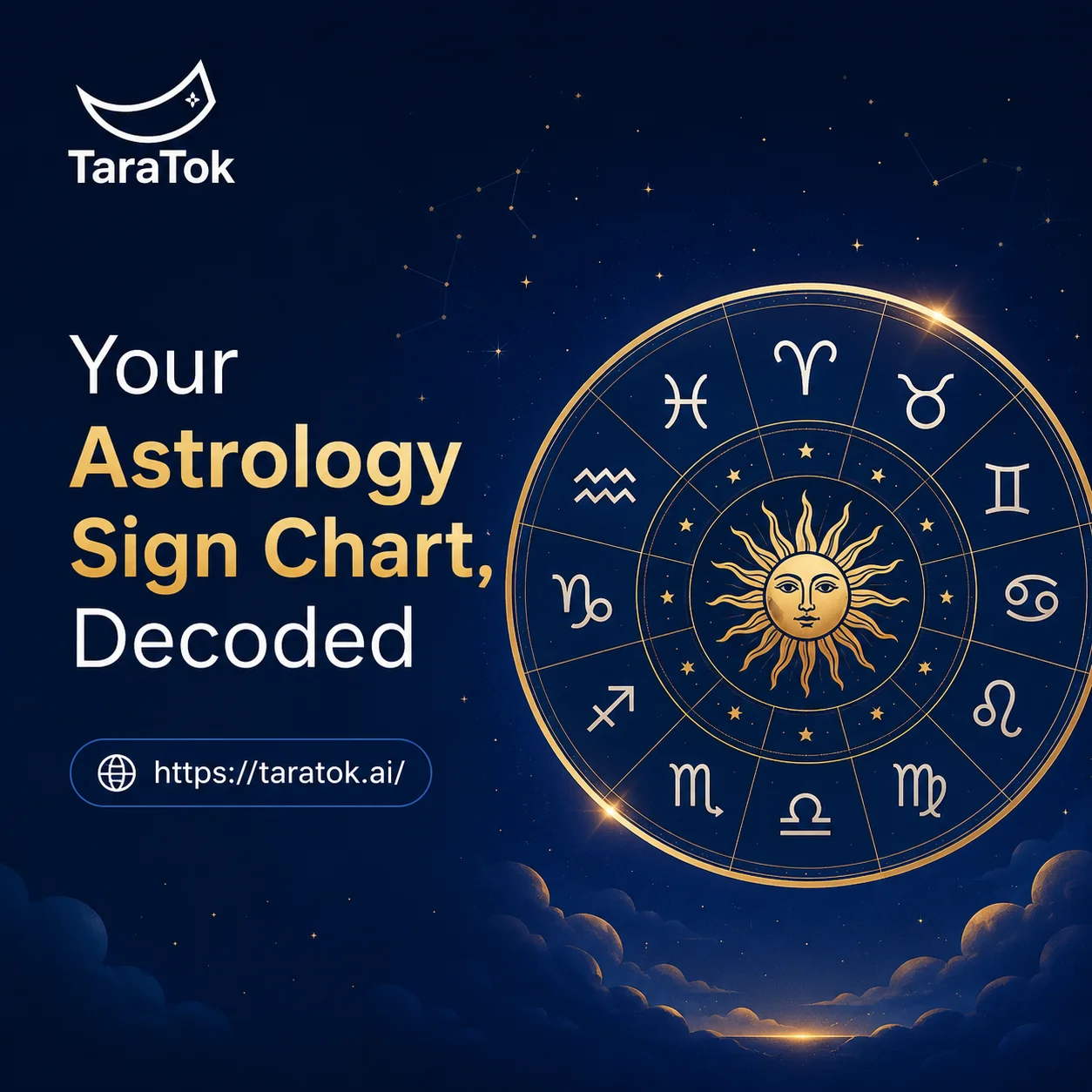
What Is an Astrology Sign Chart?
An astrology sign chart is a visual or structured representation of the zodiac signs and their relationship to an astrological chart.
The twelve zodiac signs are:
- Aries
- Taurus
- Gemini
- Cancer
- Leo
- Virgo
- Libra
- Scorpio
- Sagittarius
- Capricorn
- Aquarius
- Pisces
In Vedic astrology, these signs are known as Rashis.
However, simply knowing your Rashi is only the beginning.
The significance of a sign depends on where it appears in the birth chart, which planet rules it, which planets occupy it, and what other planetary relationships are present.
This is why an astrology sign chart should be treated as part of a broader system rather than as a standalone prediction tool.
How AI Makes Birth Chart Interpretation Easier
Traditional astrology can require substantial knowledge to interpret correctly.
AI can help simplify the process by bringing different pieces of information together.
Instead of manually looking at several tables and calculating planetary periods, a user can enter their birth details and receive an organized explanation.
TaraTok follows this approach by calculating a user's Vedic chart and making it available through its Cakra system. It also provides access to planetary-period information, including Vimshottari Dasha and sub-periods.
This makes it easier for beginners to move from simply asking, "What is my sign?" to asking more meaningful questions about timing, relationships, career, personal development, and life decisions.
AI Vedic Astrology and Planetary Timing
One of the areas where Vedic astrology differs from simple horoscope content is its emphasis on timing.
A birth chart can describe certain tendencies, but Vedic astrology also uses planetary periods, particularly Dasha systems, to examine periods of life associated with different planetary influences.
For example, someone may want to understand why a particular phase feels different from an earlier period.
An AI system can help explain the planetary period shown in the chart and translate technical terminology into everyday language.
TaraTok's platform includes current Vimshottari Dasha and sub-period information and allows users to ask personalized questions based on their chart.
This creates a more interactive experience than reading a fixed horoscope.
AI Astrology Is Becoming More Conversational
Another major change is the way people interact with astrology.
Instead of searching for a generic article about "career astrology," users increasingly want answers that relate to their own circumstances.
For example:
"What does my current planetary period mean for my career?"
Or:
"Why does my chart show repeated relationship patterns?"
A conversational AI system can use the birth chart as context and explain the relevant concepts in a question-and-answer format.
TaraTok's Upadeśa feature is designed for this type of personalized interaction, with Tara Yogi answering questions using the user's chart, palm analysis, or combined analysis depending on the available features.
Going Beyond the Birth Chart With Palm Analysis
One interesting development in AI-powered spiritual technology is the combination of astrology and palmistry.
TaraTok calls this approach Hastagraha, combining Vedic birth-chart information with Hasta or palm-based insights.
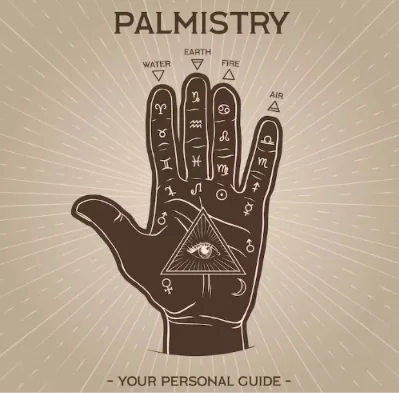
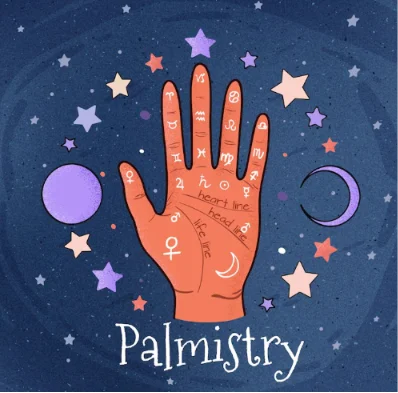
Users can upload a palm image, allowing the system to analyze elements such as major lines, mounts, markings, hand shape, and fingers.
The idea is straightforward: instead of examining only birth information, the platform can consider another traditional source of personal interpretation.
This makes the experience broader for people who are interested in both astrology and palmistry.
How to Get Better Results From AI Vedic Astrology
The quality of an astrological interpretation begins with the quality of the information provided.
For a more detailed reading, we recommend having:
- Your accurate date of birth
- Your exact birth time
- Your place of birth
- A clear understanding of the question you want to explore
- A willingness to consider the interpretation as guidance rather than certainty
It is also useful to ask specific questions.
Instead of asking, "Tell me everything about my life," a more useful question might be:
"What does my current Dasha period indicate about career changes?"
A focused question gives the interpretation a clearer direction.
AI Vedic Astrology for Beginners
People who are completely new to astrology do not need to learn every Sanskrit term before exploring their chart.
A good beginner experience should explain concepts in plain language.
For example, instead of simply displaying "Saturn in the 10th house," an AI guide can explain what the tenth house represents, what Saturn traditionally signifies, and how astrologers may interpret that combination.
TaraTok specifically positions its platform for both beginners and experienced users. Beginners can start with a Vedic signature and receive explanations without needing extensive prior knowledge, while experienced users can explore more advanced chart features.
That makes AI particularly useful as an educational companion for people who want to understand their own chart gradually.
Is AI Vedic Astrology the Same as a Human Astrologer?
Not exactly.
AI and human astrologers can approach interpretation differently.
A human astrologer can bring personal experience, intuition, cultural understanding, and direct conversation into a consultation. AI, on the other hand, can provide immediate access to calculations, explanations, terminology, and chart-based questions.
The biggest advantage of AI is accessibility.
Instead of waiting for an appointment, users can explore their birth chart whenever they have a question.
TaraTok describes its service as AI-generated spiritual guidance for reflection, personal growth, and educational purposes rather than deterministic predictions or professional advice.
That distinction is important. Astrology can be used as a tool for reflection and exploration, but major medical, legal, financial, or other professional decisions should not be based solely on an AI-generated spiritual interpretation.
Why TaraTok Is Different From a Generic Horoscope App
Generic horoscope apps often provide broad content based primarily on zodiac signs.
TaraTok takes a more personalized approach.
Its platform uses birth details to calculate a Vedic birth chart and also offers palm analysis. Its broader system includes Cakra birth-chart insights, Hasta palm intelligence, Upadeśa personalized questions, and reports designed around different time periods.
It also supports more than 50 languages, making its Vedic guidance accessible to users from different linguistic and cultural backgrounds.
For someone who wants more than a daily zodiac horoscope, this can make the experience considerably more personal.
The Future of AI Vedic Astrology
The future of astrology technology is likely to focus less on generic predictions and more on personalization.
People want context.
They want to understand why a particular period feels significant, how different parts of their birth chart connect, and how traditional concepts can be explained in language they actually understand.
This is where AI Vedic astrology has an opportunity to make a traditional system more approachable.
Rather than replacing the underlying knowledge, AI can act as a bridge between complex astrological concepts and everyday users.
The most useful platforms will likely be those that combine accurate calculations, transparent limitations, personalization, cultural sensitivity, privacy, and easy-to-understand explanations.
TaraTok's approach reflects this direction by combining Vedic birth-chart analysis with AI guidance and optional palm-based intelligence in one platform.
Final Thoughts
Understanding astrology can be difficult when all you have is a complicated chart filled with symbols, planets, houses, and unfamiliar terminology.
AI Vedic astrology makes that information easier to explore by turning a traditional birth chart into an interactive experience.
An astrology sign chart can help beginners understand the twelve Rashis, but a complete reading goes much deeper. Vedic birth chart interpretation considers the Ascendant, Moon, Nakshatra, planetary positions, houses, and timing systems to create a more complete picture.
Platforms such as TaraTok take this a step further by combining Vedic chart analysis with AI-powered questions and, where available, palm-based Hasta Intelligence.
For people curious about their personality, life patterns, planetary timing, relationships, career direction, or spiritual growth, this offers a convenient way to begin exploring Vedic astrology without needing to understand every technical detail on day one.
The goal should not be to treat every AI interpretation as a fixed prediction. The better approach is to use it as a tool for learning, reflection, and gaining a clearer understanding of the traditional concepts within your own birth chart.
Frequently Asked Questions About AI Vedic Astrology
What is AI Vedic astrology?
AI Vedic astrology combines traditional Vedic astrology concepts and calculations with artificial intelligence to provide personalized explanations and interactive guidance based on birth information.
What information is needed for a Vedic birth chart?
A Vedic birth chart generally requires your date, exact time, and place of birth. Accurate birth time is especially useful for determining the Ascendant, houses, and timing-related calculations.
What is Vedic birth chart interpretation?
Vedic birth chart interpretation is the process of examining planetary positions, houses, signs, Nakshatras, Ascendant, and planetary periods to understand traditional astrological themes associated with an individual's birth chart.
What is an astrology sign chart?
An astrology sign chart represents the twelve zodiac signs and their relationships within an astrological system. In Vedic astrology, these signs are known as Rashis.
Can AI interpret my complete birth chart?
AI platforms can calculate and explain many components of a Vedic birth chart, including planetary positions and timing systems. TaraTok provides chart-based insights through its Cakra system and personalized Tara Yogi guidance.
Can I use AI astrology if I do not know my exact birth time?
Yes. Some AI astrology platforms can still provide general insights using the available birth information. However, certain calculations become less precise without an accurate birth time.
Can AI astrology predict my future with certainty?
AI astrology should not be treated as a guarantee of future events. Interpretations are better viewed as guidance, reflection, and exploration of traditional astrological themes. TaraTok explicitly describes its insights as interpretive rather than deterministic.
Can AI Vedic astrology help with career questions?
It can provide chart-based interpretations related to traditional career indicators and planetary timing. TaraTok's personalized AI guidance allows users to ask questions about career, decisions, relationships, timing, and other areas of life.
What makes TaraTok different from a regular astrology app?
TaraTok combines Vedic birth-chart analysis, AI-powered personalized guidance, and optional Hasta palm analysis. Its Hastagraha system combines birth-chart and palm-based information for users with access to the feature.
Is TaraTok available for beginners?
Yes. TaraTok provides a beginner-friendly experience and explains Vedic concepts without requiring users to already understand complex astrological terminology.