Sign up with Google
 Sign in with Zoho


Your business has years of sales records, customer feedback, and support data, but are you using that information to make better decisions? AI can help uncover patterns, predict customer needs, and reduce repetitive work, but getting started takes more than choosing a tool. Before investing in an AI/ML development company, you need to know which business problem to solve, whether your data is ready, and how you will measure the outcome.
This blog explains what happens during a first AI/ML project, including how to choose the right use case, prepare data, test a solution, and assess whether it delivers meaningful business value.
Why Do Many Companies Use AI but See Limited Business Results?
Using AI does not automatically improve profits. The results depend on the business problem you want to solve, how well the tool fits into daily operations, and whether you can measure its impact. Before investing in AI, identify a specific goal, such as reducing manual work, improving customer response times, or making better use of business data.
Then decide how you will measure progress and who will be responsible for reviewing the results. Choosing a tool is only the starting point. The real value comes from applying it to a genuine business need and making sure your team can use it effectively.
What Are the Steps in a First AI/ML Project?
Every project is different, but most follow a similar process.
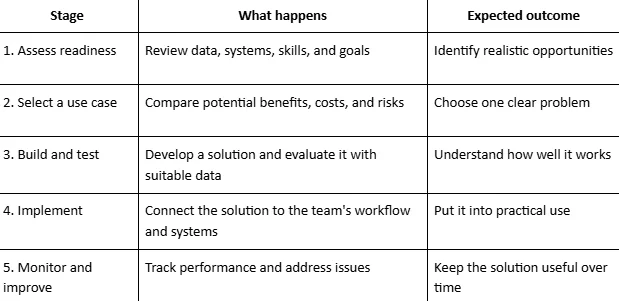
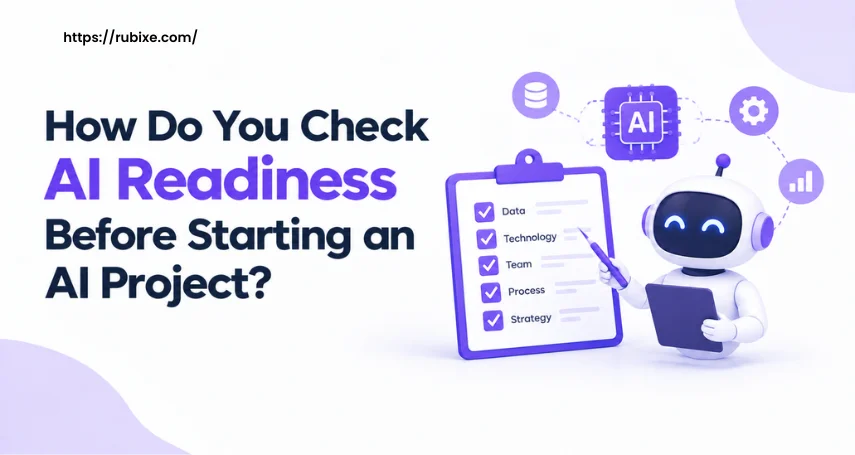
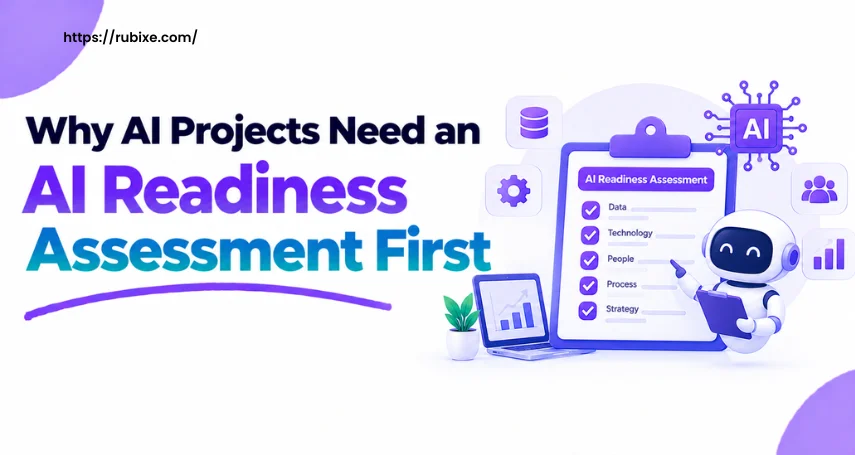
A readiness assessment can help you identify gaps before development starts. AI readiness checklist covers areas such as data, team skills, business goals, ownership, and budget.
Where Can AI/ML Create Business Value?
The potential benefit depends on the problem you choose to solve. Here are a few examples.
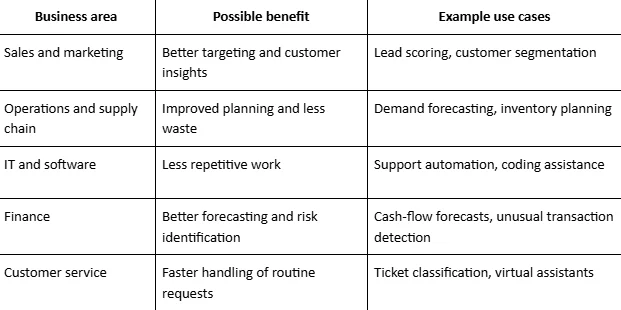
McKinsey's survey reports cost benefits in areas such as service operations and supply chain, while respondents frequently report revenue benefits in marketing and sales. These are reported patterns across surveyed organisations, not guaranteed results for an individual business.
Start with the area where a measurable improvement would matter most to your company.
What Do High-Performing AI Projects Do Differently?
McKinsey's survey identifies differences between organisations reporting stronger AI-related results and other respondents. Its findings highlight several practices:
- Redesign the workflow: Rather than simply adding a tool, review how the task should be completed with AI involved.
- Involve senior leaders: Management support helps teams secure resources and make decisions.
- Measure the impact: Set clear measures before implementation so the business can judge whether the project is working.
For your first project, decide what will change in the existing process, who will be responsible, and how you will compare the new approach with the old one.
Why Do Some AI Projects Stall After Testing?
A model may perform well in a test environment but struggle when employees begin using it every day.
Common reasons include:
- Poor workflow fit: The tool does not suit the way employees complete their tasks.
- Integration problems: Connecting the solution to existing software takes more work than expected.
- Unreliable data: Incomplete or outdated information affects the output.
- Unclear ownership: Nobody is responsible for reviewing results or resolving issues.
- No rollout plan: The pilot finishes, but the business has not planned how to introduce the solution across the team.
These risks are easier to address when they are discussed during planning rather than after development is complete.
What Should You Ask an AI/ML Development Provider?
Before selecting a provider, ask questions that reveal how they will handle the entire project.
- How will you identify the right use case? Ask how they will connect the proposed solution to a specific business problem.
- Will you assess our data first? Find out how they will check data quality, access, and suitability.
- What will the pilot include? Agree on the scope, timeline, testing approach, and expected outcome.
- Can you integrate the solution into our workflow? Clarify whether implementation and system connections are included.
- How will we measure success? Set a baseline and define the measures you will use to evaluate results.
- Who will monitor the solution after launch? Discuss maintenance, performance checks, and updates.
- What costs should we plan for? Ask about development, integration, training, hosting, and ongoing support.
A suitable provider should explain the process clearly and show how each stage relates to your business goal.
What Should You Realistically Expect?
The time and cost of an AI/ML development project depend on its complexity, data quality, testing requirements, and the number of systems involved. A straightforward task using accessible data may require less work than a custom solution involving several departments and software platforms. Some projects may also reveal that a simpler rule-based system can solve the problem without machine learning.
To evaluate the results, compare them with your original business goal. This might mean reducing manual work, improving forecast accuracy, lowering error rates, or responding to customers faster. Use these findings to decide whether to improve the solution, expand its use, or stop the project. The aim of AI/ML development is to solve a genuine business problem and deliver measurable value, not to adopt AI simply because the technology is available.
FAQs
1. What is an AI/ML development company?
These services help businesses plan, build, test, and implement systems that use artificial intelligence or machine learning to solve specific problems.
2. Can AI/ML projects generate revenue as well as reduce costs?
Yes, depending on the use case. Projects may support sales, customer targeting, forecasting, or operational efficiency, but outcomes vary.
3. Does a business need a large amount of data?
Not always. The amount and quality of data required depend on the problem and the chosen approach. A provider should assess the available data before recommending a solution.
4. How long does an AI/ML project take?
There is no standard timeline. The scope, data preparation, testing, integrations, and implementation requirements all affect the duration.
5. Why do some AI projects fail to deliver business value?
Common issues include unclear goals, poor data, weak integration, limited employee involvement, and a lack of ownership or measurement.
Conclusion
Getting started with an AI/ML development company is easier when you have a clear business problem, reliable data, and measurable goals. Before beginning development, decide what you want to improve, who will be responsible for the outcome, and how the solution will fit into your daily operations.
Start with a small project, review the results, and use what you learn to decide whether a larger investment makes sense. For more guidance on planning and applying AI solutions, read our article on AI and ML consulting. If you’re ready to explore how AI/ML could address your business needs, contact our team to discuss your goals and possible next steps.