Sign up with Google
 Sign in with Zoho
Completing the Physics syllabus is an important milestone in MHT CET preparation, but finishing the chapters does not automatically mean that every concept will remain accessible during the examination. Students may understand a topic while studying it and struggle to recall the same information several days later.
This happens because learning and remembering are different processes. Reading a chapter repeatedly may create familiarity, but students also need to practise retrieving information, applying formulas, and identifying relationships between concepts.
A structured revision system can help MHT CET aspirants retain important information without spending all their available time rereading textbooks.
Why Repeated Reading Is Not Always Effective
When students read familiar notes, the information may appear easy to understand. However, recognising a formula on a page is different from recalling it independently while solving an MCQ.
Repeated reading can be useful when a concept is unfamiliar, but it should not be the only revision technique. Students also need to close their books, test their understanding, solve questions, and identify information they cannot recall correctly.
A balanced MHT CET Physics study plan should therefore combine concept review, active recall, problem-solving, and error correction.
1. Use Active Recall Instead of Only Reading Notes
Active recall means trying to remember information without immediately checking the answer.
After studying a topic, close your notebook and write down the important formulas, definitions, principles, and conditions that you remember. You can also explain the concept aloud in your own words.
For example, after revising a chapter involving motion, attempt to recall the relevant equations and identify when each equation can be applied.
Once you finish, compare your answers with your notes. Correct missing information and revisit concepts that remain unclear.
This process helps you discover the difference between what you genuinely remember and what merely looks familiar.
2. Follow a Spaced Revision Schedule
Trying to revise every chapter in one long session can be exhausting and may leave little time for practice. Spaced revision distributes review sessions over several days.
A simple schedule might include:
- First review: On the day you study the topic.
- Second review: The following day.
- Third review: A few days later.
- Fourth review: Approximately one week later.
- Further review: During mixed practice or mock-test analysis.
These intervals are flexible rather than fixed rules. Difficult topics may require more frequent revision, while well-understood topics may need less attention.
The purpose is to revisit information before it becomes difficult to retrieve.
3. Create a Formula Sheet with Application Rules
A formula sheet is most useful when it explains more than the formula itself.
For each important formula, record its variables, units, applicable conditions, and a short example. If two formulas look similar, write down the distinction between them.
For instance, do not simply list equations from a chapter. Note which physical quantities are known, what needs to be calculated, and which conditions must be satisfied before applying a particular equation.
Organise formulas chapter by chapter so that you can review them quickly before practice sessions.
You can also mark formulas that you frequently forget or apply incorrectly. These should receive additional attention during revision.
4. Convert Each Chapter into Short Questions
After finishing a chapter, prepare a set of questions that tests its central ideas.
Examples include:
- What is the meaning of this physical quantity?
- Which conditions are required for this formula?
- How does the result change if one variable increases?
- Which units should be used in the calculation?
- How can this concept be tested through an MCQ?
Answer these questions without looking at your notes. Then verify your responses.
This method encourages conceptual understanding and prepares you for questions that require application rather than direct recall.
5. Separate Conceptual Mistakes from Memory Problems
Not every incorrect answer happens because a student forgot a formula. Some errors occur because the concept itself is unclear, the wrong equation is selected, or a calculation is performed incorrectly.
Maintain an error notebook with four categories:
Memory errors: A formula, definition, or important fact was forgotten.
Conceptual errors: The underlying principle was misunderstood.
Application errors: The correct concept was known, but it was applied in the wrong situation.
Calculation errors: Arithmetic, unit conversion, or sign handling caused an incorrect answer.
Each category requires a different solution. Memory errors need retrieval practice, conceptual errors need explanation and review, application errors need varied MCQs, and calculation errors need careful step-by-step practice.
6. Revise Through Mixed-Topic Practice
Chapter-wise practice is valuable when learning a topic, but mixed-topic questions help students decide which concept to apply without being told the chapter in advance.
Once you have covered several chapters, solve sets containing questions from different topics. After answering each question, identify the principle or formula that helped you reach the solution.
If you cannot identify the relevant concept, return to the chapter and review its application rules.
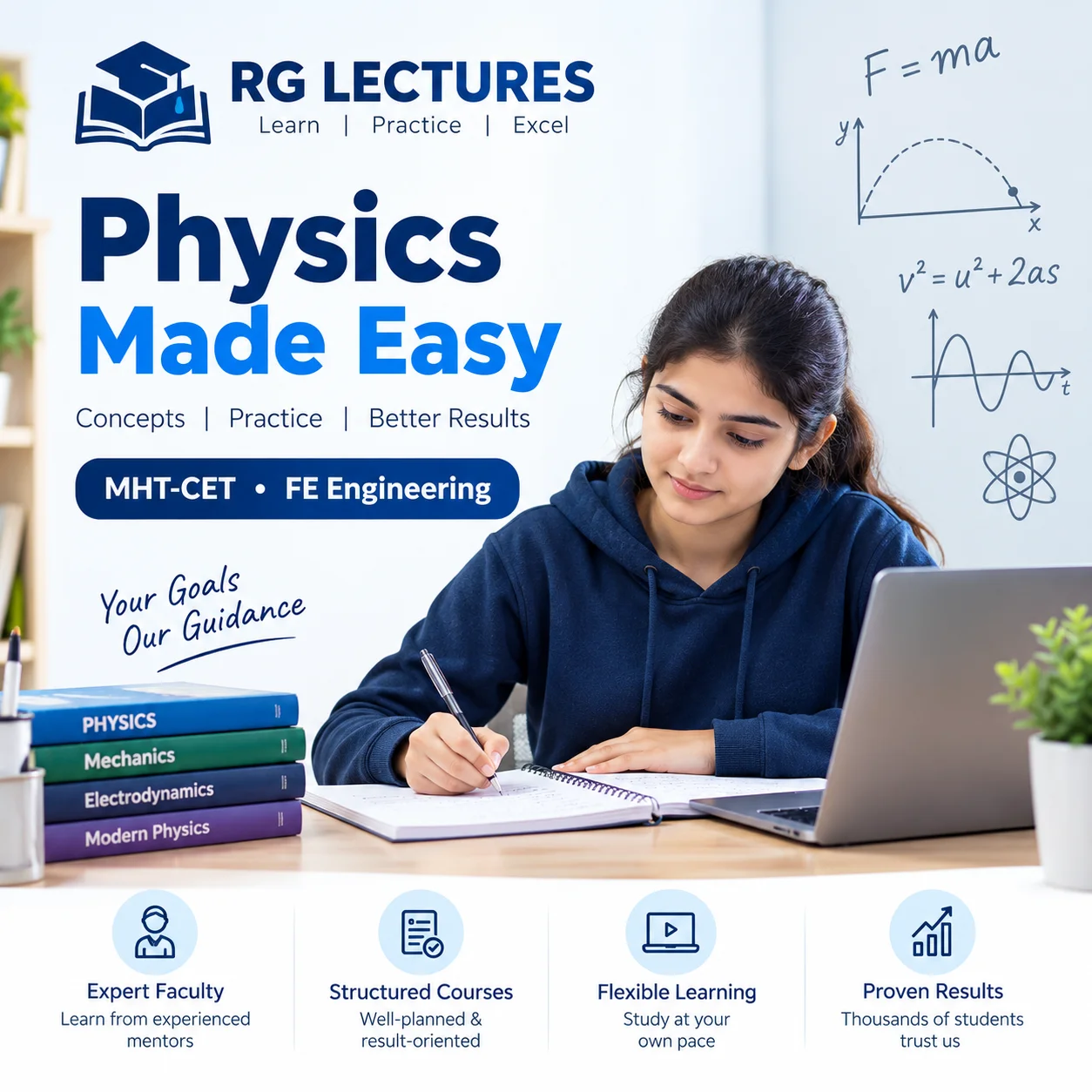
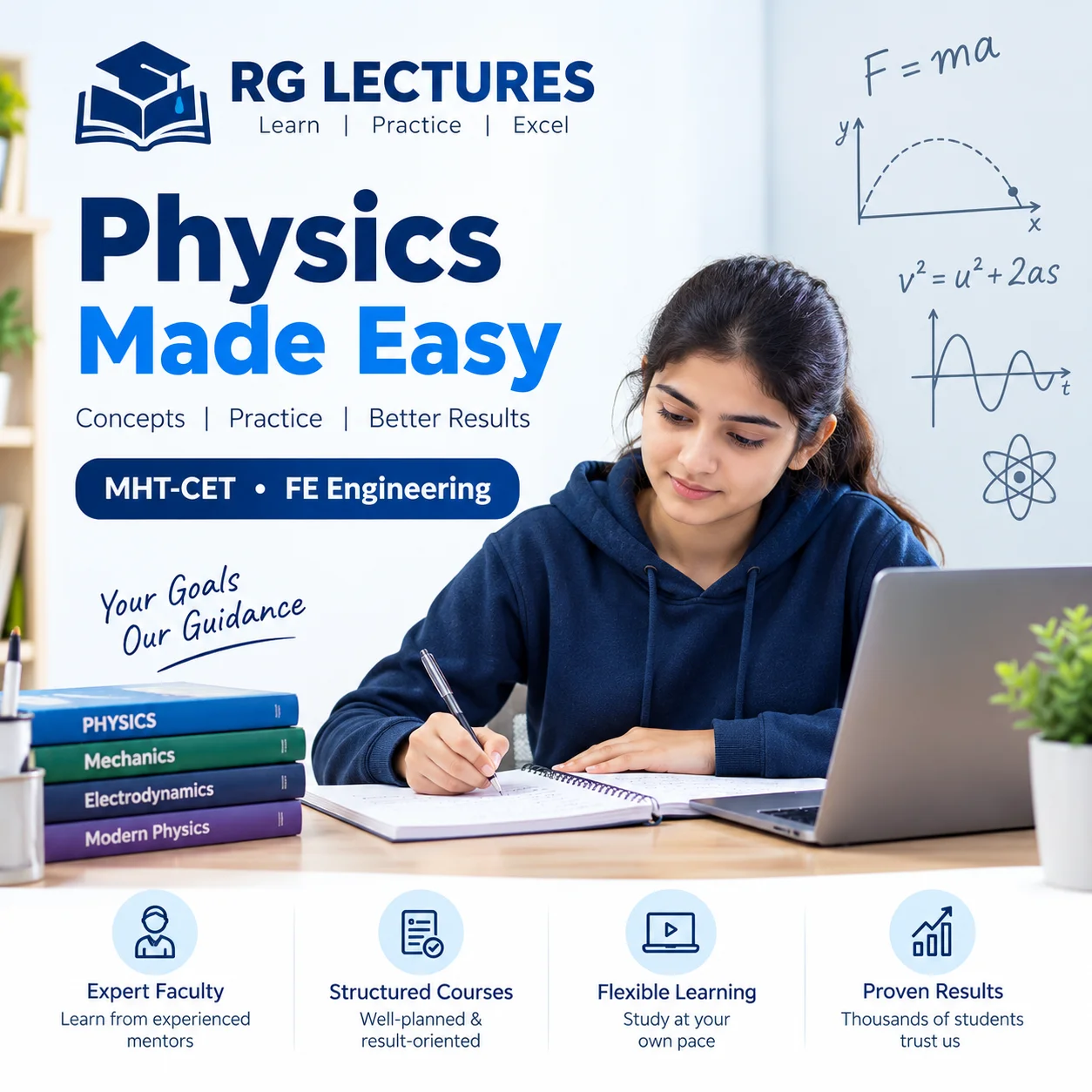
Students preparing through RG Lectures can incorporate regular Physics practice into their revision routine and use their performance to identify areas that need further work.
7. Use Mock Tests as Revision Tools
Mock tests are not only for checking scores. They can reveal which concepts are difficult to recall under time pressure and which chapters need additional practice.
After a test, review every incorrect answer and any question you answered through uncertain guessing. Record the topic, the reason for the error, and the corrective action required.
For example, if you repeatedly forget a formula, add it to your active-recall list. If you understand the formula but select it incorrectly, practise questions that compare similar concepts.
Avoid taking multiple mock tests without analysing the results. A smaller number of carefully reviewed tests may provide more useful learning than repeated testing without correction.
8. Build a Practical Seven-Day Revision Cycle
A short revision cycle can help students maintain consistency while balancing other subjects.
Day 1: Review one topic and create short recall questions.
Day 2: Test formulas and solve basic MCQs from the same topic.
Day 3: Revisit mistakes and practise application-based questions.
Day 4: Review another topic using active recall.
Day 5: Solve a mixed set from both topics.
Day 6: Attempt a timed Physics practice set and analyse incorrect answers.
Day 7: Revisit difficult concepts, formulas, and previously recorded mistakes.
Adjust the workload according to your syllabus progress, available study time, and current performance. The aim is to make revision consistent and measurable.
9. Avoid Common Revision Mistakes
Students sometimes spend too much time making elaborate notes and too little time testing their knowledge. Others postpone difficult chapters until the final days or solve questions without reviewing incorrect answers.
To make revision more effective:
- Keep summary notes short and useful.
- Test yourself before checking answers.
- Revisit difficult concepts regularly.
- Practise MCQs after reviewing a topic.
- Analyse mistakes instead of focusing only on scores.
- Protect time for both Std. XI and Std. XII revision according to your syllabus and individual needs.
A revision routine should help you identify weaknesses early rather than simply create the feeling that studying is complete.
Conclusion
Effective MHT CET Physics revision requires more than reading the same material repeatedly. Active recall, spaced revision, formula application, mixed-topic MCQs, and mock-test analysis can help students strengthen their understanding and recognise gaps in their preparation.
The best revision system is one that is realistic enough to follow consistently. By measuring progress through recall and question-solving performance, aspirants can use their study time more purposefully and approach the examination with better preparation.
Frequently Asked Questions
1. How can I revise MHT CET Physics quickly?
Prioritise important concepts from your syllabus, use concise formula notes, test yourself through active recall, and solve MCQs to identify weak areas.
2. Is reading Physics notes repeatedly enough?
No. Reading can help with understanding, but students should also practise recalling information independently and applying it to questions.
3. How can I remember Physics formulas for longer?
Review formulas at spaced intervals, write them from memory, understand their conditions of use, and solve problems that require applying them.
4. Should I solve MCQs while revising a chapter?
Yes. MCQs help test conceptual understanding, formula selection, and application. Review incorrect answers to understand what needs improvement.
5. How do mock tests help with revision?
Mock tests identify weaknesses in recall, accuracy, and time management. Reviewing mistakes turns test performance into a practical revision plan.
6. Where can I explore MHT CET Physics learning resources?
Visit RG Lectures to explore Physics preparation and learning resources relevant to entrance-exam preparation.