Sign up with Google
 Sign in with Zoho
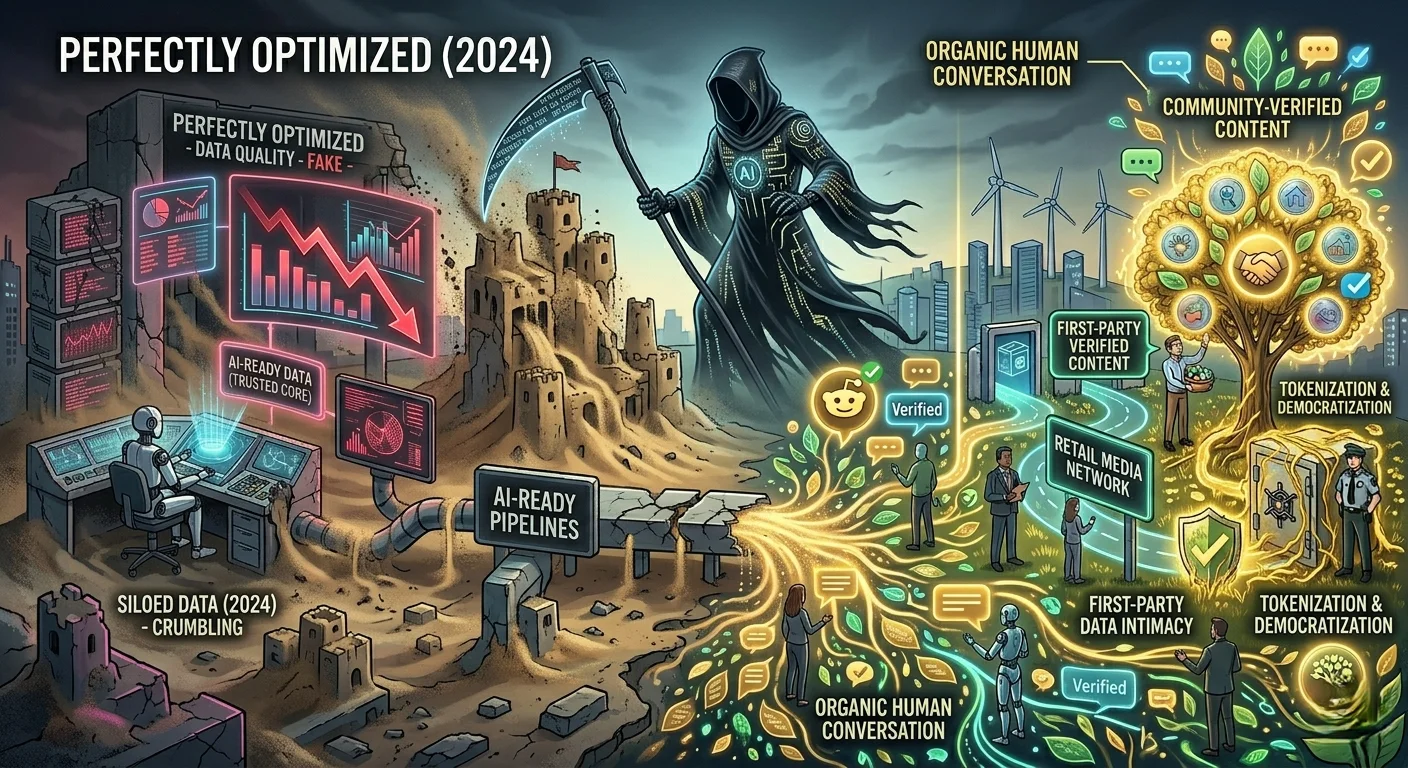

Enterprises sign contracts for everything. Office leases, software licenses, and vendor connections. Many AI models influencing revenue, compliance, and customer trust still operate without formal performance agreements.
AI Service Level Agreements address this blind spot. They give companies a clear, written way to define acceptable performance, spot problems early, and hold AI systems to the same standards as the rest of the organization.
For executives scaling major AI investments in 2026, this documented accountability is no longer optional. It is rapidly transforming into the baseline requirement for any serious enterprise deployment strategy.
What an AI Service Level Agreement Actually Covers Beyond Uptime
The majority of people associate "SLA" with response times and server uptime. That's only the beginning for AI systems. A well-constructed AI SLA goes far further, outlining precisely how a model should function, how soon issues are identified, and who is responsible when things go wrong.
Here's what a serious AI SLA should actually include:
- Accuracy and Output Quality Thresholds: This establishes the minimal performance required for the model's primary function, be it response relevance, classification accuracy, or prediction accuracy. Instead of using ambiguous terms like "high accuracy," businesses utilizing AI deployment services should insist on numerical thresholds so that everyone is aware of when performance has fallen below an acceptable threshold.
- Latency and Response Time Commitments: Beyond basic uptime, this covers how fast the model actually responds under real load, not just in testing. A fraud detection model that's accurate but too slow to flag a transaction before it clears isn't meeting its real job. SLAs should specify response times for both average and peak usage conditions.
- Model Drift Detection and Correction Windows: Models degrade quietly as real-world data shifts away from training data. A strong SLA sets a maximum window for detecting this drift and a clear timeline for correcting it, whether through retraining or recalibration, before performance loss starts affecting business outcomes.
- Data Quality and Input Standards: AI is only as reliable as the data feeding it. This defines acceptable data freshness, completeness, and format standards the enterprise must maintain, along with the AI deployment services provider's responsibility to flag input data that falls outside expected quality ranges.
- Bias and Fairness Monitoring: This commits to regular testing across demographic and use case segments to catch unfair or skewed outcomes early. The SLA should define acceptable variance thresholds and the cadence for fairness audits, not leave it as a one-time checkbox exercise.
- Retraining and Model Refresh Cadence: Models aren't static. This section sets a defined schedule, or trigger-based conditions, for when the model gets retrained on fresh data, ensuring performance doesn't quietly decay simply because nobody revisited the model after go-live.
How AI SLAs Align Technical Performance With Business Outcomes
Technical metrics only matter if they improve business performance. By linking model behavior to results that CEOs, corporate executives, and customers genuinely care about, AI SLAs close that gap.
Here's how that alignment happens in practice:
- Tying Metrics to Revenue and Cost Impact: Strong SLAs translate technical performance into business terms, like linking a small accuracy drop in a forecasting model directly to excess inventory costs.
- Setting Customer Experience Thresholds: SLAs are increasingly monitoring customer-facing indicators, including sentiment scores and resolution rates, so models are evaluated based on experience rather than just their technical functionality.
- Defining Success Around Decision Quality, Not Just Output Volume: The number of recommendations that teams genuinely trust and utilize, rather than the number of outputs a model generates, is the true indication of value.
- Increasing Knowledge of the Business Cycle: Effective SLAs push AI systems to meet rigorous operational standards during critical peak windows by establishing dynamic performance requirements mapped directly to high-volume business cycles.
5 Common Mistakes That Make AI SLAs Ineffective
Even a documented AI SLA can fall apart in practice. Bain's 2026 Automation and AI Pathfinder Survey found data access and integration are the biggest barrier to AI progress, cited by 41% of respondents, ahead of compliance, budget, skills, and executive buy-in. That one stat explains most SLA failures.
This is where enterprises typically go wrong:
- Considering the SLA as a One-Time Document: Despite changes in the model, data, or business context, SLAs are created at launch and are never reviewed.
- Ignoring Quality Commitments: SLAs often establish accuracy targets without ever specifying "acceptable input data," which results in the model being held responsible for problems that started upstream.
- Setting Immeasurable Thresholds: Terms like "high accuracy" or "minimal downtime" give too much room for interpretation when something really goes wrong.
- Avoiding Human Escalation Protocols: When the model performs poorly, there is no clear owner or response window; thus, issues tend to go unresolved while the business impact grows.
How to Build AI SLAs That Scale Across Multiple Models?
A single, well-crafted SLA works fine when there's one model in production. However, the majority of enterprise AI deployments nowadays comprise dozens of models operating across many tasks, each with unique performance requirements and risk profiles.
This fact calls for a more methodical and repeatable approach to creating SLAs rather than creating a new document for each new model.
These steps make that scalability possible:
- Create a Tiered SLA Framework: Group models by business risk and impact, then set SLA rigor accordingly. Compared to an internal reporting tool, a customer-facing fraud model requires stricter limits.
- Centralize SLA Ownership: Rather than letting each business unit create its own SLA from scratch, designate a governance team or Center of Excellence to maintain SLA templates and standards.
- Automate Performance Monitoring: Create dashboards that monitor SLA compliance in real time for all models so that degradation appears on its own rather than during quarterly reviews.
- Align SLAs with Current Vendor Contracts: To prevent accountability from being lost at the handoff point, make sure internal model SLAs and third-party enterprise AI deployment service agreements employ consistent terminology and thresholds.
Treat Every AI Model Like It's Running Your Business, Because It Is!
An AI model without an SLA is a decision-maker without accountability, and that's a risk no enterprise can afford at scale.
Straive helps organizations close that gap, supporting AI design and deployment frameworks with governance built in from the start, not bolted on later. As agentic AI takes on more autonomous decisions across the enterprise, strong SLAs are what keep that autonomy accountable.
These days, those who treat performance accountability as a strategic asset, not paperwork, are the ones set up to lead. Fast AI is easy to find. Dependable AI is what actually wins.