Sign up with Google
 Sign in with Zoho

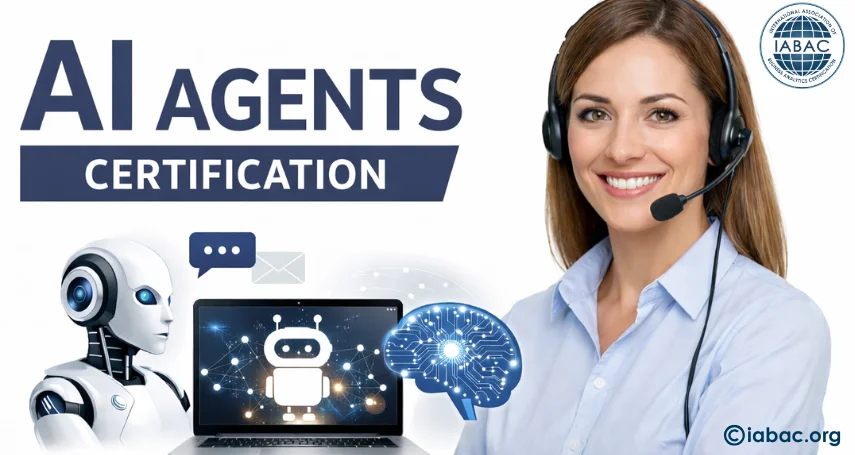
You face a flood of new AI tools and hype. You want to build systems that act on their own, make decisions, and handle complex workflows without constant human oversight. Many professionals I work with get stuck here. They know LLMs but struggle to turn them into reliable agents.
By the end of this post, you will have a clear map of the essential concepts in solid Agentic AI certification courses. You will know what to expect, why each piece matters in real projects, and how to choose training that fits your work as a developer, ML engineer, or automation specialist.
I have spent years building and deploying AI systems for clients. I have seen single-agent setups collapse under real data noise and multi-agent teams create unexpected loops. Certifications that cover the right foundations help you avoid those pitfalls. Here is what actually shows up in strong Agentic AI courses, drawn from what works in practice.
Step 1: Master AI Agent Architecture
Start with the core structure. Good courses teach you how an agent breaks down into perception (sensing inputs), reasoning (deciding what to do), action (executing tools or APIs), and memory (short-term and long-term storage).
I have deployed agents where weak memory modules caused them to forget context after just a few steps. Expect hands-on labs where you wire together components using frameworks like LangChain or LlamaIndex. You should see your agent query a database, call an external API, and log its decisions. Common mistake: skipping vector stores for memory. Test early with simple retrieval tasks. If your agent repeats queries unnecessarily, add proper embedding and indexing.
Step 2: Dive into Reasoning and Planning
Agents need more than prompts. Courses cover chain-of-thought, tree-of-thoughts, and planning algorithms like ReAct (Reason + Act).
In my experience, pure reactive agents fail on multi-step problems. One client project involved supply chain optimization. Without explicit planning, the agent made contradictory decisions. Look for courses with exercises where you implement planners that generate sub-goals, evaluate options, and replan on failure. You will see success metrics like task completion rate improve dramatically. Troubleshooting tip: If planning loops forever, add cost limits or iteration caps.
Step 3: Understand Multi-Agent Systems
This is where real power emerges. Learn orchestration, roles (planner, executor, critic), communication protocols, and collaboration patterns.
I have run simulations with 5-10 agents handling customer support handoffs. Conflicts arise when agents lack shared state or clear hierarchy. Strong programs include projects building supervisor-worker setups or debate-style agents. Expect to see tools for simulation and debugging agent interactions. Limitation to note: Multi-agent systems add complexity and latency. They shine in parallel tasks but require careful governance to prevent chaos.
Step 4: Build LLM-Powered Agents and Tool Use
Focus on integrating large language models with tools. Courses teach function calling, API orchestration, and safety wrappers.
From direct work, I know raw LLM output hallucinates actions. Wrapping tools with validation layers cuts errors. Practice sessions usually involve connecting agents to calendars, email, databases, or custom code interpreters. You should be able to create an agent that books meetings while checking availability and company policy. Watch for over-reliance on one model; good training shows model routing and fallback strategies.
Step 5: Explore Workflow Automation and Orchestration
Move beyond single tasks to end-to-end processes. This includes human-in-the-loop, error recovery, monitoring, and deployment.
In production, I have seen agents break on edge cases. Robust courses cover observability (tracing decisions), rollback mechanisms, and integration with orchestration platforms like Airflow or custom runners. You will build a workflow that handles approval gates and escalates failures. Expect diagrams of agent lifecycles and real metrics on uptime and cost.
Step 6: Cover Real-World Applications and Evaluation
Tie it together with case studies in software development, customer service, finance, or healthcare. Learn evaluation frameworks: success rate, efficiency, safety, and cost.
One pattern I see repeatedly: Teams deploy agents internally first for code review or data analysis before customer-facing use. Courses should include capstone projects measuring agents against baselines. According to McKinsey's 2025 State of AI survey, 62% of organizations are experimenting with AI agents. This tells you the window to build expertise is now – early movers gain an edge in productivity while others scramble.
Gartner predicts that by 2028, 15% of day-to-day work decisions will be made autonomously by agentic AI. For you as a practitioner, that means demand for these skills will rise fast. Certification helps you demonstrate you can deliver, not just experiment.
Statista data shows the agentic AI market stood at 5.1 billion USD in 2024 and is expanding rapidly. This growth translates to more job opportunities and projects for those who master the concepts rather than chase hype.
Gartner also forecasts 40% of enterprise applications will feature task-specific AI agents by the end of 2026. That shift creates clear demand for professionals who understand architecture and multi-agent coordination.
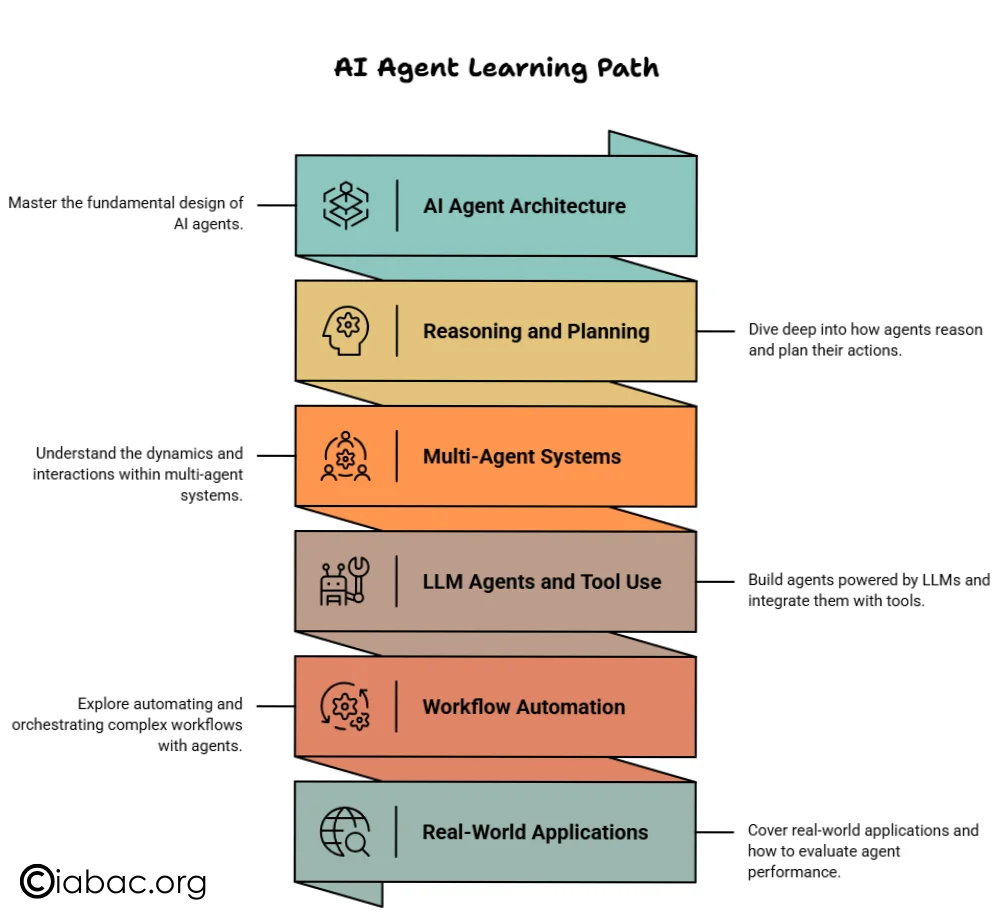
AI Agents: Core Concepts Overview
Conclusion:
You now hold a practical overview of what strong Agentic AI certification courses deliver. You can evaluate programs based on depth in architecture, planning, multi-agent work, and real deployment.
The most common mistake going forward is treating agents as plug-and-play. They require ongoing monitoring, data quality checks, and iteration. I have seen projects succeed when teams treat them like software systems with clear ownership.