Sign up with Google
 Sign in with Zoho

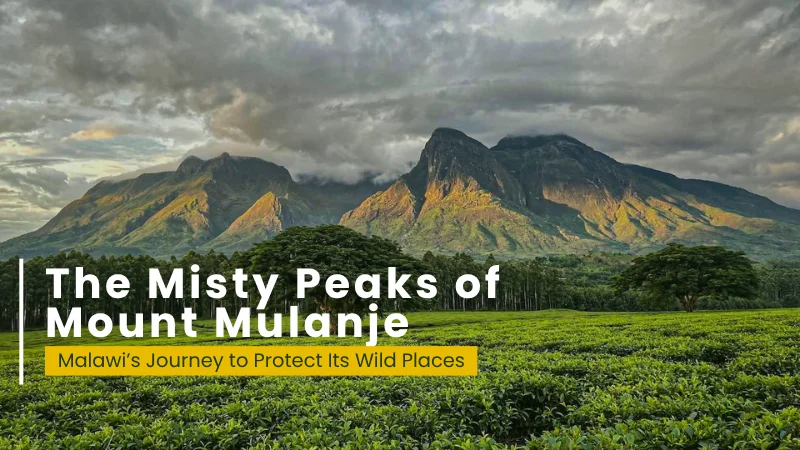
Mount Mulanje rises sharply above the tea-covered plains of southern Malawi. Its huge granite peaks often disappear into clouds, then reappear above green valleys and forested slopes. Locally known as the “Island in the Sky,” the mountain is known for its high peaks, rare wildlife and cultural importance.
At 3,002 metres, Sapitwa Peak is the highest point in Malawi. Visitors come to Mount Mulanje for hiking, mountain views and the chance to explore its forests and high plateaus.
What Makes Mount Mulanje Unique?
Mount Mulanje stands out because its huge rocky peaks rise sharply above the flat plains and green tea plantations of southern Malawi. Unlike mountains with gentle slopes, its steep rock walls rise straight from the lowlands. The highest peaks are often surrounded by clouds, giving the mountain its misty appearance.
Sapitwa Peak reaches 3,002 metres, making it the highest point in Malawi. Climbing to the top is challenging because the route has steep slopes and rocky ground. Hikers need to prepare properly, wear sturdy footwear and bring warm clothing, food and enough water for the climb. Chambe Peak also attracts experienced climbers because its West Face has a long, difficult rock-climbing route.
Hiking Through Forests and High Plateaus
Mount Mulanje has routes for different levels of experience. Shorter walks explore the lower slopes, streams and waterfalls, while multi-day treks cross the high plateaus and lead to mountain huts.
The scenery changes as the trail climbs. Lower areas have woodland and flowing streams, while higher ground has open grassland, rocky slopes and cooler air. Mountain huts provide basic shelter along popular routes, so hikers should arrange accommodation and supplies before setting off.
Climbing Sapitwa Peak is difficult, so hiring a local guide helps hikers follow the right route and prepare for changes in weather and trail conditions.
Rare Plants and Wildlife
Mount Mulanje is home to several rare plants and animals. The Mulanje cedar is a native tree found on the mountain and is also Malawi’s national tree. It is endangered, so protecting it from illegal logging and forest fires is important.
The mountain is also home to the yellow-throated apalis, a bird found only in Malawi, and the small Mulanje pygmy chameleon. These species make the mountain an important place for protecting Malawi’s wildlife.
A Mountain with Cultural Importance
Mount Mulanje holds deep spiritual meaning for local communities. Its peaks and natural features appear in traditional beliefs and stories, and some areas are treated with particular respect. Visitors should listen to local guidance and follow customs when visiting culturally important places.
In July 2025, the Mount Mulanje Cultural Landscape was inscribed on the UNESCO World Heritage List. This recognition highlights the area's natural environment and its long-standing relationship with the communities who live around the mountain.
Tea Estates and Views Around the Mountain
Tea plantations spread across the lower slopes around Mount Mulanje, creating a green contrast with the bare rock above. The surrounding countryside gives visitors a chance to see the tea-growing areas of southern Malawi alongside the mountain scenery.
Mulanje town is a useful starting point for arranging guides, transport and supplies. Visitors interested in local agriculture can also explore the tea-growing area and learn more about one of southern Malawi’s important crops.
When to Visit Mount Mulanje
The drier months, generally from May to October, are popular for hiking. Even then, conditions at higher elevations can be cold, wet and misty. During the rainy season, slippery trails and rising streams make some routes more difficult.
Before leaving, check local weather and trail conditions. Pack warm clothing, sturdy footwear, enough food and water, and any equipment needed for an overnight trek. Confirm hut arrangements in advance, as facilities are basic.
Travellers should also check entry requirements before visiting Malawi. Information about the Malawi eVisa is a starting point for reviewing visa arrangements.
Discover Mount Mulanje
From the tea plantations at its base to the rocky climb towards Sapitwa Peak, Mount Mulanje shows a different side of southern Malawi. Visitors who do not plan a summit climb can still explore lower trails, see mountain streams and learn about the rare plants and wildlife found here.