Sign up with Google
 Sign in with Zoho

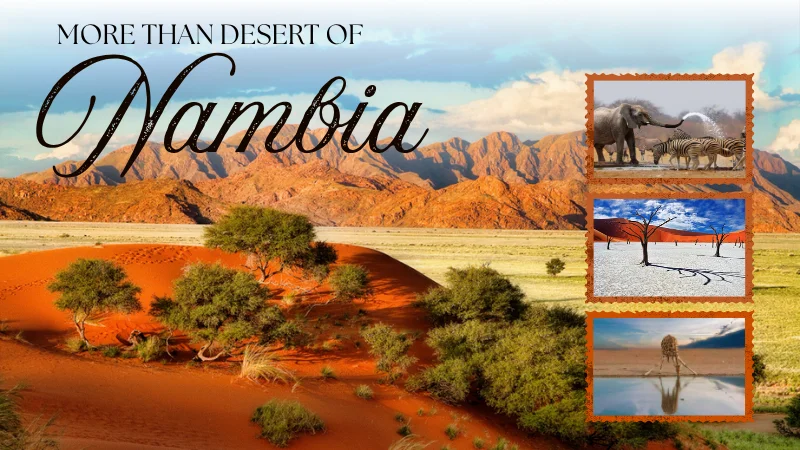
Imagine driving for hours and seeing more open land than buildings. Then, after travelling through dry country, you reach a place filled with rivers and green vegetation. Namibia has these kinds of contrasts, and they are part of what makes the country interesting.
The desert is certainly a big part of its identity. The Namib is estimated to be between 55 and 80 million years old, making it one of the oldest deserts on Earth. Places such as Deadvlei look almost unreal, with dark dead trees standing on white ground beneath towering orange dunes. The trees died after water became scarce, and the dry conditions slowed their decay. They remain there as striking reminders of how harsh the environment is.
A Country with Plenty of Space
Namibia has a very small population for its size. With vast stretches of land between settlements, driving from one destination to another often takes longer than visitors expect. A journey might pass rocky hills, gravel roads and empty plains before reaching the next town.
This is one reason preparation matters on a Namibian road trip. Fuel stations and shops are not always close together in remote areas, and mobile phone coverage is limited in some places. Carrying drinking water, checking fuel levels and knowing the route ahead of time help make long drives easier.
The quiet also gives visitors a different view of the country. Away from towns, the night sky often appears full of stars, with little artificial light to hide them. In a place with so few buildings and roads, even a simple stop to look at the sky becomes memorable.
Wildlife Has Learned to Live with the Dry Conditions
Namibia’s wildlife has adapted to places where finding water is a daily challenge. In the northwest, desert-adapted elephants travel through dry riverbeds in search of food and water. Black rhinos also live in Namibia, including in some remote areas beyond the boundaries of national parks.
Etosha National Park presents a different scene. During the dry season, animals gather around waterholes, giving visitors opportunities to watch elephants, zebras, giraffes and other wildlife. The landscape around these waterholes is often dry and open, so animals are easier to spot than they might be in thick vegetation.
Namibia’s wildlife story is also linked to conservation. The country became the first in Africa to include environmental protection in its constitution. Community conservancies give local people a role in managing wildlife and natural resources on communal land. Protecting animals is not limited to national parks; local communities also have a part in that work.
The Desert Is Only One Part of Namibia
Many people picture Namibia as endless sand, but the northeastern Zambezi Region looks very different. Rivers, wetlands and green woodland replace the dry scenery found in much of the west. The region supports a range of birdlife and animals that depend on water.
The Skeleton Coast brings another change. Cold ocean currents create coastal fog, and shipwrecks along this remote stretch of Atlantic shoreline add to its unusual appearance. It feels far removed from the tall dunes around Sossusvlei, even though both places belong to the same country.
These contrasts are useful to remember when planning a trip. Choosing destinations in different regions gives visitors a clearer picture of Namibia than spending the whole visit in one type of landscape.
A Little Preparation Goes a Long Way
Long distances, remote roads and changing conditions make planning important. Visitors should check seasonal weather, road conditions and travel times before setting off. It is also sensible to confirm entry requirements for their nationality before booking a trip. The Namibia eVisa website provides a starting point for visa-related information.
Namibia stands out for the way its extremes exist side by side: an ancient desert, wildlife surviving in dry country, quiet roads and greener river regions. The sand dunes are spectacular, but they are only one part of the story.