Sign up with Google
 Sign in with Zoho
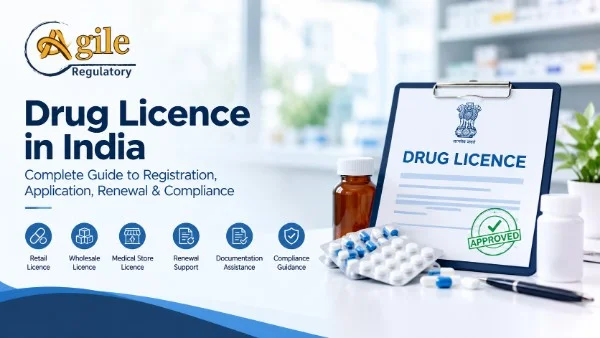
Starting a pharmacy, medical store, pharmaceutical distribution business, or drug-related operation in India involves more than arranging a shop and purchasing inventory. Businesses dealing with medicines need to understand the applicable requirements under the Drugs and Cosmetics Act, 1940 and the Drugs Rules, 1945. The licensing process is handled through the relevant drug licensing authorities, and the exact requirements can vary according to the type of activity and the applicable state rules.
It can look complicated at first to the new business owner. Questions like How do I apply for a drug license? Some common questions are: What documents are needed? Do I need a wholesale or retail license? How does renewal work?
This guide explains the process in layman's terms and points out things businesses should consider before submitting an application.
What Is a Drug License?
A drug license is a regulatory permit needed for some activities related to drugs, like selling, stocking, displaying for sale, distributing or making medicines. The license you need depends on what your business actually does.
For example, a pharmacy selling medicines directly to consumers will have different needs to a distributor supplying medicines to pharmacies, hospitals or other authorized buyers. A manufacturing business has another set of requirements.
The Central Drugs Standard Control Organization (CDSCO) publishes the Drugs Rules and related regulatory material, while licensing functions can involve the appropriate state licensing authority depending on the activity.
This is why businesses should identify their exact activity before beginning the application instead of assuming that one license covers every type of pharmaceutical operation.
Which Businesses May Need a Drug License?
The licensing requirement can apply to businesses involved in activities such as:
- Retail sale of medicines through a pharmacy or medical store
- Wholesale distribution of medicines
- Stocking medicines for sale or distribution
- Pharmaceutical manufacturing
- Certain specialized categories of drugs and products
- Distribution activities conducted through approved channels
The type of premises, nature of products, responsible technical personnel, storage arrangements, and proposed business activity can all influence the applicable requirements.
A common mistake among new entrepreneurs is selecting a license based only on the name of their business. The better approach is to first define the actual activities that will be performed at the premises.
Drug Retail Licence for a Medical Store
A pharmacy or medical store that sells medicines directly to consumers generally needs the appropriate retail drug license.
Before submitting an application, the business should assess whether the proposed premises and responsible personnel satisfy the requirements applicable to the intended category of medicines. Storage conditions are also important because medicines may require controlled or suitable environmental conditions.
The business should keep its establishment documents, premises-related records, technical-person details, and other supporting documents ready before beginning the application.
The exact requirements can differ depending on the category of products and the licensing authority involved. Therefore, applicants should verify the current requirements applicable to their location rather than relying on an old checklist found online.
Drug Wholesale License for Distributors
A wholesale operation works differently from a retail pharmacy because its customers are generally other authorized businesses or institutions rather than individual consumers.
A drug wholesale license is relevant to businesses involved in wholesale sale or distribution of medicines. Wholesale businesses need to pay particular attention to their premises, storage arrangements, responsible personnel, purchase records, and sales documentation.
The Drugs Rules include conditions relating to wholesale sale and distribution. For example, the rules provide requirements concerning purchases from duly licensed manufacturers and restrictions on resale to persons who do not hold the requisite authorization.
This means obtaining the license is only one part of compliance. The business must also maintain appropriate records and follow the conditions attached to its authorization.
Documents Commonly Considered for a Drug License Application
The documentation depends on the type of license and the jurisdiction. However, applicants may commonly need information and documents relating to:
1. Business Details
The applicant may need to provide details of the proprietorship, partnership, company, LLP, or other business structure.
2. Premises Documents
Proof relating to the proposed business premises may be required. Depending on the circumstances, this can include ownership documents, rent or lease documents, and other premises-related evidence.
3. Site and Premises Information
The licensing authority may require information about the layout and suitability of the premises, particularly where storage and handling of medicines are concerned.
4. Technical or Competent Person Details
Depending on the type of license, details and supporting documents relating to the pharmacist or other qualified/competent person may be required.
5. Identity and Address Documents
Applicant and responsible-person identification or address documents may form part of the application documentation.
6. Product and Activity Details
The applicant should clearly identify the categories of drugs and activities proposed under the license. Incorrectly describing the business activity can create avoidable complications during processing.
Because requirements can change, it is sensible to check the latest instructions of the relevant licensing authority before filing.
How to Apply for a Drug License Online
Many applicants search for drug license apply online because they want to complete the process without repeatedly visiting government offices. Depending on the state and licensing system, applications and supporting documents may be submitted through the designated online portal.
A practical application process generally involves the following stages.
Step 1: Identify the Correct License
First determine whether the business requires a retail, wholesale, manufacturing, or another applicable authorization.
Step 2: Check the Premises
Review whether the proposed premises meet the applicable requirements for the intended activity, including storage and operational arrangements.
Step 3: Arrange the Responsible Person
Where the applicable rules require a pharmacist or qualified/competent person, ensure the person's qualifications and supporting records are available.
Step 4: Prepare the Documents
Collect business, premises, identity, qualification, and other supporting documents before starting the online application.
Step 5: Submit the Application
Enter the information carefully and upload the required documents through the applicable licensing system.
Step 6: Address Queries or Inspection Requirements
Depending on the application and local procedure, the licensing authority may scrutinize the application, request clarification, or conduct an inspection.
Step 7: Receive the License
1. The license shall be issued after the applicable process on the basis of the application fulfilling the applicable requirements and the approval of the authority.
Applicants should not submit incomplete or inconsistent information simply to ensure that the application is filed quickly. Correct information at the initial stage can reduce unnecessary follow-up.
Why Businesses Use a Drug License Consultant
The application can be simple, but it is often difficult for businesses to understand which license is suitable for their specific activities.
A drug license consultant can help you determine what category you should be in, audit your documents, prepare application information, and answer procedural questions. This is especially useful for first time applicants who are unaware of the criteria for a pharmaceutical license.
Applicants should remember, however, that a consultant is not a substitute for the licensing authority. Approval is ultimately subject to the applicable law, documents, inspection requirements, and decision of the competent authority.
Professional assistance is therefore most useful for reducing procedural confusion rather than presenting licensing as an automatic approval process.
What About Drug License Renewal?
Obtaining a license is not necessarily the end of compliance. Businesses should be aware of the validity and renewal or retention requirements applicable to the authorization.
A business looking for drug licence renewal online should first confirm the current procedure applicable to its license and state. It should also review whether any business information has changed since the original application.
Changes related to the premises, the responsible person, business constitution or scope of activities may require or be the subject of separate regulatory changes or action.
Keeping copies of previous licenses, application records, supporting documents, and correspondence can make future compliance work easier.
Common Mistakes Applicants Should Avoid
Several avoidable issues can delay a licensing application.
Choosing the Wrong License
A retailer, wholesaler, distributor, and manufacturer may have different regulatory requirements. Choosing a license simply because it appears similar to another business can cause problems later.
Incomplete Documentation
Missing premises documents, qualification records, declarations or other supporting information may result in queries or delays.
Inconsistent Information
Where applicable, the business name, the details of the premises, the information about the responsible person and other particulars should be consistent across the documents submitted.
Ignoring Storage Requirements
Medicines cannot always be treated like ordinary retail products. Businesses should consider the storage requirements applicable to the products they intend to handle.
Waiting Until the Last Moment for Renewal
Businesses should track their licensing obligations in advance rather than waiting until the last possible moment.
When Should You Take Professional Assistance?
Professional assistance can be useful when:
- You are starting a new pharmacy or medical store.
- You are setting up a pharmaceutical wholesale business.
- You are unsure which license category applies.
- Your premises or responsible person has changed.
- Your application has received a query from the authority.
- You need assistance with documentation or online filing.
- You are planning a renewal or modification of an existing license.
The most important step is to understand the regulatory requirement before submitting an application.
How Agile Regulatory Helps With Drug Licensing
Agile Regulatory provides regulatory and compliance support to companies that require help with drug licensing requirements in India. The service includes assistance with wholesale, retail and manufacturing drug license needs based on the applicant’s business.
The team can help businesses understand the applicable process, organize documentation, prepare application information, and navigate procedural requirements.
Businesses can review the detailed service information here:
Drug License Registration Process & Requirements in India – Agile Regulatory
The objective is to make the regulatory process easier to understand while keeping the application aligned with the applicable requirements.
Frequently Asked Questions
Can I apply for a drug license online?
Online application facilities depend on the applicable licensing system and jurisdiction. Applicants should use the designated system and follow the latest instructions issued by the relevant authority.
Is a wholesale and retail drug license the same?
No. Wholesale and retail activities have different regulatory requirements and should be assessed according to the nature of the business and the applicable rules.
Does every medical store need a drug license?
Businesses involved in regulated sale or stocking of medicines should determine the applicable licensing requirement before starting operations. The exact authorization depends on the activity and products involved.
Can a consultant guarantee drug license approval?
No responsible consultant should guarantee approval. The competent licensing authority determines whether the application meets the applicable requirements.
What happens if documents contain incorrect information?
Incorrect or inconsistent information can result in queries, delays, or other regulatory complications. Applicants should review the application carefully before submission.
Final Thoughts
The first step for companies involved in the sale, distribution, stocking or manufacturing of medicines to meet the regulations is obtaining a drug license. The proper method is to determine the business activity, understand the relevant licensing category, gather the necessary documents, and submit correct information through the correct process.
If you are starting a medical store, a wholesale distribution business or a pharmaceutical manufacturing operation, it is important to understand the regulatory requirements before filing to save time and avoid mistakes that could have been prevented.
For companies that need professional support, Agile Regulatory can assist with the documentation and application process depending on the type of proposed activity.
About Agile Regulatory: Agile Regulatory is a business compliance and certification service provider offering regulatory assistance across India, including drug licensing, CDSCO-related services, BIS, EPR, WPC, FSSAI, Legal Metrology, ISO, and other business compliance requirements.