Sign up with Google
 Sign in with Zoho

Cash on delivery has helped delivery businesses grow for years, but it also creates one of the most difficult operational problems in last-mile logistics: managing physical cash.
A delivery agent collects money at the customer's doorstep, carries it throughout the route, and eventually hands it back to the company. By the end of the day, the operations team has to match collected cash against delivered orders, identify shortages, investigate discrepancies, and prepare settlement records.
The more delivery agents a company has, the harder that process becomes.
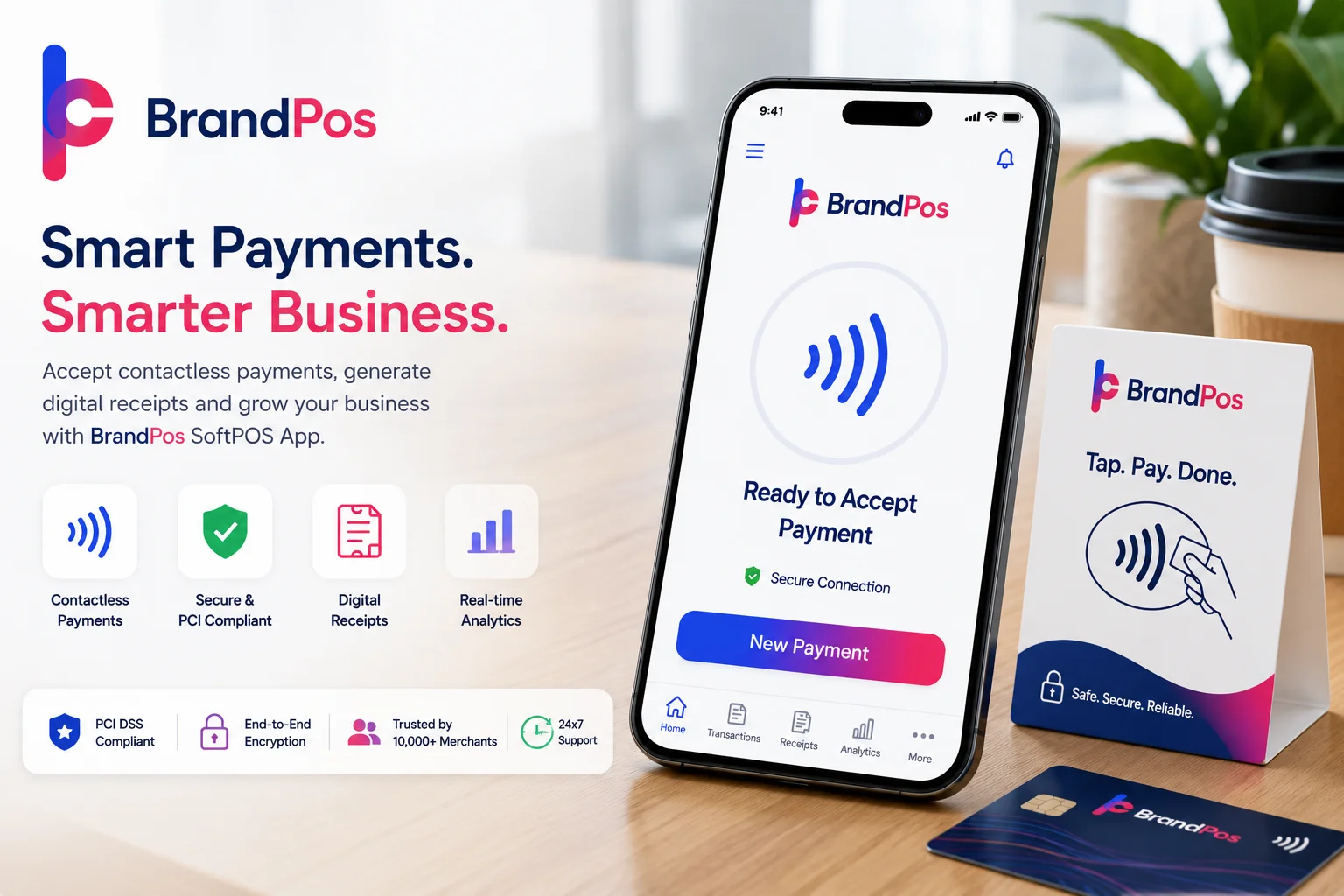
A SoftPOS App offers another approach. Instead of collecting cash for every eligible order, a delivery agent can use a compatible smartphone to accept supported contactless payments directly at the customer's doorstep.
The payment is processed digitally, the customer can receive a digital receipt, and the business gets transaction visibility without waiting for an agent to return with a cash collection.
Why Cash-on-Delivery Creates Daily Problems
COD looks simple from the customer's perspective.
The customer receives the package, pays the delivery agent, and the order is completed.
Behind the scenes, however, the delivery company has created another financial workflow.
The agent becomes responsible for collecting, carrying, protecting, and eventually handing over the money.
This creates several operational challenges.
An agent may have dozens of COD deliveries during a shift. Each collection has to match the corresponding order value. If the agent collects the wrong amount, gives incorrect change, loses cash, or records a transaction incorrectly, the operations team has to investigate.
Cash also creates a physical security concern.
The more money agents carry, the greater the consequences of theft, loss, or accidental misplacement.
Digital collection does not eliminate every payment risk, but it can remove the physical cash-handling layer from eligible transactions.
Real Cash COD Problems Every Delivery Business Faces Daily
- Cash shortages: Collected amounts may not match expected order values.
- Manual reconciliation: Operations teams must compare delivery records against physical cash.
- Agent accountability: Managers need to determine which delivery or agent caused a discrepancy.
- Cash security: Agents carrying significant amounts of money face additional risk.
- Change problems: Agents may not always have the correct change for customers.
- Delayed visibility: Managers may not know the exact payment status until cash is reported.
- Administrative workload: Finance teams spend time counting, recording, and matching cash.
- Settlement delays: Physical cash must reach the appropriate collection or banking process before final reconciliation.
- Customer disputes: Without a clear digital receipt, payment confirmation may be harder to establish.
- Scaling difficulties: More delivery agents mean more people handling cash and more reconciliation work.
For a small operation, these problems may be manageable.
For a courier company with hundreds of daily deliveries, they can become a significant operational burden.
How BrandPos SoftPOS App Transforms Last-Mile Payment Collection
- Turn the agent's compatible smartphone into a payment point: A delivery agent can use a supported Android phone instead of carrying a separate payment terminal.
- Accept payment at the doorstep: Customers can complete supported contactless transactions while receiving their delivery.
- Reduce physical cash handling: Eligible digital payments do not require the agent to collect and carry banknotes.
- Send digital receipts: Customers can receive payment confirmation through supported digital channels.
- Give managers faster visibility: Transaction information can become available through the BrandPos dashboard.
- Simplify reconciliation: Digital transaction records can reduce the manual matching required for cash collections.
- Scale across the fleet: Additional compatible smartphones can be deployed as the delivery team expands.
This changes the role of the delivery agent.
Instead of being both a delivery person and cash collector, the agent can become a mobile payment acceptance point.
SoftPOS App for Android at the Customer's Doorstep
A delivery agent's smartphone is already an important business tool.
Agents use phones for navigation, delivery instructions, customer calls, proof of delivery, and route management.
Adding payment acceptance to a compatible NFC-enabled Android phone can consolidate another business function into the same device.
The customer receives the package.
The agent enters or confirms the amount.
The customer taps a supported contactless card or compatible wallet.
The payment is processed.
The transaction result is displayed.
A digital receipt can then be sent through supported channels.
The entire interaction can take place at the customer's doorstep without the customer handing over cash.
BrandPos's published product information describes smartphone-based contactless payment acceptance, digital receipts, transaction visibility, encryption, and tokenization as part of its SoftPOS offering.
The Payment Journey From Doorstep to Dashboard
The process can be understood in a few simple stages.
1. Agent Receives the Delivery
The delivery application shows the order amount and customer information.
2. Payment Amount Is Confirmed
The agent confirms the amount that needs to be collected.
3. Customer Taps
The customer uses a supported contactless card or mobile wallet against the agent's compatible NFC-enabled smartphone.
4. Payment Is Processed
The transaction moves through the payment-processing infrastructure for authorization.
5. Agent Receives Confirmation
The agent sees whether the transaction was approved or declined.
6. Customer Receives a Digital Receipt
Depending on the configured options, the receipt can be delivered through supported channels such as SMS or WhatsApp.
7. Operations Team Gets Transaction Visibility
Payment information can appear within the merchant's transaction environment, allowing managers to monitor collection activity.
This eliminates several steps associated with physically collecting and returning cash.
Why Digital Receipts Matter in Delivery
Receipts are especially important when the payment happens outside a conventional store.
A customer may want confirmation that the amount has been paid immediately after receiving the parcel.
A digital receipt provides a record without requiring the agent to carry a printer or paper rolls.
It also gives the customer something they can retain for future reference.
For delivery companies, digital receipts can help create a clearer transaction trail.
The customer has payment confirmation.
The agent has transaction confirmation.
The business has a corresponding digital record.
That three-way visibility can make payment disputes easier to investigate.
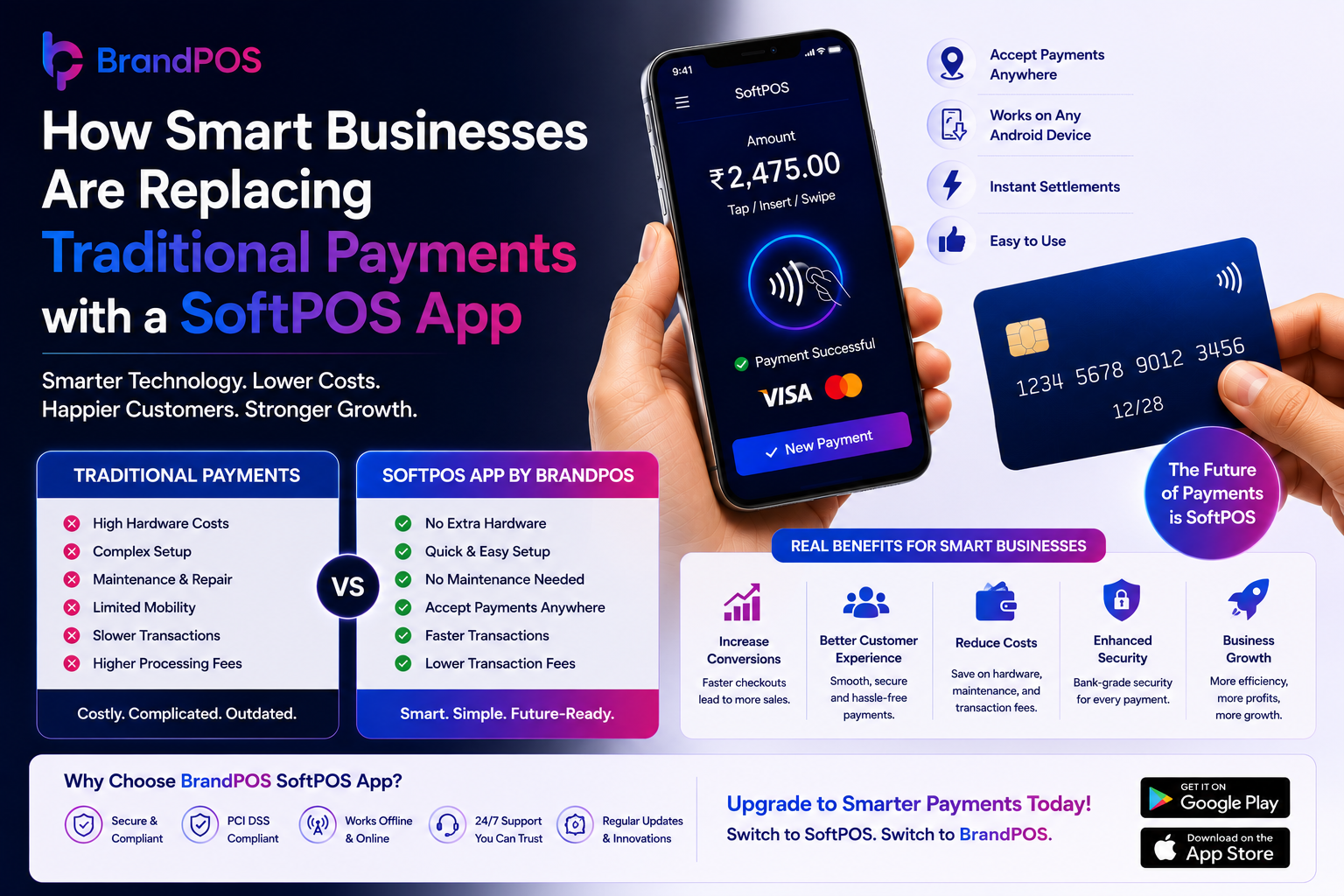
Cash COD vs Digital COD via BrandPos SoftPOS App
Digital payments do not make reconciliation completely automatic in every delivery software environment.
The delivery company may still need to connect payment records with its order-management or logistics system.
However, starting with a digital transaction record is significantly different from starting with a pile of physical cash.
Real-Time Payment Confirmation for Operations Managers
One of the biggest operational advantages of digital collection is visibility.
Imagine an operations manager monitoring 20 delivery agents.
With cash COD, the manager may know how many deliveries were completed but still need to wait for the agents to return and report their collected cash.
With digital payment acceptance, approved transactions can be visible through the merchant dashboard.
That can help managers identify:
- Completed payment collections
- Transaction amounts
- Payment activity by agent or device
- Successful and unsuccessful transactions
- Daily payment volume
- Outstanding collection issues
The result is a shorter gap between the customer's payment and the operations team's awareness of that payment.
Automated Daily Reconciliation
Reconciliation is one of the least visible but most time-consuming parts of COD operations.
A finance or operations employee may have to compare:
Delivery order → expected COD amount → agent collection → cash handed over → bank deposit
Every mismatch needs investigation.
With digital payment collection, the workflow can instead become:
Delivery order → digital payment → transaction record → payment reconciliation
If the payment data is integrated with the company's delivery or accounting systems, reconciliation can become even more streamlined.
BrandPos provides transaction visibility through its dashboard, while businesses can use integrations where their operational systems support them.
The exact level of automation depends on how the delivery company's order-management and accounting platforms are configured.
A Courier Company With 20 Delivery Agents
Consider a courier company operating with 20 delivery agents.
The company handles a large number of COD orders every day.
Previously, agents collected cash throughout their routes. At the end of the day, the operations team counted the money and compared it with delivery records.
The process took approximately three hours.
Occasionally, there were cash shortfalls.
The company introduced BrandPos on compatible Android smartphones used by delivery agents.
For eligible orders, customers could pay at the doorstep by tapping a supported card or wallet.
The company then had digital transaction records alongside its delivery records.
Instead of waiting for all 20 agents to return with cash, the operations manager could monitor payment activity through the BrandPos environment.
After implementation, the company reduced its daily reconciliation process from approximately three hours to around ten minutes.
The company also reported eliminating the daily cash shortfalls it had previously experienced.
This example should be viewed as an illustrative operational scenario, not a guaranteed result for every courier company. Actual reconciliation time depends on order volume, delivery software, payment integration, internal processes, and staff workflow.
The important change is the removal of physical cash from a large portion of the collection process.
Scaling a Delivery Fleet Without Ordering More Hardware
Delivery businesses can grow quickly.
A company may begin with ten agents and expand to 50 or 100.
With dedicated payment terminals, growth can require another round of hardware procurement.
The company must order devices, configure them, distribute them, maintain them, and replace them when necessary.
A smartphone-based approach can make deployment more flexible.
If new agents already have compatible Android smartphones, the business can potentially add payment-enabled devices without purchasing a separate card reader for every employee.
This is particularly useful for:
- Courier companies
- Food delivery operators
- E-commerce logistics teams
- Pharmacy delivery services
- Grocery delivery businesses
- Field-service companies
- B2B distribution teams
- Local parcel networks
The smartphone becomes a multipurpose field device rather than just a communication tool.
What Delivery Companies Should Check Before Deployment
Before rolling out digital doorstep collection, management should evaluate:
- Whether agent smartphones support NFC
- Android version and device compatibility
- Internet connectivity across delivery areas
- Merchant account and KYC requirements
- Payment limits and applicable transaction rules
- Receipt delivery options
- Delivery-management integration requirements
- Agent permissions
- Dashboard access for operations managers
- Reconciliation workflow
- Backup procedures for connectivity or payment failures
A good deployment should also train agents to verify the payment result before handing over goods when payment is required before delivery completion.
Security and Device Management Still Matter
Delivery agents use smartphones in uncontrolled environments.
Devices may be exposed to public networks, accidental damage, or unauthorized software changes.
That makes device security important.
BrandPos uses encryption and tokenization as part of its payment-security architecture and restricts unsupported rooted or modified devices.
Delivery companies should also ensure that payment-enabled phones are protected with appropriate screen locks, current software, secure credentials, and controlled employee access.
A delivery phone should be treated as payment infrastructure once it is being used to collect customer money.
Final Thoughts
Cash on delivery creates more than a payment method.
It creates a physical cash-management operation that delivery businesses must secure, monitor, count, reconcile, and settle every day.
Digital doorstep payment changes that workflow.
A compatible smartphone can become a payment point, allowing customers to tap at the door while managers receive digital transaction visibility.
For a growing logistics company, that can mean less physical cash, clearer payment records, faster reconciliation, and a simpler way to expand payment collection across the delivery fleet.
The biggest benefit is not simply replacing cash with a card tap.
It is replacing a manual collection chain with a digital transaction trail.
For delivery businesses looking to modernize last-mile collections, that shift can make payment operations easier to monitor and scale.
Frequently Asked Questions
1. Can delivery agents accept card payments directly at the customer's doorstep?
Yes. With a compatible NFC-enabled Android smartphone and the required BrandPos setup, agents can accept supported contactless card and mobile-wallet payments at the customer's location.
2. Does every delivery agent need a separate card machine?
No separate card reader is required when the agent uses a compatible smartphone for SoftPOS payment acceptance. The exact number of supported devices depends on the merchant's account and deployment configuration.
3. Can customers receive a digital receipt after doorstep payment?
Yes. BrandPos supports digital receipt delivery through supported channels, including SMS and WhatsApp, depending on the configured payment workflow.
4. Can managers see delivery payment activity in real time?
BrandPos provides transaction visibility through its merchant dashboard. The exact agent-level reporting and integration capabilities depend on the business's account configuration and connected systems.
5. Will SoftPOS completely eliminate COD reconciliation work?
It can significantly reduce the manual work associated with physical cash, but it does not automatically eliminate every reconciliation task. Delivery orders, payment records, refunds, failed transactions, and accounting records may still need to be matched depending on the company's systems.