Sign up with Google
 Sign in with Zoho
Every morning, school transportation teams are responsible for moving students safely between their homes and schools. Behind what appears to be a routine pickup and drop-off operation is a complex system involving drivers, vehicles, routes, schedules, traffic conditions, and student safety.
A delayed bus can disrupt classroom schedules. An unexpected route change can leave parents concerned. A vehicle breakdown can affect dozens of students at once.
For schools and transportation operators managing multiple buses across different routes, maintaining visibility and coordination is essential.
This is why School Transportation Management is becoming increasingly dependent on technology.
From real-time GPS tracking and route optimization to driver safety monitoring and preventive maintenance, modern fleet technology helps transportation teams make more informed decisions while keeping student safety at the center of operations.
Why School Transportation Management Is More Complex Than It Looks
Unlike commercial transportation, school bus operations must balance efficiency with the safety and well-being of children.
Every route involves several variables:
- Students living across different neighborhoods
- Fixed school start and dismissal times
- Multiple pickup and drop-off locations
- Changing traffic and road conditions
- Students requiring additional transportation support
- Driver availability and vehicle capacity
- Unexpected delays and vehicle breakdowns
- Communication with schools and parents
Even small disruptions can affect an entire route.
For example, a bus arriving 15 minutes late may leave students waiting at pickup points, delay school arrival, and generate multiple calls from concerned parents.
When transportation teams lack real-time information, resolving these situations becomes unnecessarily difficult.
The challenge isn't simply knowing where the bus should be. It's knowing what's actually happening on the road.
1. Real-Time School Bus Tracking: Better Visibility, Fewer Unknowns
One of the biggest challenges in student transportation is limited visibility into daily bus movement.
Traditional transportation management often relies on scheduled arrival times and manual communication with drivers.
But schedules don't always reflect reality.
Traffic congestion, road closures, unexpected stops, and weather conditions can affect arrival times.
Without real-time tracking, transportation administrators may struggle to provide accurate updates.
How GPS Tracking Helps
School bus GPS tracking allows authorized transportation teams to monitor vehicle locations and movement.
It can provide information about:
- Live bus locations
- Current route progress
- Vehicle stoppages
- Route deviations
- Arrival and departure activity
- Historical vehicle movement
This information helps administrators respond more quickly when buses are delayed or operating outside planned routes.
Where supported by the transportation system, location information can also contribute to more accurate arrival updates for parents and school staff.
Because knowing a bus is late is useful. Knowing where it is and why it's delayed is better.
2. School Bus Route Optimization: Smarter Routes, More Predictable Commutes
School transportation routes are rarely simple.
Students may live across several neighborhoods, roads may have different access restrictions, and buses must arrive within specific time windows.
Poor route planning can lead to unnecessary mileage, longer student travel times, and inefficient vehicle utilization.
For transportation teams managing dozens or hundreds of buses, these inefficiencies can become expensive.
How Route Optimization Helps
School bus route optimization uses operational information to support more efficient route planning.
Depending on the system, planners can consider:
- Student pickup and drop-off locations
- Vehicle seating capacity
- School start and dismissal times
- Travel distances
- Road restrictions
- Traffic conditions
- Special transportation requirements
The objective is to develop practical routes that balance travel time, safety, and vehicle capacity.
A shorter route isn't necessarily a better route if it introduces unsafe pickup locations or unrealistic schedules.
Effective route planning prioritizes safe and reliable transportation, not simply fewer miles.
3. Driver Behavior Monitoring: Student Safety Starts Behind the Wheel
School bus drivers carry significant responsibility.
Their decisions directly affect the safety of students, pedestrians, and other road users.
Behaviors such as speeding, harsh braking, distracted driving, and aggressive acceleration can create unnecessary risks.
Traditional driver monitoring may depend on complaints, occasional observations, or incident reports.
But these methods don't always provide a complete picture of everyday driving behavior.
How Driver Monitoring Technology Helps
Modern fleet telematics can help transportation managers identify driving patterns that may require attention.
Common indicators include:
- Speeding events
- Harsh braking
- Rapid acceleration
- Aggressive cornering
- Distracted driving indicators
- Repeated risky driving patterns
This information can support targeted driver coaching and ongoing safety reviews.
The purpose should be to encourage safer driving habits rather than rely only on penalties after incidents occur.
For school transportation, even small improvements in driving behavior can contribute to a safer travel environment.
4. AI Dashcams and Video Telematics: Understanding What Happens on the Road
When a school bus incident occurs, transportation teams need reliable information.
Driver statements and witness accounts can provide useful context, but they may not always explain the complete sequence of events.
Video telematics can help by connecting relevant camera footage with vehicle movement information.
How Video Telematics Supports School Bus Safety
Depending on camera placement and system capabilities, video telematics may provide:
- Road-facing incident footage
- Vehicle speed and GPS context
- Harsh braking or collision-related events
- Incident timestamps
- Relevant driving behavior information
This can help transportation managers review incidents more accurately and identify opportunities for safety improvements.
Video systems should be deployed with appropriate privacy protections, access controls, retention policies, and safeguards for footage involving children.
The objective is not constant surveillance of students.
It's to give authorized safety teams reliable information when an incident needs to be understood.
5. Preventive Maintenance: A Breakdown Shouldn't Become a Student Transportation Emergency
A school bus breakdown can disrupt an entire transportation schedule.
Students may need to wait for a replacement vehicle, schools may need to adjust arrival arrangements, and parents may require updates.
Unexpected mechanical failures can also create safety concerns.
This makes preventive maintenance an essential part of school bus fleet management.
How Fleet Maintenance Technology Helps
Fleet management systems can help transportation teams monitor vehicle service requirements and maintenance activity.
Useful capabilities include:
- Scheduled maintenance reminders
- Vehicle inspection records
- Mileage-based service monitoring
- Diagnostic alerts where supported
- Maintenance history
- Vehicle availability reporting
By maintaining accurate service information, transportation managers can identify overdue maintenance and plan servicing more effectively.
Preventive maintenance cannot eliminate every breakdown, but it helps reduce dependence on reactive repairs.
A well-maintained bus isn't just an operational asset. It's part of the school's safety responsibility.
6. Managing Multiple School Buses Through One Operational View
Larger school districts and transportation operators may manage buses across multiple schools, depots, and routes.
Without centralized visibility, transportation managers may need to switch between different systems or contact multiple people to understand daily operations.
This can make routine decisions more complicated.
Which buses are currently operating?
Which vehicles are available?
Are any routes experiencing unusual delays?
Which buses require maintenance?
A centralized fleet management platform can help bring this information together.
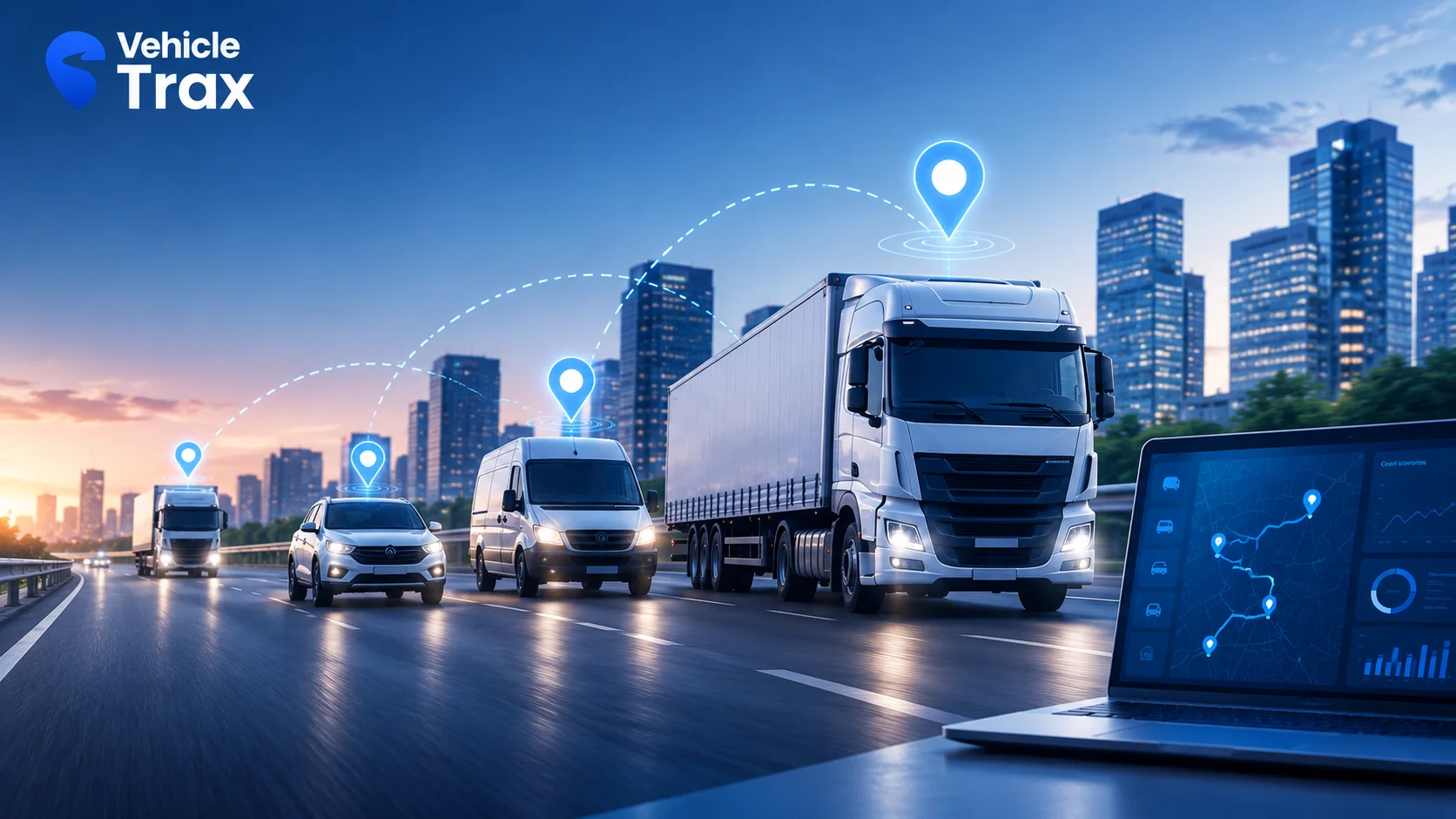
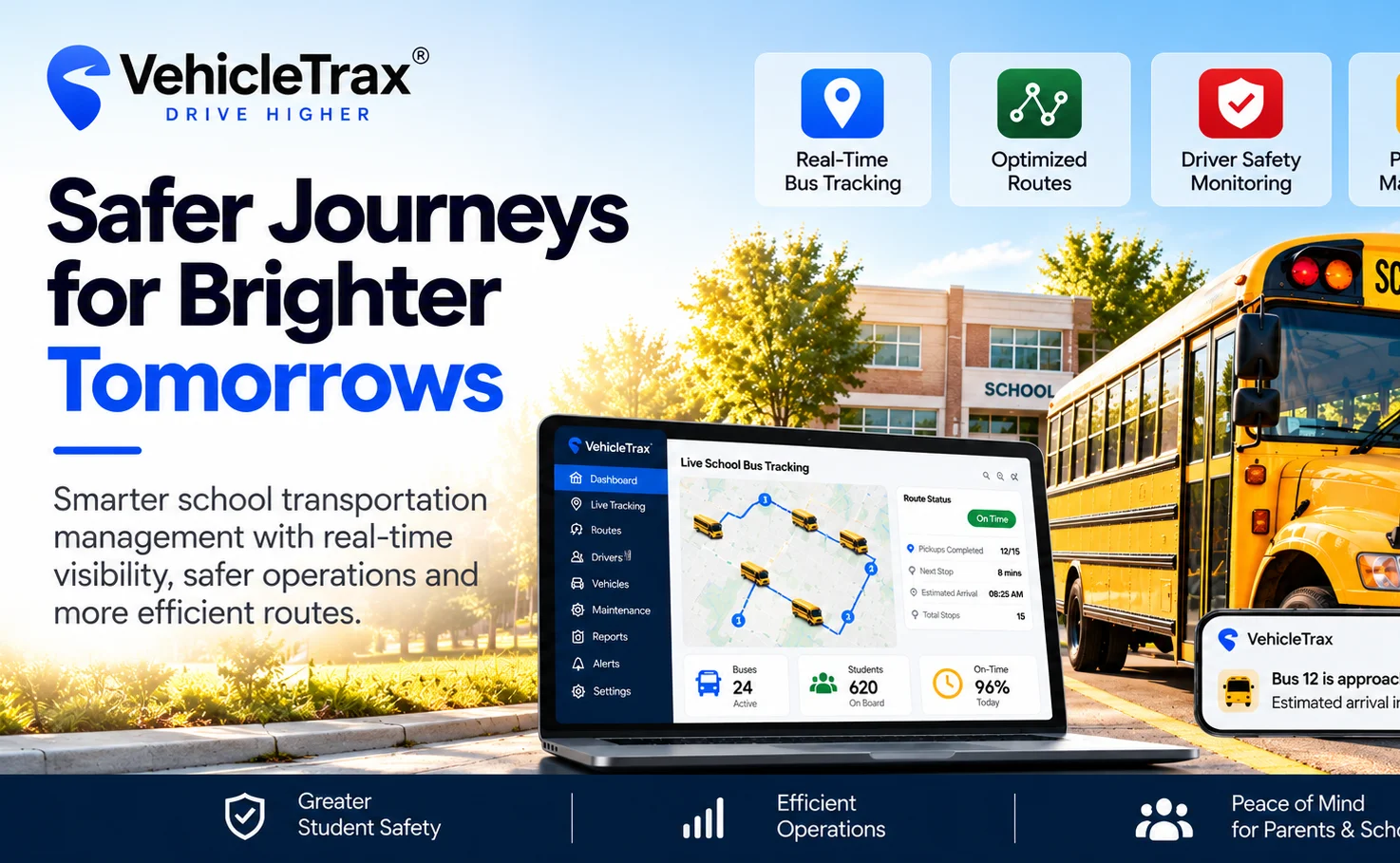
Solutions such as VehicleTrax combine GPS fleet tracking, video telematics, driver behavior insights, and maintenance visibility to support more connected school bus fleet operations.
Centralized information can help transportation teams make faster decisions and reduce dependence on disconnected manual processes.
7. Student Transportation Safety Goes Beyond GPS Tracking
GPS tracking is valuable, but vehicle location alone cannot confirm every aspect of student safety.
A bus may arrive at its destination without providing information about whether a particular student boarded or exited.
For schools requiring student-level accountability, additional systems and procedures may be necessary.
These may include:
- Authorized student boarding and drop-off records
- Attendance confirmation processes
- Parent or guardian notifications
- Student identification procedures
- Emergency communication workflows
- Special-needs transportation protocols
Such functions should be evaluated separately from standard fleet tracking capabilities.
Combining appropriate student transportation processes with vehicle-level visibility can help schools develop a more comprehensive approach to safety.
8. Transportation Communication: Keeping Parents and Schools Informed
Few things create more concern than uncertainty about a child's commute.
When buses are delayed, parents want timely and reliable information.
School administrators need to understand whether transportation disruptions will affect student arrivals or dismissal schedules.
Transportation teams need a practical way to communicate changes without creating unnecessary phone calls.
How Technology Supports Better Communication
Integrated transportation systems can support communication through:
- Bus arrival updates
- Delay notifications
- Route change information
- Emergency alerts
- Transportation status updates
The exact information available depends on the system and its integration with school communication tools.
Clear communication helps reduce uncertainty and allows parents and school staff to respond appropriately to transportation changes.
9. School Transportation Cost Management: Efficiency Without Compromising Safety
School transportation budgets must cover fuel, maintenance, vehicles, drivers, insurance, and other operating expenses.
When costs rise, transportation teams face pressure to improve efficiency.
However, student safety must remain the priority.
Reducing transportation expenses should not mean overcrowding buses, eliminating essential maintenance, or creating unrealistic routes.
Instead, schools can identify operational inefficiencies through better data.
Important areas include:
- Unnecessary mileage
- Excessive idling
- Underutilized vehicle capacity
- Repeated mechanical failures
- Inefficient route planning
- Avoidable vehicle downtime
Fleet analytics can help transportation teams understand these patterns and identify opportunities for responsible cost optimization.
10. School Transportation KPIs Every Fleet Manager Should Monitor
Measuring performance helps school transportation teams understand whether operations are becoming safer, more reliable, and more efficient.
No single KPI provides a complete picture.
For example, reducing average route duration may appear positive, but it should not come at the expense of safe pickup locations or appropriate student travel conditions.
Similarly, increasing vehicle utilization must remain consistent with seating capacity and applicable safety requirements.
The goal is to improve transportation performance without compromising student well-being.
What Schools Should Look for in Transportation Management Technology
Before adopting a school transportation management solution, administrators should evaluate how well the technology supports their operational and safety requirements.
Important considerations include real-time visibility, route planning, driver monitoring, maintenance tracking, incident reporting, and access to useful operational data.
Schools should also consider data privacy, system reliability, ease of use, and compatibility with existing transportation processes.
Where student-level tracking or parent communication is required, administrators should verify that these capabilities are available through the selected platform or supported integrations.
Technology should support established safety procedures, not replace them.
Conclusion: Safer School Transportation Starts With Better Visibility
Student transportation is one of the most important daily responsibilities managed by schools and transportation operators.
Every route involves decisions that affect student safety, punctuality, vehicle reliability, and operational efficiency.
As transportation networks become more complex, manual coordination and limited vehicle visibility can make these responsibilities harder to manage.
Modern School Transportation Management technology helps address these challenges through GPS tracking, route optimization, driver behavior monitoring, video telematics, preventive maintenance, and fleet analytics.
But technology alone isn't the solution.
The strongest transportation programs combine reliable systems with trained drivers, clear safety policies, consistent maintenance, and effective communication.
Because when it comes to transporting students, success isn't simply getting every bus to school on time.
It's making every journey as safe, reliable, and accountable as possible.