Sign up with Google
 Sign in with Zoho
Running a fleet is expensive.
But fuel prices, repairs, and insurance aren't always the biggest problem.
Often, it's the costs you can't immediately see.
An engine idling for 40 minutes. A driver taking an inefficient route. A maintenance warning that gets ignored until the vehicle breaks down. A truck covering unnecessary miles. A vehicle sitting unused while another is overloaded.
Multiply these small inefficiencies across 50, 100, or 500 vehicles, and they become a serious operating expense.
That's where fleet management software changes the equation.
Instead of finding out where the money went at the end of the month, fleet managers get the visibility to identify waste while it's happening—and do something about it.
Fuel Costs: Start With What You Can Control
You can't control the price at the pump.
You can control how your fleet uses fuel.
Excessive idling, speeding, aggressive acceleration, unnecessary mileage, and inefficient routing can quietly push fuel costs higher every day.
With GPS fleet management software, managers can see:
- How long vehicles are idling
- Which drivers are speeding or accelerating aggressively
- Where unnecessary miles are being driven
- Which vehicles are deviating from planned routes
- How individual vehicles and drivers are performing
The goal isn't simply to track fuel.
It's to understand why you're burning more of it than necessary.
Once you can see the cause, you can start fixing it.
Smarter Routes Mean Fewer Wasted Miles
The shortest route on paper isn't always the smartest route on the road.
Traffic changes. Jobs run late. New stops get added. Vehicles become unavailable. Customer schedules move.
Static route planning can't always keep up.
Modern fleet management technology combines real-time vehicle visibility with route optimization to help dispatchers make better decisions throughout the day.
That could mean assigning the nearest vehicle to a job, avoiding congestion, changing stop sequences, or identifying routes that consistently generate unnecessary mileage.
Fewer unnecessary miles mean:
- Less fuel consumed
- Less vehicle wear
- More jobs completed
- Better ETAs
- Lower cost per trip
Route optimization isn't just a navigation feature.
It's a cost-control tool.
Stop Waiting for Vehicles to Break Down
A warning light is cheaper than a tow truck.
But only if someone acts on it.
Reactive maintenance becomes expensive quickly. One unexpected breakdown can create repair costs, towing expenses, missed jobs, replacement vehicle costs, and customer delays—all from one vehicle being unavailable.
Fleet management software helps maintenance teams move from:
"What broke?"
to:
"What needs attention next?"
Service schedules, mileage, inspections, vehicle diagnostics, maintenance history, and alerts can be monitored from one place.
When maintenance becomes proactive, fleets can address smaller issues earlier, reduce unexpected downtime, and keep vehicles productive for longer.
Your Drivers Influence More Than Safety
How someone drives directly affects what a vehicle costs to operate.
Speeding burns more fuel.
Harsh acceleration increases consumption.
Aggressive braking adds wear.
Excessive idling wastes fuel while accomplishing nothing.
Telematics gives fleet managers objective data on these behaviors.
Instead of telling drivers to simply "drive better," managers can identify specific patterns and provide targeted coaching.
And that's an important distinction.
Driver monitoring shouldn't just be about catching bad behavior.
It should help create better behavior.
Safer, smoother driving can improve fuel efficiency, reduce mechanical stress, lower accident exposure, and ultimately reduce operating costs.
Downtime Is More Expensive Than It Looks
A vehicle in the shop isn't just a maintenance expense.
It's a vehicle that isn't completing jobs, making deliveries, visiting customers, or generating revenue.
That's why fleet availability matters.
With connected fleet data, managers can see vehicle health, maintenance status, mileage, utilization, and availability together.
That makes it easier to schedule maintenance around operations instead of letting breakdowns dictate the schedule.
It can also reveal another expensive problem:
Underutilized vehicles.
If some vehicles are constantly overloaded while others barely move, adding more vehicles isn't necessarily the answer.
Better utilization might be.
The Real Advantage: Knowing Where the Money Is Going
This is where modern fleet management becomes much more than GPS tracking.
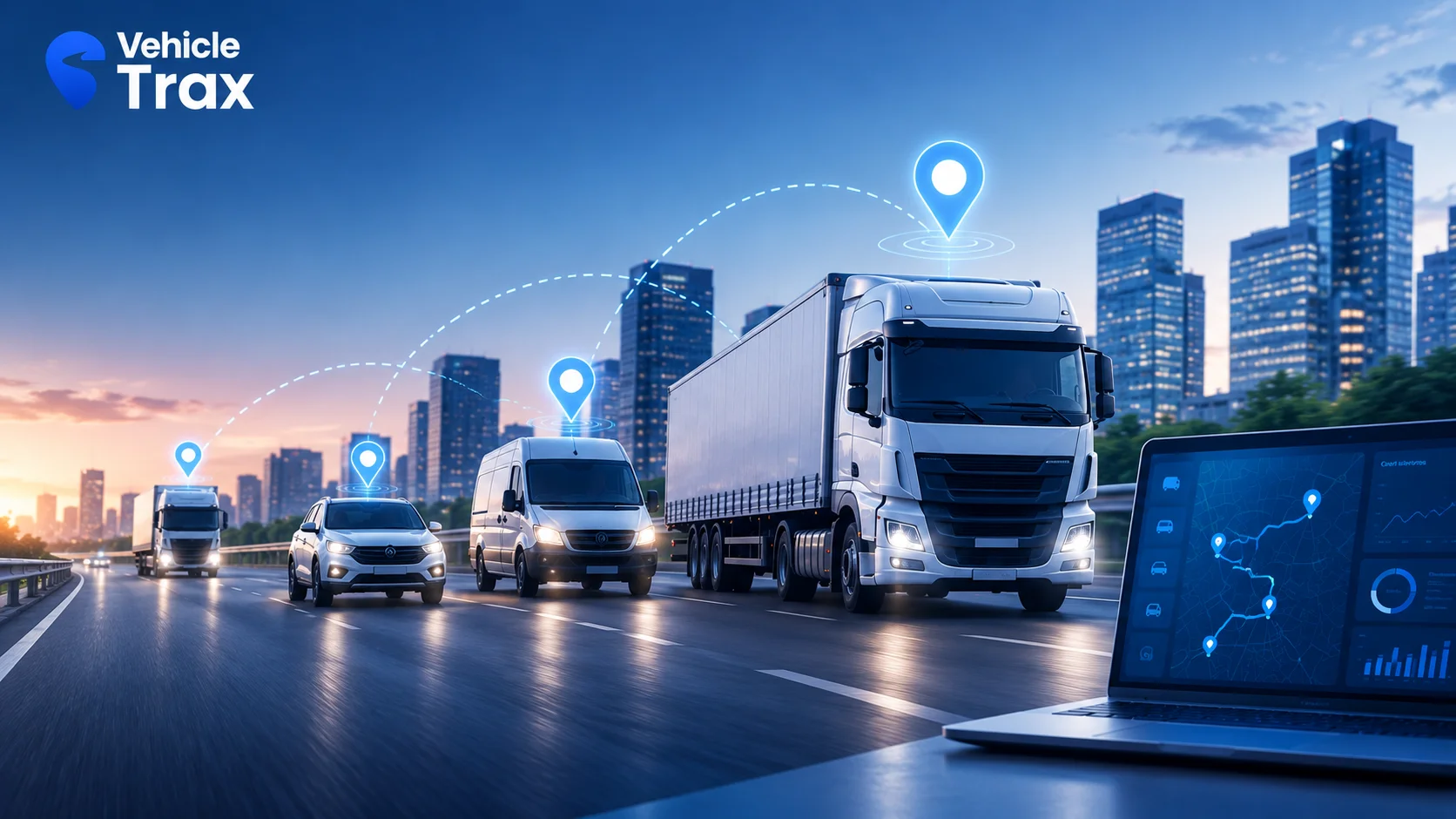
A dot on a map tells you where a vehicle is.
Useful? Absolutely.
But it doesn't tell you the whole story.
Fleet managers also need to know:
- Is the vehicle being utilized efficiently?
- Is it idling too much?
- Is the driver operating safely?
- Is the route efficient?
- Is maintenance coming due?
- Is there a vehicle health issue developing?
- Could another vehicle complete the job more efficiently?
When GPS tracking, telematics, driver behavior, maintenance, routing, and fleet analytics come together, managers get something far more valuable than location.
They get context.
And context leads to better decisions.
From Tracking Vehicles to Optimizing the Fleet
Reducing vehicle operating costs isn't about finding one massive expense to eliminate.
Usually, there isn't one.
The opportunity is spread across hundreds of smaller decisions happening every day:
A better route.
Ten fewer minutes of idling.
An earlier maintenance intervention.
A safer driving habit.
A better vehicle assignment.
One decision might not dramatically change your fleet budget.
Thousands of better decisions will.
That's why modern fleet management software matters.
VehicleTrax brings GPS tracking, telematics, AI-powered route optimization, driver behavior monitoring, maintenance intelligence, AI Dashcams, and fleet analytics together in one platform—helping fleet managers understand not just where their vehicles are, but what's actually happening across their fleet.
Because controlling fleet costs starts with one thing:
Seeing where they're coming from.