Sign up with Google
 Sign in with Zoho

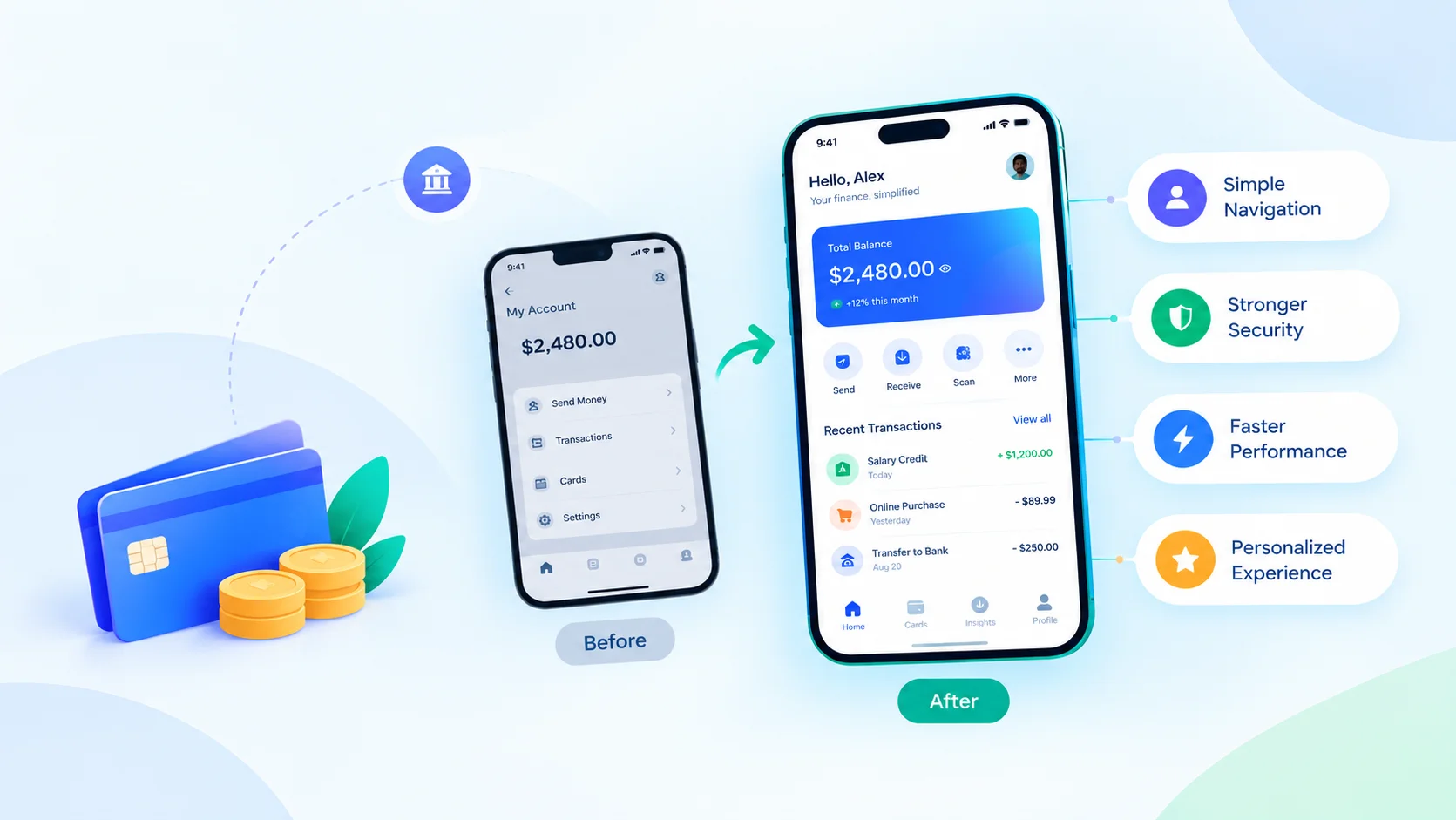
A fintech app may have useful features, strong security, and modern technology, but that does not always mean people will enjoy using it. If users struggle to find information, complete payments, or understand financial details, they may stop using the app. This is where a Fintech App Redesign can make a real difference. Redesigning a fintech app is not just about changing colors, buttons, or screen layouts. It is about making the entire experience easier, clearer, faster, and more trustworthy. A well-planned redesign can improve navigation, simplify important tasks, and help users feel more comfortable when managing their money.
What Is Fintech App Redesign?
Redesign of a fintech app is the activity that helps improve an existing financial application to make it more user-friendly. The improvements can be made in terms of changing the user journey, interface, navigation, functionality, content, and design of the app.
Generally, redesign starts from identifying problems in the existing application. For example, the payment process could be too complicated, the transaction information could be hard to access, the financial information could be hard to understand, or the account verification could be hard. Rather than developing something new without having any reasons for that, the redesign aims to solve the issues mentioned above.
Why Does a Fintech App Need a Redesign?
User expectations evolve with technology and changes in digital habits. A useful app for one set of users might not be useful for today's users.
Some fintech apps also become crowded after adding many new features. Users may struggle to find important actions or financial information.
Common reasons for a redesign include:
- Complicated navigation
- Outdated interface
- Slow or confusing user flows
- Difficult onboarding
- Crowded dashboards
- Poor mobile experience
- Unclear financial information
- Inconsistent design elements
- Difficult payment processes
A redesign can address these problems without losing the app's useful features.
Key Steps for a Fintech App Redesign
A successful redesign needs more than a fresh visual style. It should start with user problems instead of visual changes. The following steps can help create a better fintech experience.
1. Review the Current User Experience
First, check the use of the app is used throughout the day. Look at important tasks and identify where users face difficulties.
Check registration, login, payment, transfers, transactions, and account management. There are significant usability issues in these areas. Feedback from users can be valuable, too. Repeated issues can be found in reviews, support requests, and usability tests. This research will help to build a better foundation for the redesign process. It also prevents unnecessary changes.
2. Simplify the User Journey
Financial apps can have numerous features. But users should be able to perform regular actions quickly. Check all the key user scenarios and remove unnecessary steps. Keep the process focused on what users actually need.
For instance, the transfer of money must be clear and understandable. Users should be familiar with each action before transferring funds.
Simplified user scenarios will help users feel comfortable performing regular financial actions.
3. Improve App Navigation
Good navigation makes it easy for users to reach what they need without overthinking. There should be shortcuts to important sections like accounts, payments, cards, transactions, and settings. All pages should be labeled clearly, and the navigation should be consistent. Avoid hiding important features behind unclear icons or complicated menus.
4. Redesign the Dashboard
The dashboard is often the first important screen users see after logging in. It should provide useful information without making the screen feel crowded.
Show the most important information first, such as:
- Account balance
- Recent transactions
- Payment activity
- Cards
- Spending information
- Important alerts
Users should be able to understand their financial status quickly. A clean dashboard can also make the app feel more organized and easier to trust.
5. Make Financial Data Easier to Understand
The financial information may be complicated to comprehend, but Fintech UI can solve the problem through proper structuring. The presence of too much numerical data and calculations, multiple lines of transactions, and complex diagrams and graphs. For example, presenting the financial information in the form of a table with column headings will make it easier for the user to comprehend.
Group related information as much as possible. Use simple language instead of using complicated financial jargon. Users must understand their expenditure and account information without requiring further explanation.
6. Improve the Onboarding Experience
The onboarding process is the user's first experience with your application. Complicated onboarding can lead to a significant number of abandoned sessions right at the beginning. Make the sign-up process as easy as possible for the user and collect only necessary information; explain all the complicated verification processes in simple words.
Another application of progress indicators is providing the user with information about the remaining steps or giving guidance about errors and how to resolve them. A better onboarding experience will provide a more positive impression.
7. Keep Security Easy to Use
A fintech app’s security is the basis of its existence. However, security measures should not make the application hard to use.
A good UI/UX design would solve this issue by helping users understand what exactly they are being asked for when an additional step is required. Fintech apps should make the security processes intuitive and transparent. The use of biometrics, additional codes, and confirmations should be understandable to the user. The pop-ups and alerts that ask for this information should have a meaningful message.
8. Improve Payment and Transaction Flows
One of the most important aspects of a fintech app is the payments screen. This area deserves special attention during the redesign process. Important information must be displayed to the user before the payment is confirmed. It is crucial to show the amount, the recipient, the fees, and other details.
At the end, the user needs to get confirmation. Transaction information should be easily accessible to the user without having to dig around in convoluted menus.
9. Focus on Mobile Experience
Currently, people have their finances controlled through smartphones. This means that there is a need for certain principles when designing fintech UIs. For instance, the buttons should be big, the text readable, and data should be structured properly to fit on a small screen. It is also important to provide an interface that would function on different screens and devices. The user will feel more comfortable using financial services on a smartphone.
10. Test the Redesigned Experience
Testing needs to be done before the redesigned app becomes available to all its users. Actual users may reveal issues that the designers may overlook. Provide users with typical tasks and see how they perform those tasks.
Their feedback can help to refine the design prior to launch. Several iterations of testing can make the app more reliable. Effective fintech app redesign services typically involve testing as a key step of the process.
How Fintech App Redesign Services Can Help
A professional Fintech App Redesign services team can help companies with analyzing their existing product and optimize the user experience. Such teams can conduct UX research, suggest improvements to the user flow, create wireframes, develop UI designs, produce prototypes, perform a usability test, and design a design system. The critical point is that businesses should invest in redesigning the product to fix existing issues rather than updating it to make it look newer. A professional redesign should address the needs of both users and the company.
The Role of Fintech UI/UX Design
Fintech UI/UX design combines visual design with the overall user experience. Both areas need attention during an app redesign.
UI design is all about the look and feel of the application. UX design is an approach to making it easy for users to reach their goal.
Similarly, a good experience can be diminished if the interface is not clear. It requires both sides to collaborate to create good design.
Benefits of Fintech App Redesign
- Simplifies financial processes and transactions.
- Provides a cleaner and more modern user experience.
- Eliminates confusion in payment and transaction processes.
- Simplifies understanding of financial data.
- Enhances the mobile experience.
- Increases user engagement and retention.
Final Thoughts
The first step in a Fintech App Redesign is understanding real user issues. It's all about making financial tasks easier, clearer, and more comfortable. Prioritize navigation simplicity, informativeness, security, and user experience. When combined, fintech redesign can make for a better day-to-day experience. However, with a thoughtful approach, financial products can continue to serve the user's needs as they evolve.