Sign up with Google
 Sign in with Zoho

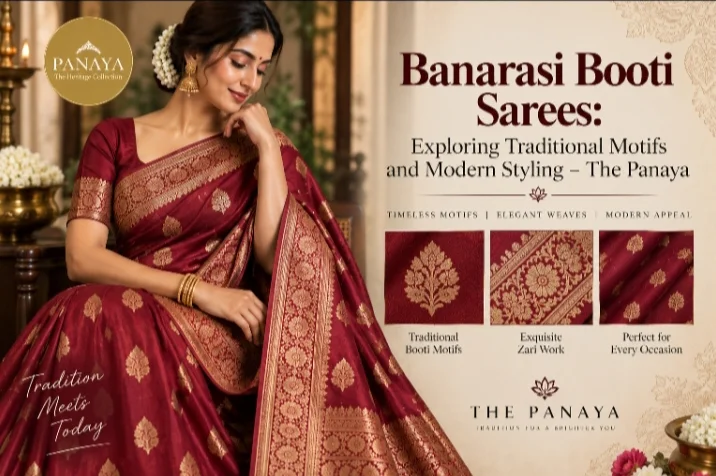
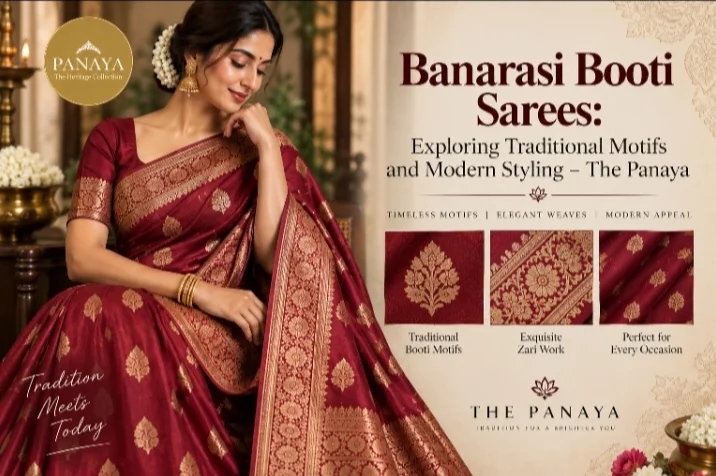
Banarasi Booti Sarees are known for their delicate woven motifs and distinctive traditional character. Their versatile designs also make them suitable for contemporary styling.
Some sarees make an impression through bold patterns, while others rely on small details that reveal themselves more closely. Banarasi Booti sarees belong to the latter category. Their repeated motifs are usually arranged across the saree body, creating a design that can feel traditional without being excessively elaborate.
For wedding saree buyers, this makes the booti style worth exploring. The same basic motif can look very different depending on the fabric, colour, zari, border and pallu. With the right blouse and accessories, a traditional Banarasi Booti saree can also take on a distinctly modern character.
What Makes Banarasi Booti Sarees Different?
A booti is a small decorative motif woven across the body of a saree. Floral, paisley, leaf and other traditional-inspired shapes can be used to create the pattern.
Unlike a large jaal design that covers much of the fabric, bootis are generally separated from one another. This creates visual space and allows the base colour of the saree to remain noticeable.
The arrangement matters just as much as the motif itself. Small, evenly spaced bootis can create a neat appearance, while larger or more closely positioned motifs can make the saree look richer.
The Role of Banarasi Weaving
Banarasi sarees are valued for their woven decorative details. In a booti saree, the motifs become an important part of the fabric's overall character.
Zari may be used within the motifs, around the border or throughout the pallu. Some designs may also introduce coloured threads to create additional contrast.
When choosing a saree, look at the body, border and pallu together. A heavily decorated pallu paired with a relatively simple body can create an interesting contrast, while similar detailing throughout the saree produces a more elaborate appearance.
Katan Silk and Booti Designs
A Katan Silk Banarasi Saree can be a strong option for buyers who prefer a smooth fabric with a subtle sheen and structured drape.
The relatively firm fall of Katan silk allows small woven motifs to remain clearly visible when the saree is pleated. Gold bootis on colours such as red, maroon, green or blue can create a traditional wedding look.
If you prefer something softer in appearance, consider lighter shades such as pink, yellow, powder blue or green. Smaller motifs and moderate zari can make the saree suitable for daytime functions and engagements.
Choosing the Right Colour
Colour should be selected according to both the occasion and your existing wardrobe.
Traditional Wedding Colours
For a main wedding ceremony, rich shades such as red, maroon, wine, magenta and deep green can work well. Gold zari can provide a clear contrast against these colours.
If the saree already contains several shades, choose a blouse that picks up one of the existing colours rather than adding another unrelated tone.
Contemporary Colour Choices
Blue, purple, pink, powder green and softer yellow can give a Banarasi Booti saree a more contemporary appearance. These shades can work particularly well for engagements, receptions and daytime celebrations.
A neutral blouse can tone down a bright saree, while a contrasting blouse can make the outfit more noticeable.
Understanding Zari and Border Designs
Zari is one of the details that can change the character of a Banarasi Booti saree.
A saree with small gold bootis and a narrow border can have a relatively restrained appearance. A broad zari border and elaborate pallu can make the same type of motif more suitable for a formal wedding.
Match the Border to the Body
If the body is covered with prominent bootis, an extremely elaborate border may make the outfit look busy. A balanced border allows the motifs to remain visible.
On a simpler saree, however, a decorative border can provide the extra detail needed for a festive appearance.
Styling a Banarasi Booti Saree for Weddings
One of the advantages of booti designs is their flexibility. They can be styled for different wedding functions without looking identical each time.
For the Engagement
Choose a lighter colour and moderate zari. Pair the saree with a contrasting blouse, statement earrings and a simple hairstyle.
For the Sangeet
Brighter colours can work well for the energetic atmosphere of a sangeet. Keep the drape secure and choose footwear that allows comfortable movement.
For the Main Wedding
A rich Katan Silk Banarasi Saree with gold bootis, a detailed border and traditional jewellery can suit the main ceremony. A classic blouse with elbow-length sleeves can reinforce the traditional character.
For the Reception
For an evening reception, pair a richly coloured booti saree with a structured contemporary blouse. Statement earrings and a clean hairstyle can give the outfit a modern direction.
Blouse Pairing Ideas
The blouse can either reinforce the traditional appearance or change the mood of the saree.
A matching blouse creates a coordinated look, while a contrasting blouse can highlight the colour of the border or motifs. Gold, maroon, green, pink and deep blue are useful options depending on the saree.
For a classic style, try a round or boat neckline with elbow-length sleeves. A higher neckline, contemporary sleeves or a structured silhouette can give the saree a more modern appearance.
When the saree has detailed zari work, keep the blouse relatively simple. Too much embroidery can compete with the woven motifs.
Jewellery and Accessories
A Banarasi Booti saree does not always require heavy jewellery. The amount you choose should depend on the saree's pattern and the occasion.
For a wedding, gold earrings, bangles and a necklace can complement gold zari. For an engagement or reception, statement earrings with a few bangles may be enough.
Pearls can work nicely with softer colours, while a traditional maang tikka can complement a more formal wedding outfit.
Complete the look with a clutch or potli and comfortable footwear. The accessories should support the saree rather than distract from its woven design.
Comfort and Drape
Wedding celebrations can last several hours, so comfort should be part of the buying decision.
Consider the weight and structure of the saree. A Katan Silk Banarasi Saree has a relatively structured drape, so properly pressed pleats can help display the booti pattern neatly.
Try the complete outfit before the event, including the blouse and footwear. This allows you to adjust the saree length, pallu position and pleats in advance.
If you are buying online, check the available measurements, fabric information, close-up images and care instructions before ordering.
How to Choose the Right Banarasi Booti Saree
Start by deciding which wedding function you are dressing for. Then consider the base colour, motif size, zari, border and pallu.
If you prefer understated clothing, smaller bootis with moderate zari may suit you better. If you enjoy traditional wedding wear, a richer colour with larger motifs and a broader border can create a more detailed appearance.
You can compare different colours, fabrics and Banarasi designs through the Banarasi Saree Collection before making your choice.
For those exploring Banarasi sarees for weddings and festive occasions, The Panaya can also be considered when comparing different styles and design details.