Sign up with Google
 Sign in with Zoho

Choosing to remove a tattoo is a personal decision. Maybe the design no longer represents you, you want to make space for a new tattoo, or you simply want your skin back to how it looked before. Whatever your reason, understanding the tattoo removal process can make the experience much easier.
If you are searching for tattoo removal London in UK, one of the most important things to know is that results depend on much more than simply choosing a laser clinic. Your tattoo’s colour, depth, size, age, location and your skin type can all influence how it responds to treatment.
How Does Laser Tattoo Removal Work?
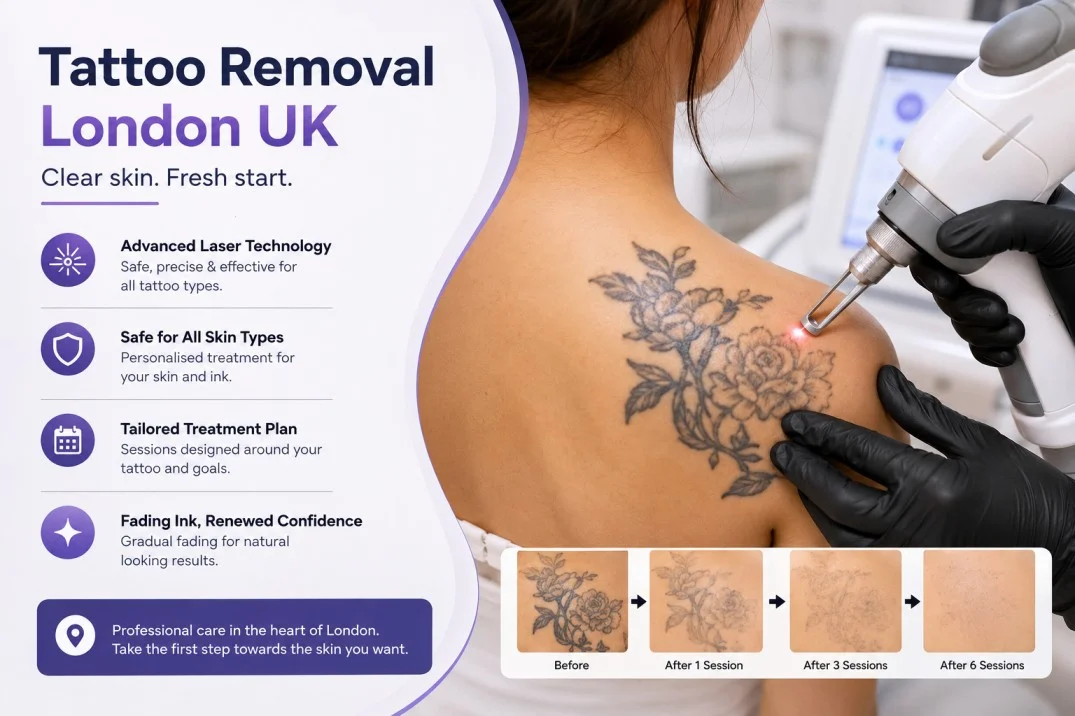
Laser tattoo removal works by targeting the pigment embedded within the skin. Very short energy pulses disrupt the ink into much smaller particles, which your body's natural processes can gradually clear.
The treatment does not remove the tattoo in one instant. Instead, the ink becomes progressively lighter after each session as your body continues clearing the fragmented pigment.
Modern laser systems have made tattoo removal considerably more precise. However, there is no universal treatment setting that works identically for every tattoo. A professional assessment is therefore an important first step.
What Tattoos Can Be Removed?
Most tattoo types can be treated with laser technology, but some are more straightforward than others.
Black ink is generally considered one of the easier colours to target. Coloured tattoos can be more complicated because different pigments respond differently to laser wavelengths. Green, blue, yellow, white and certain cosmetic pigments may require particularly careful assessment.
Other factors matter too. A dense professional tattoo may behave differently from a lightly applied amateur tattoo. Cover-ups can also take longer because several layers of pigment may be present.
Previously treated tattoos deserve special attention as well. If an earlier treatment has left pigmentation changes or scarring, your clinician should assess the skin before deciding how to proceed.
How Many Tattoo Removal Sessions Will You Need?
There is no honest one-number answer.
Some tattoos respond relatively quickly, while others require a longer treatment course. The number of sessions can be affected by:
- Tattoo size and ink density
- Ink colour and composition
- How deeply the pigment was placed
- Whether the tattoo is a cover-up
- Your skin type
- Tattoo location
- Previous laser treatment
- How your skin responds between sessions
Current clinical guidance from the Institute of Medical Physics indicates that many tattoos may require several sessions rather than a single treatment, with the exact plan determined during assessment.
This is why you should be cautious of any clinic promising exactly the same number of sessions for every person.
Is Tattoo Removal Painful?
Pain levels vary from person to person and depend on the tattoo and treatment area. Patients commonly describe the sensation as quick snaps or flicks against the skin.
The appointment itself is usually relatively short, although larger or more complicated tattoos can take longer.
After treatment, temporary redness, swelling or sensitivity may occur. Following your clinic's aftercare instructions is important because the skin needs time to recover while your body continues processing the fragmented ink.
What About Darker Skin?
Skin tone is an important consideration when choosing a tattoo removal treatment.
A suitable treatment approach needs to account for the amount of melanin in the skin as well as the tattoo pigment. This is particularly important for people with darker skin tones, where inappropriate settings or techniques can increase the risk of unwanted pigmentation changes.
A proper consultation should therefore consider both the tattoo and the skin surrounding it, rather than treating every patient using the same settings.
How Much Does Tattoo Removal Cost in London?
The price of tattoo removal in London varies considerably between clinics.
Cost may depend on the tattoo's surface area, complexity, colours, treatment technology and the number of sessions required. Some providers charge separately for every appointment, while others offer treatment packages.
For example, the Institute of Medical Physics currently uses a fixed-price model based on tattoo size, with pricing starting from £750 for tattoos up to 5cm² and treatment packages that include unlimited sessions over the specified treatment period. Pricing and offers can change, so patients should confirm the current cost during their consultation.
When comparing clinics, don't look only at the price of one session. Consider the potential total cost of treatment, what is included and whether additional sessions could substantially increase the final bill.
How Do You Choose a Tattoo Removal Clinic in London?
A good clinic should be willing to explain your treatment rather than simply sell you a package.
Before booking, consider asking:
- What laser technology will be used?
- Who will assess and perform the treatment?
- How will my skin type be considered?
- What happens if my tattoo responds slowly?
- What aftercare will I receive?
- Are there additional costs for further sessions?
- Can I see genuine treatment results?
Medical oversight, appropriate technology and a personalised treatment plan can make a meaningful difference to your experience.
Why Consider Professional Tattoo Removal in London?
Trying to remove a tattoo yourself may seem cheaper, but home remedies, creams and abrasive techniques cannot replicate controlled clinical treatment. They can also damage the skin and potentially create problems that make subsequent professional treatment more complicated.
Professional tattoo removal gives you access to controlled equipment, appropriate treatment settings and expert assessment.
At the Institute of Medical Physics in King's Cross, London, tattoo removal is performed using the Phantom™ system, which the clinic describes as using acoustic shockwaves to disrupt tattoo pigment rather than relying on conventional heat-based treatment.
Frequently Asked Questions
Can every tattoo be completely removed?
Many tattoos can be significantly faded or completely cleared, but results vary. Ink type, depth, colour, skin type, location and previous treatment can all affect the final outcome.
Is laser tattoo removal safe?
When appropriately assessed and performed using suitable equipment and settings, laser tattoo removal is a well-established treatment. Your individual risks should always be discussed during consultation.
Can coloured tattoos be removed?
Yes. Coloured tattoos can be treated, although some colours may be more challenging than black ink and can require a more specialised approach.
Where can I get tattoo removal in London?
If you're looking for tattoo removal London UK, you can explore the treatment options available at the Institute of Medical Physics and arrange a consultation to have your tattoo assessed.
Ready to find out what treatment your tattoo needs? Book a tattoo removal consultation in London and get a personalised assessment before starting treatment.