Sign up with Google
 Sign in with Zoho


Products are handled by manufacturers and distributors at a number of stages, such as procurement, manufacturing, receiving and storage, order fulfillment and delivery. It's essential to have precise product data at all stages for inventory management and efficiency. The serial number tracking software Smart Serial Number Tracking Software assists businesses in tracking individual products, batch information and providing increased visibility of inventory movement.
Manual tracking systems might not be able to offer the detail that businesses need as production volumes and distribution networks grow. Staff should have access to accurate product information such as identifiers, batch numbers, stock locations and movements.
A specific tracking system can be used to link these records and to facilitate more efficient inventory management.
Why Manufacturers Need Product-Level Tracking
Manufacturing companies may have raw materials, components, work-in-progress or finished goods. There may be different tracking needs for each of these categories.
A manufacturer of electronic equipment might, for instance, want to distinguish individual finished products by means of serial numbers. It also might be required to keep batch records for components received from the suppliers.
If not documented, it may be hard to trace a product back to its location or its journey through production and storage.
Manufacturers can benefit by implementing serial number and batch tracking:
- Recognize a finished product as a component of a product.
Group parts by supplier or batch.
- Keep accurate stocking levels.
Track product movement throughout stores.
- Support quality-related investigations.
- Enhance visibility during dispatch and returns.
Businesses with a need for more detailed inventory information than just quantity tracking can provide will find these capabilities useful.
Why Distributors Need Better Traceability
Distributors buy products from suppliers and transport them to customers via various warehouses. Products can be moved from point to point, assigned to orders, or returned during this process.
With thousands of units being managed by a business, it can take a long time to determine which of the thousands of items a particular unit is without a reliable record.
A systematic tracking system supports the distribution teams to review:
- The origin of a product, or the supplier or shipment.
Batch or serial number that a product is identified by.
- The location of the inventory in this moment.
- If the product has been allocated or dispatched.
- Which products have been returned to inventory.
This information allows businesses to have a more controlled product handling and warehouse operations.
Although they share similarities, the two are distinct.Though similar, they are different from each other.
Both methods are used to achieve product traceability, but for different purposes.
Serial Number Tracking
Serial number tracking is a process of assigning a unique number to each product unit.
It is useful for:
- Electronic & computer equipment.
- Industrial machines and tools.
- Medical devices.
- Automotive components.
- High-value products.
- Equipment that has specific service records.
Batch and Lot Tracking
Batch tracking is the process of associating products within a batch or lot.
It is useful for:
- Food and beverage products.
- Pharmaceuticals.
- Cosmetics.
- Chemicals.
- Manufactured components.
- Products with expiry dates.
Many manufacturers and distributors find it's best to have both to get a fuller picture of inventory.
It is essential that the manufacturing and distribution operations have these features.
The selection of tracking software should be based on the features that can enable a business to perform its actual processes.
1. Individual Serial Number Management
Businesses should be able to create, assign, import and search unique product identifiers on the platform.
This allows employees to easily identify individual units, even if they're selling multiple products with the same SKU.
2. Batch/Supplier Lot Records
The businesses should be able to keep batch information and relate the batch to relevant product records. This will facilitate the recording of supplier and production related stock.
3. Scanning QR Codes and barcodes.QR Code and Barcode Scanning.
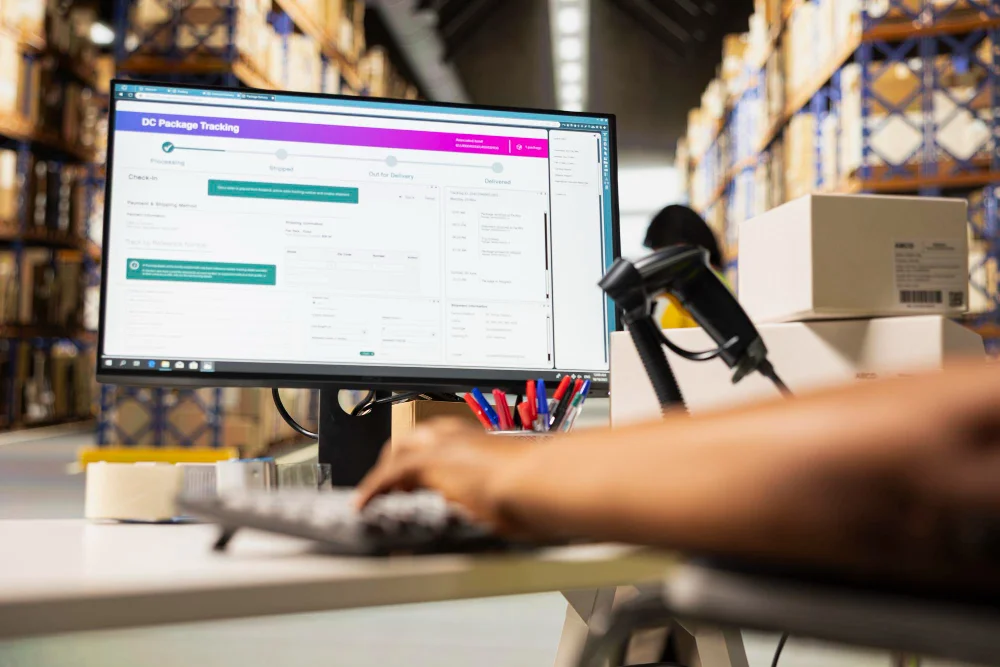
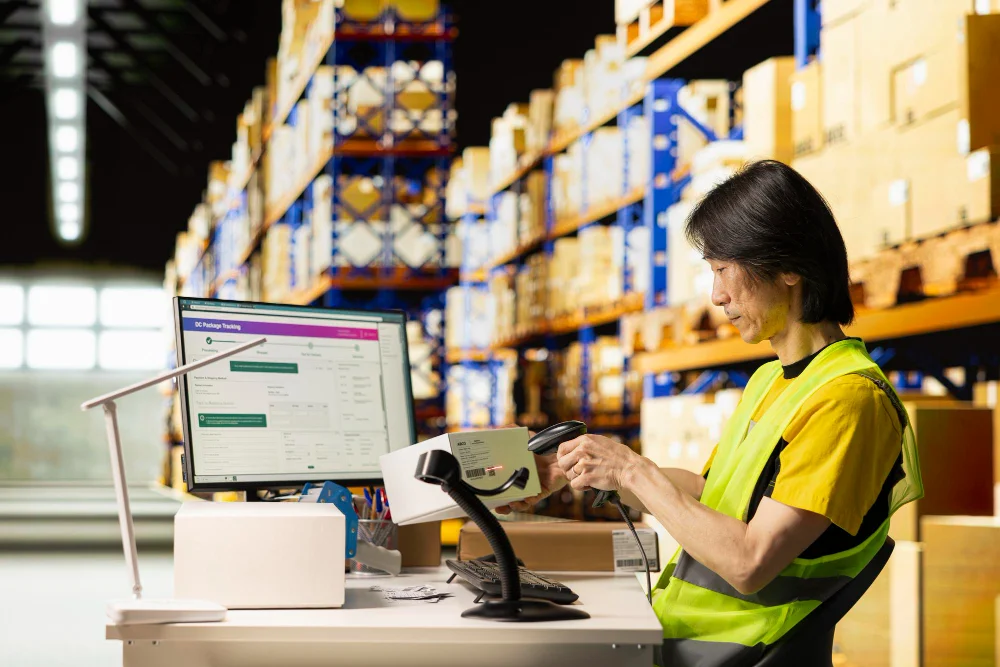
Scanning may allow for easier identification of products when received, stored, picked, and dispatched.
Staff can access product information using compatible devices without having to type the identifier over and over again.
4. Warehouse Location Tracking
Manufacturers and Distributors can have their stock at various warehouses, storage areas or zones.
With location tracking, employees can find out where products are stored and can make better use of coordination when transferring products.
5. Inventory Movement Records
The software needs to be able to record inventory transactions consistently, such as receiving, transferring, adjusting and shipping inventory.
These records allow businesses to track products and look into discrepancies.
6. Reporting and Inventory Visibility
Reporting tools enable managers to check stock levels, product history and inventory movement. This data can be used to aid in the buying process, warehouse design, and reviews.
Streamline inventory workflows from arrival to dispatch.Simplify receiving, processing and dispatching of inventory.
The value of tracking software is enhanced when it is used for the entire warehouse process.
Receiving and inspection: Work staff document received inventory and include any necessary serial/batch information.
Storage and put away: Products are put in the right warehouse location, assisting the team to keep organized stock records.
Manufacturers can track information regarding components and finished products as needed, including production and assembly.
Order picking: Staff locate products that need to be picked and check each item before fulfilling orders.
Product identification records provide improved inventory documentation for shipping and dispatch.
Products returned can be compared to identification records prior to processing.
These activities are linked together to ensure businesses have more consistent information throughout the warehouse operations.
Manufacturing and Distribution Inventory (MDI) is a primary focus of GOIS.Manufacturing and Distribution Inventory (MDI) is one of the key areas of focus for GOIS.
GOIS offers inventory management tools suited for organizing product identification and warehouse activities.
It features a serial number tracking feature to assign, scan, import and search individual product numbers. Additionally, the platform provides batch and lot tracking, enabling businesses to have an organized record of grouped inventory.
Other features include barcode and QR code scanning, label printing, multi-location inventory management, and inventory reporting.
These capabilities can be used to control the product information throughout the receiving, storage, picking, counting and shipping process.
For organizations with serialized and batch inventories, GOIS provides a viable solution for maintaining the more detailed product records in their inventory management process.
When implementing a tracking system, it is crucial to prepare your business for success.To set up a tracking system, it is important to prepare your business.
Manufacturers and distributors should check their current inventory procedures before introducing new software.
Discuss product categories and determine whether each product category needs individual serial numbers or batch/lot tracking.
Implement standard SKU formats, serial number rules and batch naming.
Install warehouse locations: Identify warehouse locations and use location identifiers to track inventory accurately.
Prepare data that already exists: Check spreadsheets and product records prior to importing them into the new system.
Match up scanning devices: Ensure that barcode scanners and mobile devices are compatible for operation.
Train staff: Inform staff about the record keeping of product identification when receiving, storing, picking and dispatching products.
Ensure Tracking accuracy is monitored – regularly review for missing or inconsistent records.
Having a good preparation helps businesses to set up processes and make their tracking system more useful.
Conclusion
Product manufacturers and distributors require accurate product information to manage their inventory from procurement to production, storage, and fulfillment. The serial number tracking can be used to identify individual units, and batch tracking can be used to identify products as part of a group.
A specific tracking system can enhance product visibility, streamline warehouse operations, and facilitate efficient inventory management. GOIS combines serial number management, batch tracking, barcode scanning, and multi-location inventory capabilities to help businesses improve their product traceability and warehouse control.
Structured inventory solutions can help streamline businesses and enhance long-term inventory management for businesses with expanding product quantities.