Sign up with Google
 Sign in with Zoho
Marketing Plan and Strategy: What Growing Businesses Can Learn From Top Brands
Why do some brands build strong customer recognition while others struggle to turn marketing investments into consistent sales?
The difference is not always a bigger advertising budget.
A business may invest in Meta Ads, Google Ads, influencer marketing, and content creation but still struggle because these activities are not connected to a clear business objective.
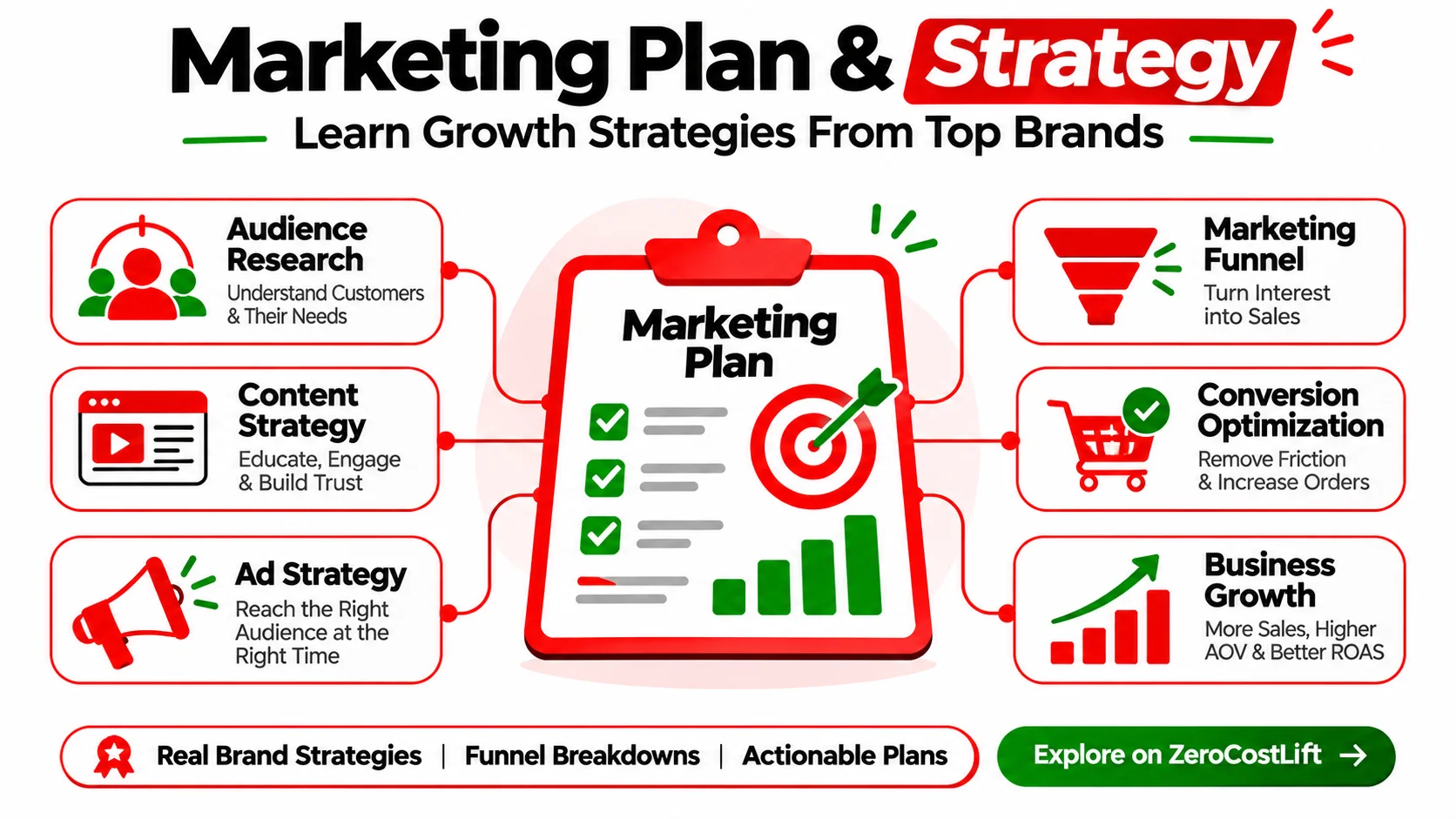
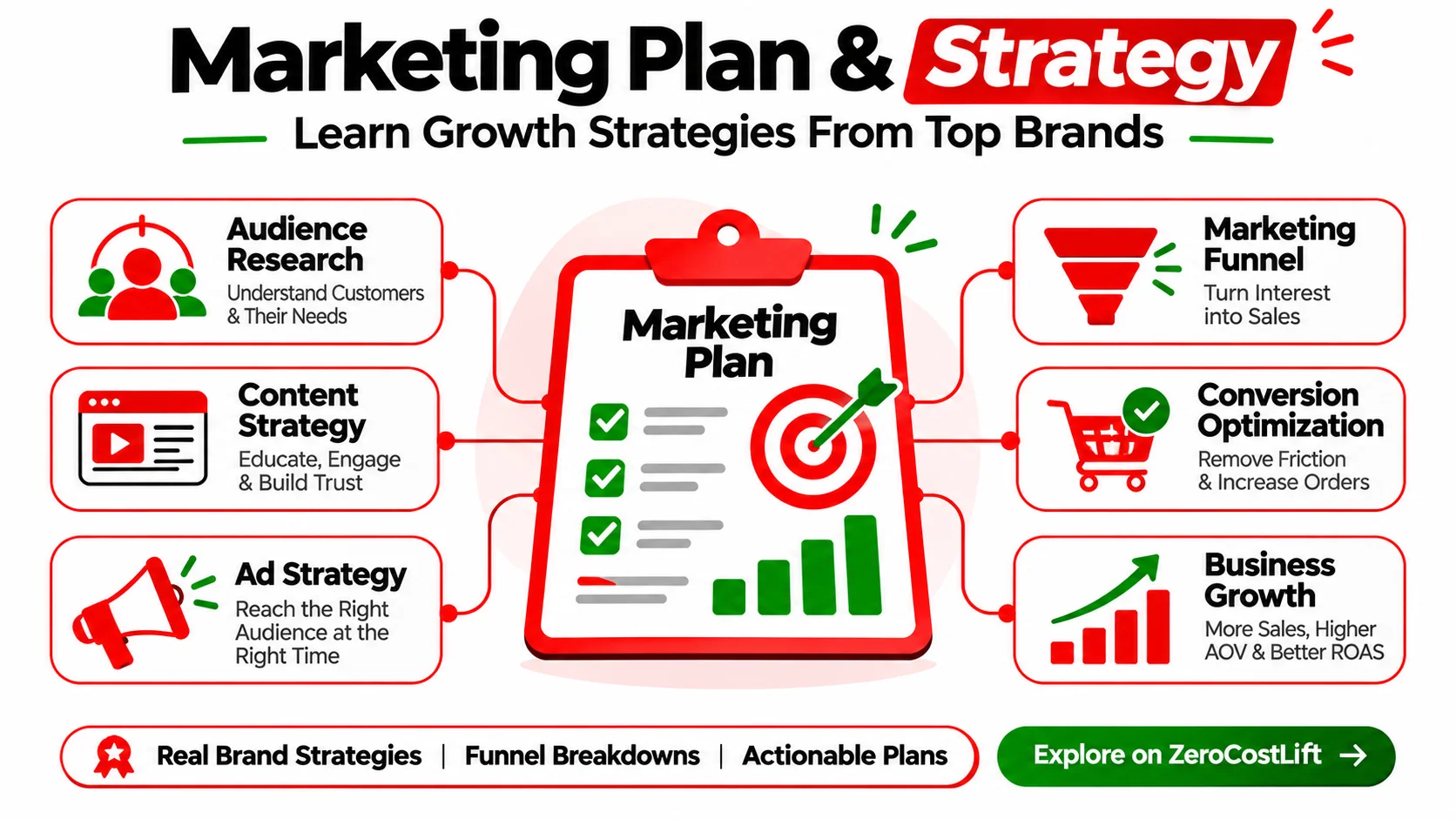
A well-structured marketing plan and marketing strategy help connect customer research, brand positioning, advertising, content, and conversion into one growth system.
Studying established brands can also help businesses understand different approaches to attracting customers and building long-term relationships.
In this guide, we'll explore how to create a marketing strategy, build a practical marketing plan, and learn from brands across fashion, beauty, travel, lifestyle, and real estate.
What Is a Marketing Strategy?
A marketing strategy is a long-term approach that defines how a business will reach its target audience, communicate value, compete in the market, and achieve commercial objectives.
It answers four important questions:
- Who are our ideal customers?
- Why should they choose our products?
- Which marketing channels can reach them?
- How will we measure success?
For example, a premium clothing brand may focus on quality, design, and customer experience.
A budget-friendly fashion business may emphasize accessibility, product variety, and value.
Both sell clothing, but their positioning and marketing strategies can differ significantly.
An effective strategy starts with understanding customers rather than copying competitors.
Marketing Plan vs. Marketing Strategy: What's the Difference?
Although these terms are often used interchangeably, they serve different purposes.
For example, a skincare brand's strategy might be to attract customers looking for ingredient-focused personal-care products.
Its marketing plan could include educational videos, search advertising, product-page improvements, and monthly performance reviews.
The strategy explains why and where to compete. The plan explains what to do and when.
5 Marketing Strategy Lessons to Research From Leading Brands
Different industries provide different marketing lessons.
Instead of assuming every successful brand uses the same formula, examine how its positioning, customer experience, and marketing channels fit its business model.
1. Zara: Fashion Positioning and Product Discovery
Zara is a useful brand for studying fashion merchandising, collection presentation, and customer shopping journeys.
When researching its public marketing approach, examine how product categories, visual presentation, and new collections are communicated.
Marketing strategy lesson: Product presentation and shopping experience should reinforce a brand's positioning.
2. SHEIN: Online Fashion Shopping Experience
SHEIN provides opportunities to research online product discovery, category navigation, promotional presentation, and customer engagement.
Its large assortment makes it a relevant subject for studying how fashion products are organized for online shoppers.
Marketing strategy lesson: Website navigation and product discovery are important parts of digital marketing, not just website design.
3. Lululemon: Premium Product Positioning
Lululemon is a useful example for researching premium activewear positioning and product communication.
Study how product benefits, activity-specific categories, and customer-facing content contribute to the shopping experience.
Marketing strategy lesson: A clear value proposition can help brands communicate beyond price alone.
4. Mamaearth: Personal-Care Product Education
Beauty and personal-care shoppers may want information about ingredients, product benefits, and suitability.
Mamaearth provides a useful research opportunity for understanding how educational content supports product evaluation.
Marketing strategy lesson: Content should address customer questions rather than focus exclusively on promotional messages.
5. MakeMyTrip: Travel Customer Journey
Travel purchases involve searching destinations, comparing dates, reviewing prices, and understanding booking conditions.
MakeMyTrip is relevant for studying how travel platforms organize search and booking experiences.
Marketing strategy lesson: Reducing customer decision-making friction is an important part of marketing performance.
These examples are research directions, not verified claims about the brands' internal campaign performance.
Explore the related resources in ZeroCostLift's Top Brands Marketing Strategy Collection.
How to Create a Marketing Plan for Your Business
A useful marketing plan should connect business goals with practical activities.
Step 1: Define Your Marketing Objectives
Start with measurable goals.
Examples include increasing qualified leads, improving online purchases, reducing acquisition costs, or increasing repeat orders.
Avoid objectives such as "get more traffic" without defining the business outcome you want.
Step 2: Research Your Target Audience
Understand customer needs, purchasing motivations, budget considerations, and common objections.
Use customer feedback, website analytics, search behaviour, and market research to develop your audience understanding.
Step 3: Analyze Your Competitors
Study relevant competitors' public advertising, product positioning, landing pages, content, and offers.
Identify useful patterns, but do not assume that visible marketing activities prove profitability.
Step 4: Select Your Marketing Channels
Choose channels based on customer intent and business objectives.
Google Search Ads may help capture existing demand, while Meta Ads can introduce products to new audiences.
SEO, educational content, email marketing, and other channels may support different stages of the customer journey.
Step 5: Create a Content and Advertising Plan
Define the messages customers need at different stages.
For example:
Awareness: Educational videos, social posts, and search content.
Consideration: Product comparisons, customer reviews, and demonstrations.
Conversion: Relevant offers, clear landing pages, and purchase reassurance.
Retention: Product education, customer support, and repeat-purchase communication.
Step 6: Allocate Your Budget
Distribute your budget according to business priorities, historical performance, and available resources.
Avoid following fixed budget percentages without considering your industry, product margins, and customer acquisition economics.
Step 7: Measure and Improve
Review marketing performance regularly.
Track metrics such as conversion rate, customer acquisition cost, average order value, return on ad spend, and customer lifetime value.
Use these insights to identify which activities deserve further investment.
How a Marketing Funnel Connects Your Strategy and Plan
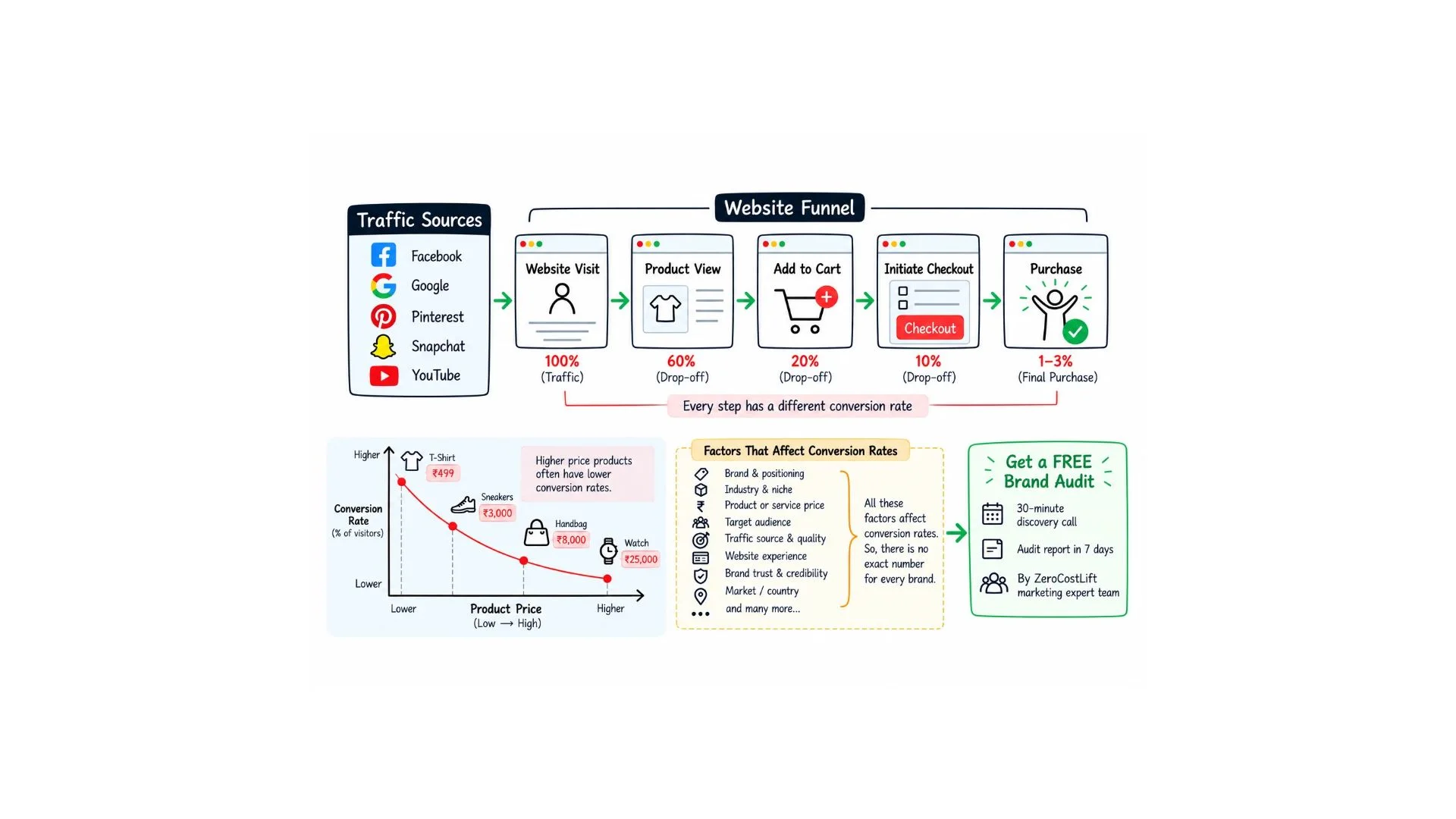
A marketing funnel represents the customer journey from discovering a business to completing a valuable action and potentially becoming a repeat customer.
For example, an e-commerce funnel might look like this:
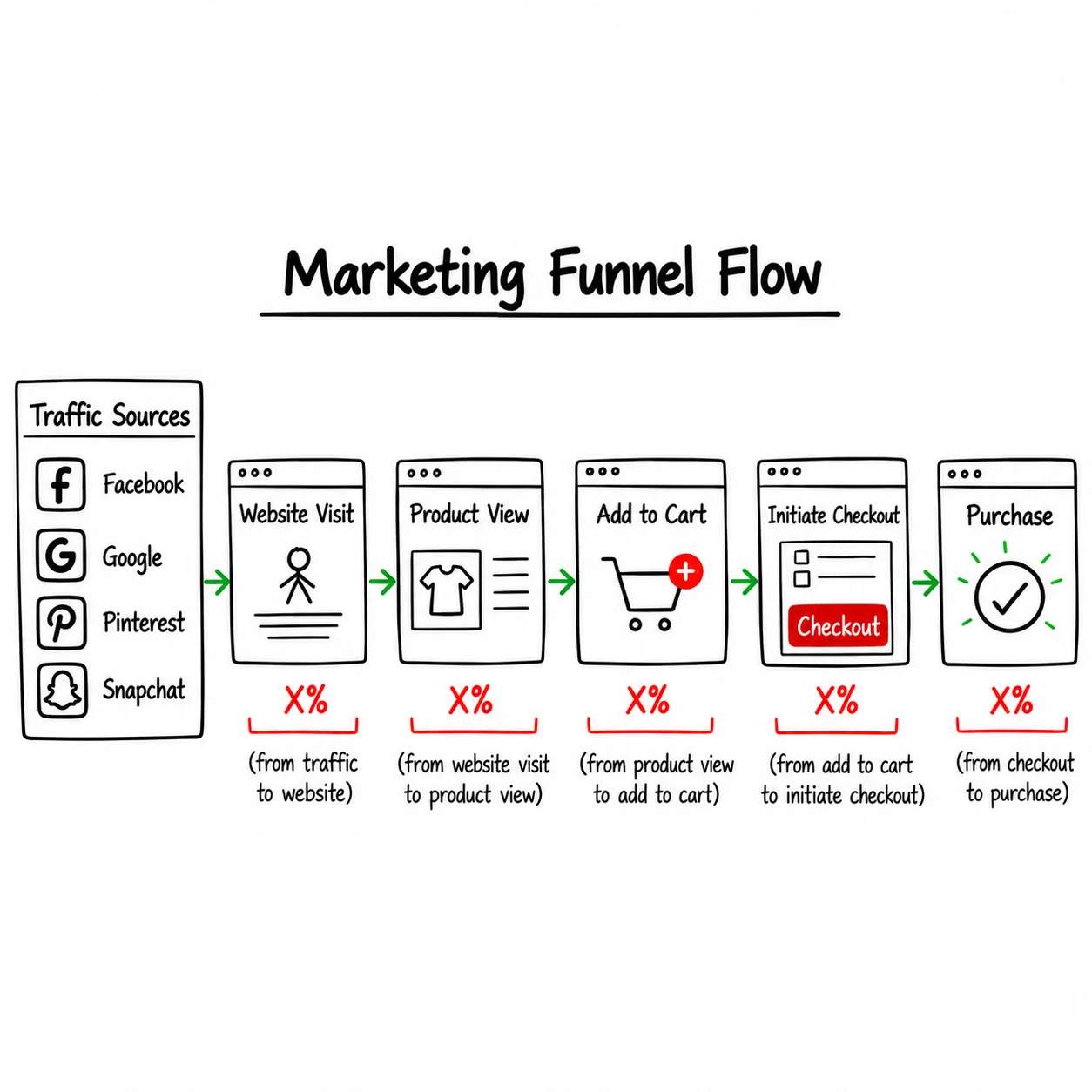
Meta Advertisement → Product Page → Add to Cart → Checkout → Purchase → Repeat Order
A real estate funnel may follow a different path:
Google Search → Property Landing Page → Enquiry → Qualification → Site Visit → Sale
The marketing strategy determines how the business attracts and communicates with customers.
The marketing plan organizes the activities required.
The marketing funnel helps connect those activities to customer behaviour.
Together, they create a more structured approach to growth.
A Practical 30-Day Digital Marketing Plan
Here is an example of how a small business could organize its first month of marketing improvements.
This is an illustrative framework. Businesses with longer buying cycles or limited traffic may need more time to evaluate results.
How to Analyze a Top Brand's Marketing Strategy
Studying a successful brand is more useful when research follows a consistent structure.
Start by selecting a brand relevant to your industry or customer segment.
Then examine six areas.
Document observations and convert them into hypotheses for your own business.
For example, if competitors provide detailed comparison guides, you might test whether similar information helps your customers make better decisions.
The objective is to learn from competitors, not duplicate their marketing assets.
Important Metrics for Evaluating Your Marketing Plan
A marketing strategy should be measured against meaningful business outcomes.
Customer Acquisition Cost (CAC): Measures the relevant cost of acquiring a new customer.
Conversion Rate: Measures the percentage of visitors, sessions, or leads completing a defined action.
Return on Ad Spend (ROAS): Compares attributed advertising revenue with advertising spend.
Average Order Value (AOV): Measures average revenue per order.
Customer Lifetime Value (CLV): Estimates the value a customer generates over time.
Repeat Purchase Rate: Measures how often customers purchase again during a defined period.
These metrics should be interpreted together.
For example, a high ROAS does not automatically indicate profitability if product margins are low or fulfilment costs are high.
Common Marketing Planning Mistakes to Avoid
Copying Competitor Strategies Without Research
A strategy used by a well-known brand may not suit your customers, pricing, or business model.
Use competitor observations to develop testable ideas.
Focusing Only on Advertising
Advertising performance also depends on landing pages, offers, website experience, and customer retention.
Creating Content Without Clear Objectives
Every content activity should support a customer need or business goal.
Ignoring Marketing Performance Data
Without reliable measurement, businesses may continue investing in activities that do not contribute meaningfully to growth.
Changing Too Many Things at Once
When possible, prioritize focused experiments so you can better understand their impact.
Learn Marketing Strategies From Real Brands With ZeroCostLift
Building a marketing plan becomes easier when you have relevant examples to study.
ZeroCostLift provides structured marketing funnel breakdowns of established brands across different industries.
Its Top Brands Marketing Strategy collection includes research resources covering Zara, SHEIN, Lululemon, MakeMyTrip, Mamaearth, Nykaa, Wakefit, Godrej Properties, and other brands.
These resources are designed to help founders, marketers, agencies, and growth teams examine observable marketing approaches, including:
- Brand positioning and customer communication
- Advertising and creative strategies
- Landing-page experiences
- Product offers and conversion journeys
- Industry-specific marketing opportunities
Rather than starting every marketing experiment with assumptions, use structured competitor research to identify ideas worth evaluating.
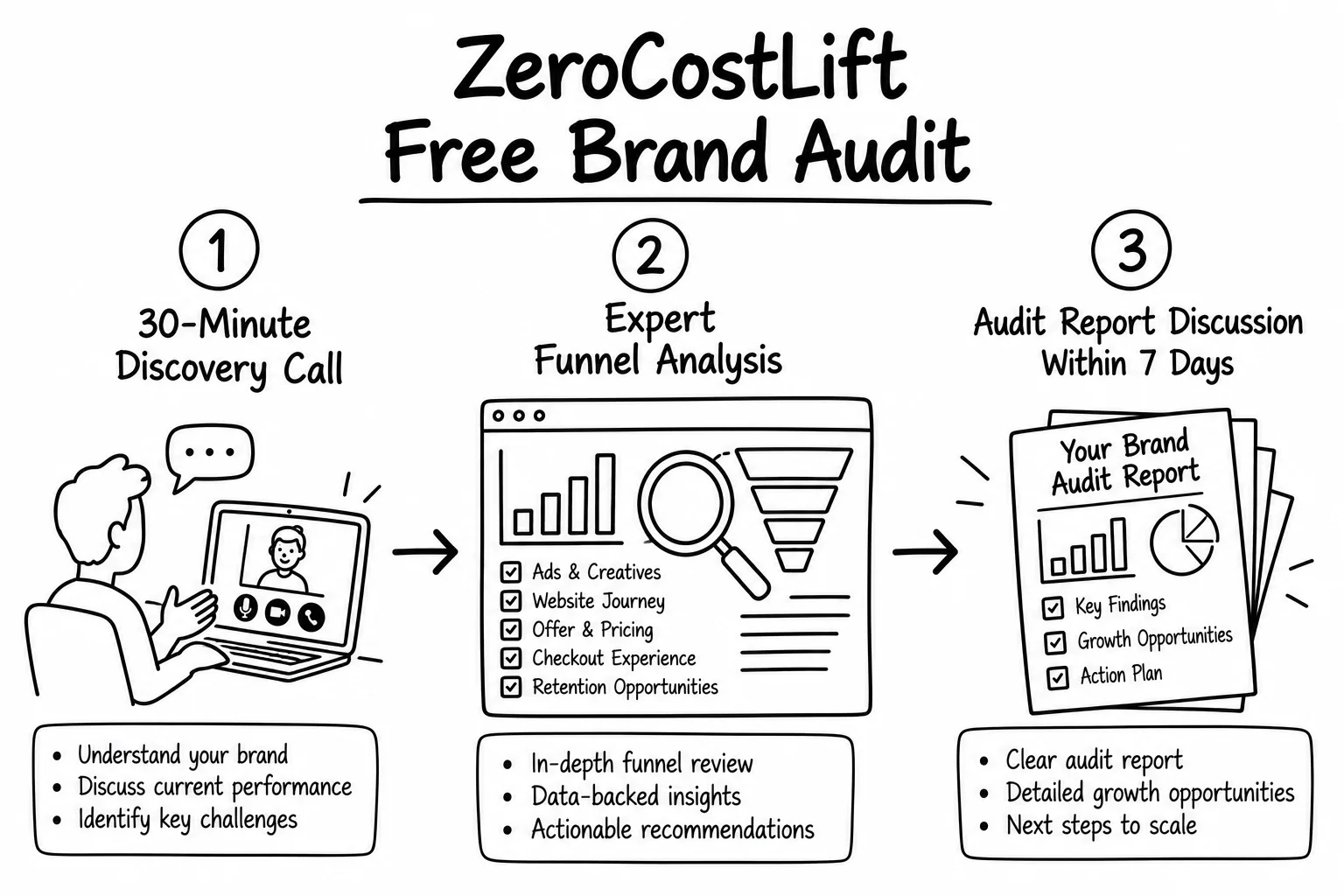
Frequently Asked Questions
1. What is a marketing plan?
A marketing plan is a structured document outlining marketing objectives, target audiences, activities, budgets, timelines, and performance measurements.
2. What is the difference between a marketing plan and a marketing strategy?
A marketing strategy defines the overall direction and competitive approach. A marketing plan explains the specific actions required to implement that strategy.
3. How do top brands develop marketing strategies?
Established brands use different approaches based on customer research, positioning, products, business objectives, and market conditions. Public marketing materials can provide insights, but they do not reveal every internal decision.
4. How can competitor research improve my marketing plan?
Competitor research can help identify customer expectations, positioning differences, content opportunities, and advertising ideas worth testing.
5. What should a digital marketing plan include?
It should include measurable objectives, audience research, channel selection, content activities, advertising budgets, timelines, and performance indicators.
6. How does a marketing funnel support business growth?
A marketing funnel helps businesses understand customer journeys and identify opportunities to improve acquisition, engagement, conversion, and retention.
Conclusion: Build Your Marketing Plan With Better Research
A successful marketing strategy requires more than creative advertisements and frequent content publishing.
It starts with understanding customers, defining business objectives, selecting relevant channels, and measuring performance.
Studying established brands can provide useful ideas for product positioning, advertising, content, and customer journeys.
However, every approach should be adapted to your own business and validated through testing.