Sign up with Google
 Sign in with Zoho

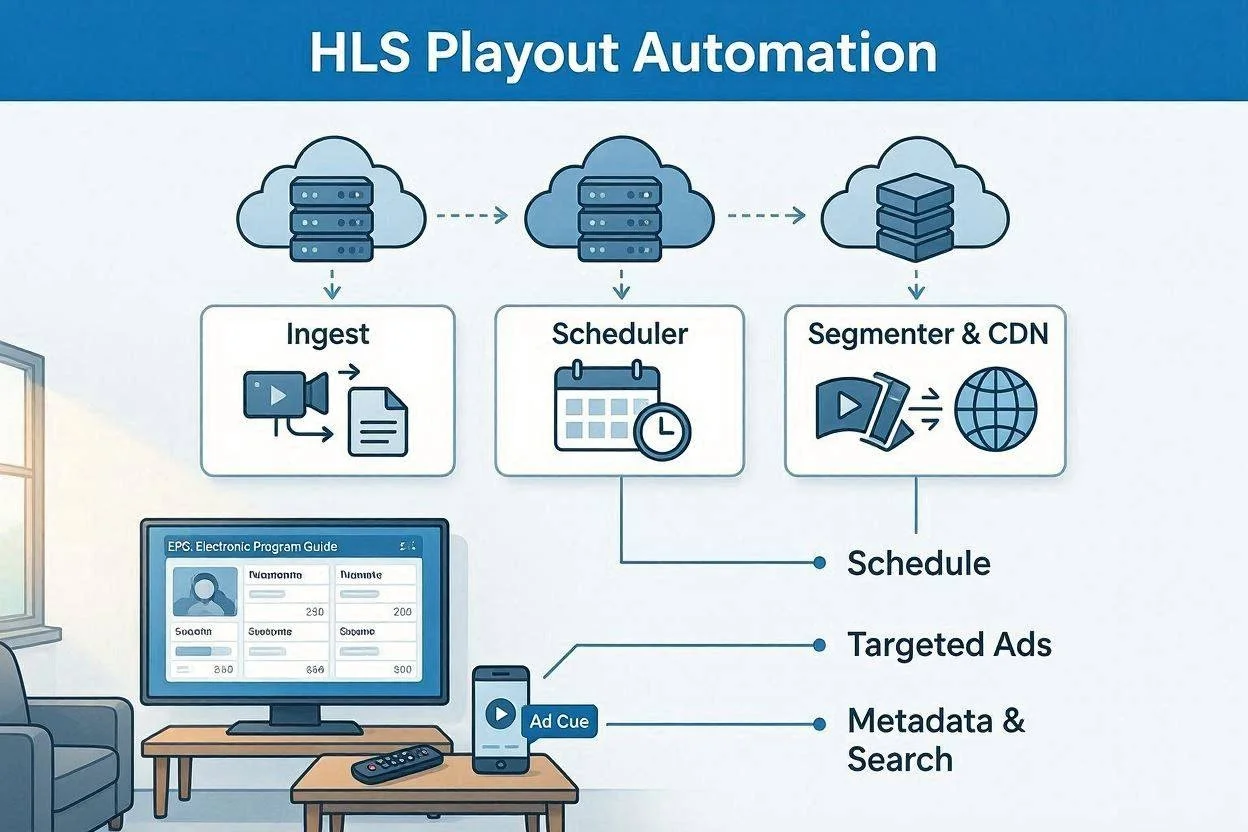
The broadcasting industry has experienced remarkable technological advancements over the last decade. Cloud infrastructure, OTT platforms, IPTV services, and FAST channels have transformed how television content is produced, scheduled, and delivered to audiences worldwide. Two technologies that play an increasingly important role in this ecosystem are HLS playout automation and the Electronic Program Guide (EPG). Together, they help broadcasters automate channel operations while improving the viewing experience through accurate scheduling and reliable content delivery.
Whether you are launching a digital television network, managing a FAST channel, or operating an OTT streaming platform, understanding how HLS playout automation works alongside an EPG is essential for building a professional broadcasting workflow.
The Evolution of Television Broadcasting
Traditional television broadcasting required physical control rooms, satellite transmission systems, dedicated playout hardware, and teams of operators who manually controlled programming schedules.
Cloud broadcasting has fundamentally changed these workflows.
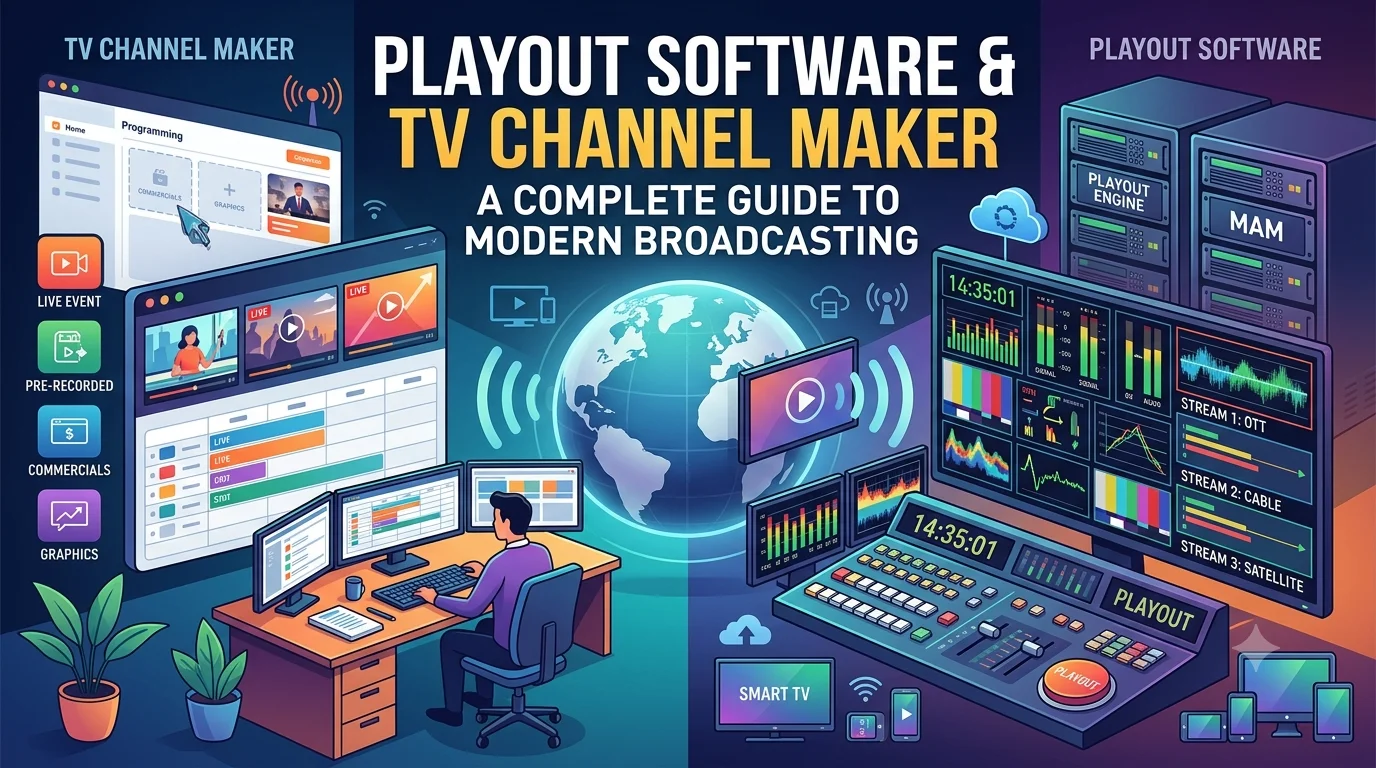
Modern broadcasting platforms automate scheduling, playlist execution, advertisement management, graphics, live event switching, and multi-platform distribution through centralized cloud infrastructure.
Automation reduces operational complexity while improving broadcast reliability.
This evolution has made television broadcasting accessible to organizations of all sizes.
What Is HLS Playout Automation?
HLS playout automation refers to the automated management and delivery of video content using the HTTP Live Streaming (HLS) protocol.
The automation system schedules programs, manages playlists, inserts advertisements, displays graphics, coordinates live events, and generates continuous HLS streams for viewers.
Rather than requiring constant manual supervision, broadcasters configure schedules in advance while the system automatically executes programming around the clock.
Automation improves efficiency while maintaining consistent channel operation.
Understanding HTTP Live Streaming
HTTP Live Streaming (HLS) is one of the world's most widely used streaming protocols.
Originally developed by Apple, HLS divides video into small segments that are delivered over standard web servers.
Streaming devices automatically adjust video quality according to available bandwidth, ensuring smooth playback with minimal buffering.
HLS supports both live streaming and video-on-demand services, making it ideal for modern OTT platforms and television networks.
Its compatibility across devices has made it an industry standard.
What Is EPG?
Many broadcasters ask, what is EPG and why is it so important?
An Electronic Program Guide (EPG) is a digital schedule that displays current and upcoming television programming.
Viewers use the EPG to browse channels, read program descriptions, check broadcast times, and discover new content.
For broadcasters, the EPG serves as an operational scheduling framework that coordinates automation systems with planned programming.
Accurate EPG data improves both operational management and audience satisfaction.
How HLS Playout Automation and EPG Work Together
Although they perform different functions, HLS playout automation and EPG systems are closely integrated.
The EPG defines the broadcast schedule by specifying which programs should play at particular times.
The automation system then follows that schedule, delivering HLS video streams according to the programmed timeline.
As content changes throughout the day, the EPG updates automatically while automation continues uninterrupted broadcasting.
This synchronization ensures viewers always receive accurate program information.
Benefits of Broadcast Automation
Modern television channels often operate continuously throughout the day.
Managing schedules manually would require significant staffing while increasing the likelihood of programming errors.
HLS playout automation provides several operational advantages:
- Continuous 24/7 broadcasting
- Automated playlist execution
- Advertisement scheduling
- Live event switching
- Branding graphics insertion
- Reduced operational costs
- Improved scheduling accuracy
Automation enables broadcasters to focus more on content strategy than routine operational tasks.
Improving Viewer Experience
A professional viewing experience depends on more than high-quality video.
Viewers also expect accurate program information, reliable schedules, and uninterrupted streaming.
An up-to-date Electronic Program Guide allows audiences to discover upcoming content easily, while HLS playout automation ensures broadcasts begin on time and continue without interruption.
These technologies work together to increase viewer confidence and encourage longer viewing sessions.
Consistency strengthens audience loyalty.
Multi-Platform Distribution
Modern audiences access television through many different devices.
Smart TVs, Android TV, Apple TV, Fire TV, Roku, smartphones, tablets, gaming consoles, desktop browsers, and OTT applications all require optimized streaming.
HLS playout automation generates adaptive streams that support virtually every major viewing platform.
The EPG remains synchronized across devices, ensuring viewers receive the same programming information regardless of how they access the channel.
Cross-platform compatibility has become essential.
Cloud-Based Broadcasting Advantages
Cloud-native broadcasting platforms simplify both HLS automation and EPG management.
Administrators manage schedules, upload content, monitor channels, and update programming remotely using centralized dashboards.
Cloud deployment also offers:
- Flexible scalability
- Automatic software updates
- Disaster recovery
- Lower infrastructure costs
- Remote administration
- Faster deployment
These advantages make cloud broadcasting highly attractive for modern television networks.
Future of Broadcast Automation
Artificial intelligence continues transforming broadcasting workflows.
Future automation systems will likely optimize schedules automatically, predict viewer preferences, personalize Electronic Program Guides, and improve adaptive streaming performance.
Machine learning will also enhance content recommendations, advertisement placement, and operational analytics.
These innovations will further streamline television broadcasting while improving audience engagement.
Conclusion
Understanding what is EPG is essential for broadcasters implementing HLS playout automation. While HLS automation manages continuous content delivery through adaptive streaming technology, the Electronic Program Guide organizes programming schedules that help viewers navigate television channels effectively.
Together, these technologies create reliable, scalable broadcasting workflows that improve operational efficiency, strengthen viewer experiences, and support the growing demands of OTT platforms, IPTV services, FAST channels, and cloud-based television networks.