Sign up with Google
 Sign in with Zoho
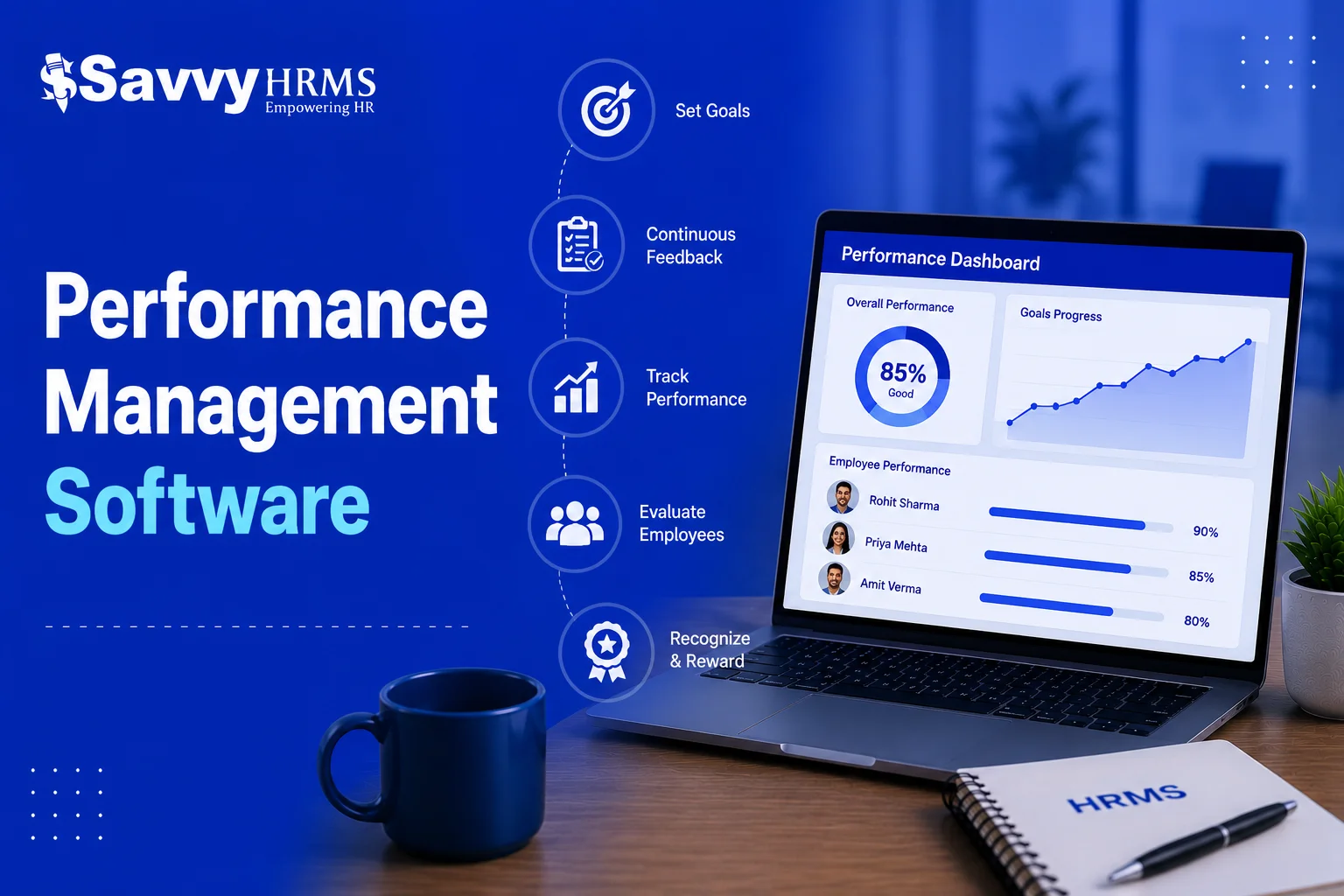
Employee performance used to be judged once a year, in a room with a printed form and a manager scrambling to remember what happened in March. That approach doesn't work anymore — and most HR teams know it. The organizations pulling ahead today are the ones using performance management software to turn scattered feedback, goals, and reviews into one connected, ongoing process.
But performance management software has become a crowded category. Every vendor claims AI-powered insights, seamless integrations, and a beautiful interface. So how do you separate genuine value from marketing gloss?
This guide breaks down what performance management software actually does, why it matters, the features worth prioritizing, and how to evaluate vendors without getting lost in checkbox comparisons.
What Is Performance Management Software?
Performance management software is a digital platform that helps organizations plan, track, evaluate, and improve employee performance throughout the year — not just during a single review cycle. It typically brings together goal-setting, continuous feedback, one-on-one meetings, formal reviews, recognition, and talent analytics into a single system that managers and employees actually use day to day.
The goal isn't just to digitize paperwork. It's to replace guesswork with visibility — giving managers real signals about how their teams are doing, and giving employees clarity about what's expected of them and how they're progressing.
Why Performance Management Software Matters More Than Ever
A lot of companies still treat performance management as an HR compliance task rather than a growth driver. That mindset is costly. Consider a few realities that show up again and again in workforce research:
- A large share of employees say they don't fully understand what's expected of them in their role.
- Most employees want more feedback than they currently receive.
- Recognition remains one of the most under-delivered — and most requested — experiences at work.
- Organizations with clearly defined individual goals see meaningfully higher engagement than those without them.
None of these are software problems on the surface. They're management and communication problems. But the right platform makes it dramatically easier to solve them — by prompting regular check-ins, surfacing goal progress automatically, and giving managers structured ways to have better conversations instead of leaving it to memory and good intentions.
Here's what a strong system delivers when it's working well:
1. Clarity replaces ambiguity. Employees know what success looks like because goals are visible, documented, and tied to real business objectives — not buried in a spreadsheet nobody opens.
2. Feedback becomes a habit, not an event. Instead of a once-a-year scramble, managers and peers can give feedback in the moment, when it's actually useful.
3. Development plans get built on real data. Skill gaps and growth opportunities show up in the system instead of relying on a manager's memory during review season.
4. Recognition happens in real time. Public, timely recognition reinforces the behaviors you actually want to see more of — instead of praise arriving months after the fact, if at all.
5. Trust grows between managers and employees. Transparent goals, consistent conversations, and visible follow-through build the kind of trust that's nearly impossible to fake.
6. Leaders get a real talent pipeline. With performance data centralized, succession planning and promotion decisions stop being guesswork.
7. The whole organization stays aligned. When individual and team goals visibly ladder up to company priorities, people understand how their work matters.
8. Business outcomes actually improve. Many organizations privately admit their current performance process isn't moving the needle — a modern system is built specifically to close that gap.
The Four Phases Every Performance Management System Should Support
Regardless of vendor, the strongest performance management platforms are built around a continuous cycle rather than a single annual event.
1. Plan
Goals should be set collaboratively, tied to organizational strategy, and visible to everyone involved — not locked away in a manager's private notes. Good planning tools let you cascade company goals down to teams and individuals so everyone can see how their work connects to the bigger picture.
2. Monitor
Once goals are set, you need real-time visibility into progress. This means dashboards, automated check-ins, and early warning signs when something's off track — not a status update that only surfaces during a quarterly meeting.
3. Review
This is where development actually happens. Reviews should go beyond a rating scale — they should open a real conversation, incorporate historical context to reduce recency bias, and ideally include input from peers, not just a single manager's perspective.
4. Recognize
Recognition closes the loop. When people are acknowledged for good work as it happens, it reinforces the right behaviors and keeps morale high between formal review cycles.
A platform that only covers one or two of these phases is a partial solution. Look for software that treats the full cycle as connected, not four separate tools bolted together.
Must-Have Features in Modern Performance Management Software
Goal Management
- Cascading goals that connect individual, team, and company objectives
- Support for OKRs, SMART goals, or whatever framework fits your culture
- Real-time progress tracking and shared ownership across teams
- AI-assisted goal writing to save managers' time
One-on-Ones and Reviews
- Digital meeting tools with shared agendas and action items
- Templates that guide managers toward better conversations
- Automatic reminders so 1-on-1s actually happen consistently
- Review cycles that pull in goal data and prior feedback automatically
- 360-degree and multi-rater feedback options
Recognition
- Easy peer-to-peer recognition, not just top-down praise
- Automated milestone and anniversary reminders
- A public feed that makes recognition visible across the company
- Integration with tools like Slack or Teams so recognition doesn't get siloed in a separate app
Continuous Feedback
- Flexible, on-demand feedback requests
- AI support for writing clear, constructive comments quickly
- Analytics that surface development trends over time
Talent and Succession Insights
- 9-box or similar visualization tools to spot flight risk and promotion readiness
- Calibration tools for fair, consistent ratings across teams
- Succession planning that pulls directly from performance data
8 Questions to Ask Before You Buy Performance Management Software
Choosing the right platform isn't about finding the tool with the most features — it's about finding the one that fits how your organization actually works. Before committing to a vendor, ask:
- What problem are we actually trying to solve? Are you fixing broken review cycles, low recognition, unclear goals, or all three? Your answer should shape your shortlist.
- What's working and what isn't in our current process? An employee engagement survey is often the fastest way to find out.
- Will managers actually want to use this? Software that feels like a burden gets ignored, no matter how powerful it is.
- Can it flex to fit our culture? Look for customizable templates, branding options, and the ability to reflect your company's values — not a rigid, generic workflow.
- Does it integrate with our HRIS and everyday tools? Managers shouldn't need five logins to do their job.
- Does the vendor use its own product? If a company won't use the software it sells, that's worth noting.
- What does implementation and ongoing support look like? Ask about onboarding help, response times, and whether support is available to all users, not just administrators.
- Can the vendor help you prove ROI? A serious platform should help you measure whether performance management is actually improving outcomes, not just generating reports nobody reads.
Where Performance Management Software Beats the Alternatives
Some organizations try to get by with generic tools instead of a dedicated platform. Here's how they typically stack up:
- HRIS systems handle records, payroll, and benefits well, but usually lack the depth needed for real performance conversations and goal tracking.
- Spreadsheets and generic office tools are cheap and familiar, but they don't scale, they're error-prone, and they make it nearly impossible to spot trends across a growing team.
- Purpose-built performance management platforms are designed specifically for this job — combining goals, feedback, reviews, and analytics into one connected experience that grows with your organization.
If performance management is a genuine priority — not just a compliance checkbox — a dedicated platform almost always pays for itself in time saved and better decisions made.
Moving From Annual Reviews to Continuous Performance Management
Most organizations sit somewhere between two extremes: purely traditional annual reviews and fully continuous, coaching-based performance management. Very few companies flip a switch and land fully in the continuous camp overnight — and that's fine.
A realistic path forward looks like this:
- Start small. Increase feedback frequency or introduce regular 1-on-1s before overhauling the entire review process.
- Bring employees into the conversation. People are far more likely to embrace a new process they helped shape.
- Train managers to coach, not just evaluate. This is often the hardest and most important shift.
- Let technology carry the operational weight. Automated reminders, dashboards, and templates keep the new habits from quietly fading after a few months.
- Communicate the "why" clearly. People adapt faster to change when they understand the reasoning behind it.
- Review and adjust. Treat your performance process itself as something you continuously improve — not something you set once and forget.
Final Thoughts
The best performance management software doesn't just digitize your existing process — it changes how managers lead and how employees experience their work. It replaces vague annual reviews with ongoing clarity, replaces rare feedback with regular coaching, and replaces guesswork with real data about where your talent stands.
If you're evaluating options, resist the urge to chase the longest feature list. Focus instead on what your managers and employees will actually use, how well it fits your culture, and whether the vendor will genuinely support you after the sale — not just during the demo.
At Savvy HRMS, we built our performance management tools around exactly that principle: give managers and employees a system they'll actually want to use, so performance conversations become a habit instead of a headache. If you're ready to move beyond spreadsheets and once-a-year reviews, we'd love to show you what a connected performance management process can look like for your team.