Sign up with Google
 Sign in with Zoho
You're standing at the sink watching water pool around your ankles instead of draining the way it should. If that sounds familiar, you're not alone. It's one of the most common calls we get, and it's also one of the most misunderstood plumbing problems out there. Some people swear by baking soda. Others grab a bottle of chemical gel the moment they see standing water. Neither answer is complete, and the "right" fix actually depends on what kind of clog you're dealing with.
This guide walks through what we've learned from years of clearing drains in older Los Alamitos homes, newer builds in Cypress, and everything in between, so you know what to try yourself, what to avoid, and when it's genuinely time to call in help.
What Exactly Counts as a "Clogged Drain"?
Not every slow drain is the same problem. We've walked into homes where the owner assumed they needed a full sewer line replacement when it was really just a hairball in the shower trap, and we've seen the opposite too, where someone spent weeks pouring baking soda down a drain that actually had a collapsed section of pipe underneath the slab.
Definition Box
If it's one sink acting up, you're likely dealing with a localized clog that's fair game for DIY methods. If your toilet gurgles every time the washing machine drains, that's a different animal entirely, and we'll cover that further down.
Why Drains Clog in the First Place
Clogs build up gradually. Think of it less like a sudden blockage and more like plaque building on teeth over months of skipped flossing. Whatever goes down the drain sticks to the pipe walls a little at a time, and the passage narrows until water can't get through fast enough.
The Usual Suspects
- Hair, especially in bathroom sinks and shower drains
- Grease, oil, and fat that solidify once they cool inside the pipe
- Soap scum, which reacts with minerals in hard water to form a sticky film (something we see a lot in Orange County given the local water hardness)
- Food scraps, coffee grounds, and starchy foods like rice or pasta that expand after they're wet
- Small objects that fall in by accident, like bottle caps or kids' toys
- Tree roots working their way into older sewer lines, common in neighborhoods with mature landscaping
Kitchen Clogs vs. Bathroom Clogs
DIY Methods That Actually Work
Here's what we tell homeowners to try before picking up the phone.
The Boiling Water Trick
This sounds almost too basic, but for grease clogs it genuinely helps. Boil a full kettle and pour it down the drain in two or three stages, waiting about 30 seconds between pours. The heat softens solidified grease so it can move along with the water instead of hardening in place. One caution from field experience: skip this on a drain that's already showing signs of a severe blockage, since repeated scalding water sitting against a compromised joint can occasionally make things worse rather than better.
Baking Soda and Vinegar
A classic for good reason. Pour about half a cup of baking soda down the drain, follow with an equal amount of vinegar, and let the fizzing reaction go to work loosening grime along the pipe walls.
How Long to Let It Sit
Fifteen to thirty minutes is usually enough, then flush with hot water. If the drain is still sluggish after that, don't repeat the process five more times hoping for a different result. In our experience, that pattern almost always means the clog sits further down the line than a surface treatment can reach.
The Plunger (Yes, Technique Matters)
We've watched plenty of people plunge a drain for ten minutes with nothing to show for it, simply because the technique was off. You need enough water in the sink or tub to fully cover the plunger's rubber cup, and a tight seal against the drain opening. Push down slowly first to force air out, then use firm, quick strokes. It's less about muscle and more about maintaining consistent suction pressure.
A Drain Snake or Zip-It Tool
For hair clogs, a plastic zip-it tool (the barbed plastic strips sold at most hardware stores) or a hand-crank drain snake reaches much further than a plunger ever could. Insert it, twist, and pull. Fair warning, what comes out isn't pretty, but it works.
What You Should Never Pour Down a Drain
Chemical drain cleaners look like the fastest fix, and that's exactly why so many homeowners default to them. In practice, they cause more problems than they solve.
Why Chemical Drain Cleaners Backfire
These products rely on caustic chemicals like sodium hydroxide or sulfuric acid to break down clogs. According to a summary of documented hazards on <cite index="9-1">Wikipedia's page on chemical drain cleaners</cite>, strongly corrosive and acidic drain cleaners rank among the most hazardous household products available to consumers, capable of causing severe burns and even fatal outcomes if swallowed.
Here's the part most product labels don't mention: if the clog doesn't fully clear on the first try, that caustic liquid sits in standing water against your pipe, slowly corroding it from the inside. And if a plumber later needs to snake that same drain, they're now handling leftover chemical residue in a confined space. It's simply not worth the risk to your pipes, your skin, or your septic system if your home has one.
When DIY Isn't Enough: Signs You Need Professional Orange County Drain Cleaning
Sometimes you do everything by the book and the water still won't move. That's usually your plumbing telling you the issue runs deeper than a sink-level fix.
Q&A: Common Homeowner Questions
Q: My drain clogs again within a week of clearing it. What's happening? A: A clog that keeps returning in the same spot usually points to a partial blockage further down the line, or a structural issue like a sagging section of pipe, neither of which basic tools can permanently fix.
Q: Multiple drains are slow at the same time. Is that serious? A: Yes. That pattern is a strong sign the main sewer line is affected, not just one fixture, and it isn't something baking soda is going to resolve.
Q: I hear gurgling from other drains when I flush the toilet. Should I be concerned? A: That gurgling means air is trapped somewhere in the plumbing system because of a blockage. It's a solid reason to bring in professional orange county drain cleaning rather than keep guessing at home fixes.
Q: Can tree roots really get into pipes? A: They can, and we see it often in older Orange County neighborhoods with mature trees. Roots seek out moisture and can work their way into even hairline cracks in aging pipe over the years.
When any of the above sounds familiar, calling a licensed team for drain cleaning orange county homeowners already trust can save you from turning a manageable clog into a cracked pipe or a far more expensive sewer line repair.
How Professionals Unclog Drains
Once DIY methods stop working, plumbers generally lean on a few core techniques. Here's what each one actually does, so you know what you're paying for.
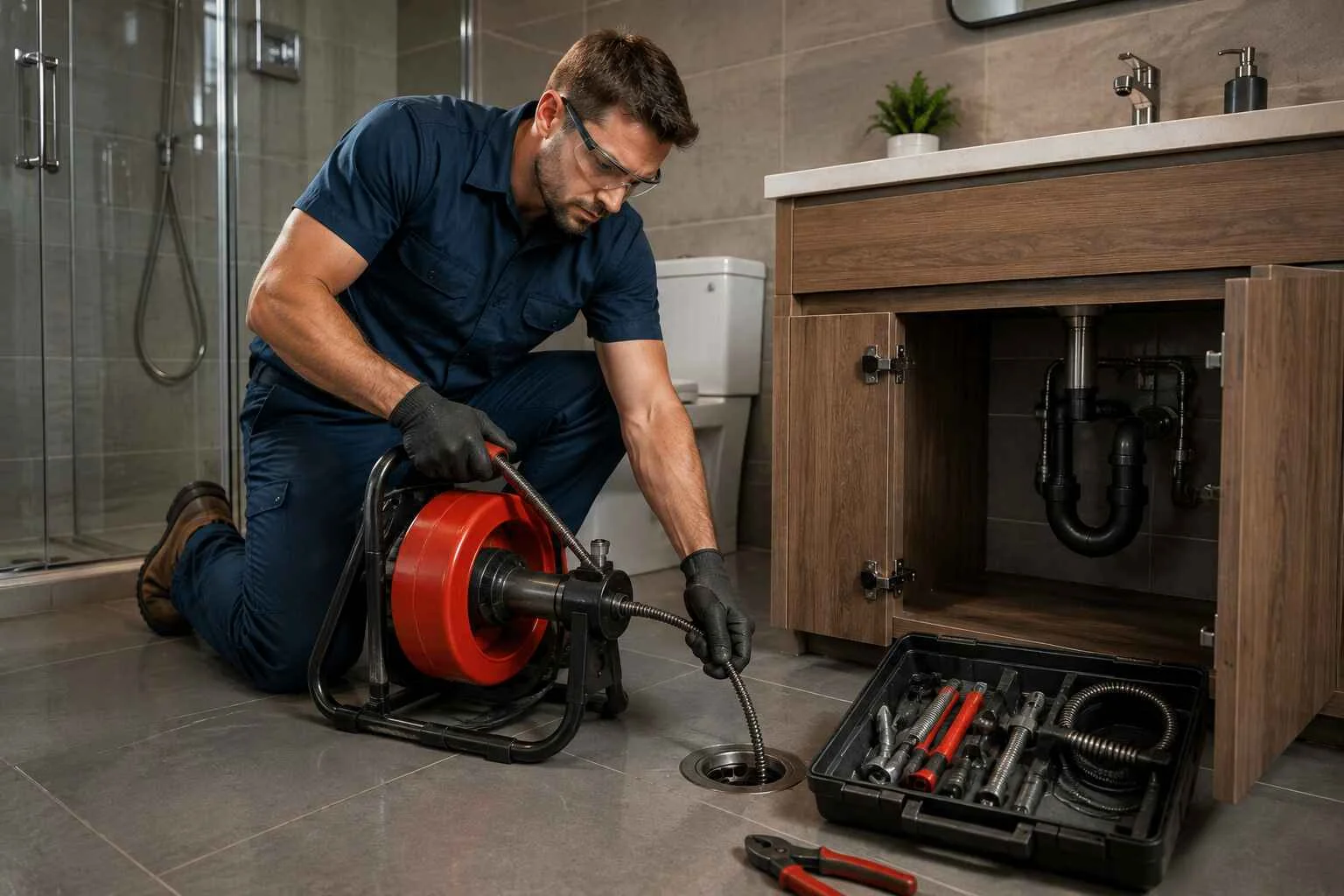
- Drain Snaking: A motorized cable with a rotating head that breaks apart and physically pulls out clogs, including hair, roots, and years of buildup that a hand tool can't reach.
- Hydro Jetting: High-pressure water blasts through the pipe and scours the interior walls clean, rather than just punching a hole through the clog and leaving residue behind. This tends to be the more thorough option for grease-heavy kitchen lines or pipes with a long buildup history.
- Camera Inspection: A small camera is fed into the line so the technician can actually see what's causing the blockage, whether that's root intrusion, a collapsed section, or ordinary buildup, so the repair matches the real problem instead of a guess.
If you want a closer look at what a service visit typically covers, SJ Plumbing's drain cleaning service page walks through the process in more detail.
How to Keep Drains From Clogging Again
Prevention really is easier than the fix. A handful of habits go a long way over time:
- Use a mesh drain cover in showers and tubs to catch hair before it enters the pipe
- Never pour grease or cooking oil down the kitchen sink, even small amounts accumulate
- Run hot water for about 30 seconds after washing greasy dishes to flush residue through
- Book routine orange county drain cleaning once a year, especially in older homes
- Avoid flushing anything besides toilet paper, regardless of what the packaging claims about being "flushable"
Conclusion
Unclogging a drain doesn't have to mean reaching for a bottle of harsh chemicals the moment water stops draining. Start simple: boiling water, the baking soda and vinegar combination, a properly used plunger, or a drain snake for hair-based clogs. Between them, these cover the majority of everyday clogs without putting your pipes at risk. But if the same drain keeps backing up, several fixtures are affected at once, or you're hearing strange gurgling sounds through the house, that's your plumbing signaling that the problem sits beyond what a sink-level fix can solve. At that point, a licensed team offering drain cleaning orange county homeowners rely on can pinpoint the actual cause with equipment DIY methods simply can't match, and help you avoid a much bigger repair bill later on.
FAQs
1. Is it safe to use a plunger on every type of clogged drain?
Mostly, yes, but avoid it on a toilet right after using a chemical cleaner, since splashing that liquid can cause burns. For sinks and tubs, a plunger is one of the safer first steps to try.
2. How often should I schedule professional drain cleaning?
Once a year works well for most households. Homes with older pipes, large trees nearby, or frequent clogs may benefit from a check every six months instead.
3. Can I use a wire coat hanger instead of a drain snake?
You can in a pinch for shallow clogs, but a proper zip-it tool or drain snake is built to grab hair and debris without scratching the interior of the pipe.
4. Why does my drain still smell bad after I clear the clog?
Lingering odor usually comes from organic buildup, food, soap, or hair, still coating the pipe walls even after the blockage itself is gone. A baking soda and vinegar flush typically clears the smell along with any leftover residue.
5. Are chemical drain cleaners ever okay to use?
They're best avoided altogether. Even when they appear to work, they can weaken pipes over time and carry serious health risks if they splash back or come into contact with other chemicals already sitting in the line.