Sign up with Google
 Sign in with Zoho

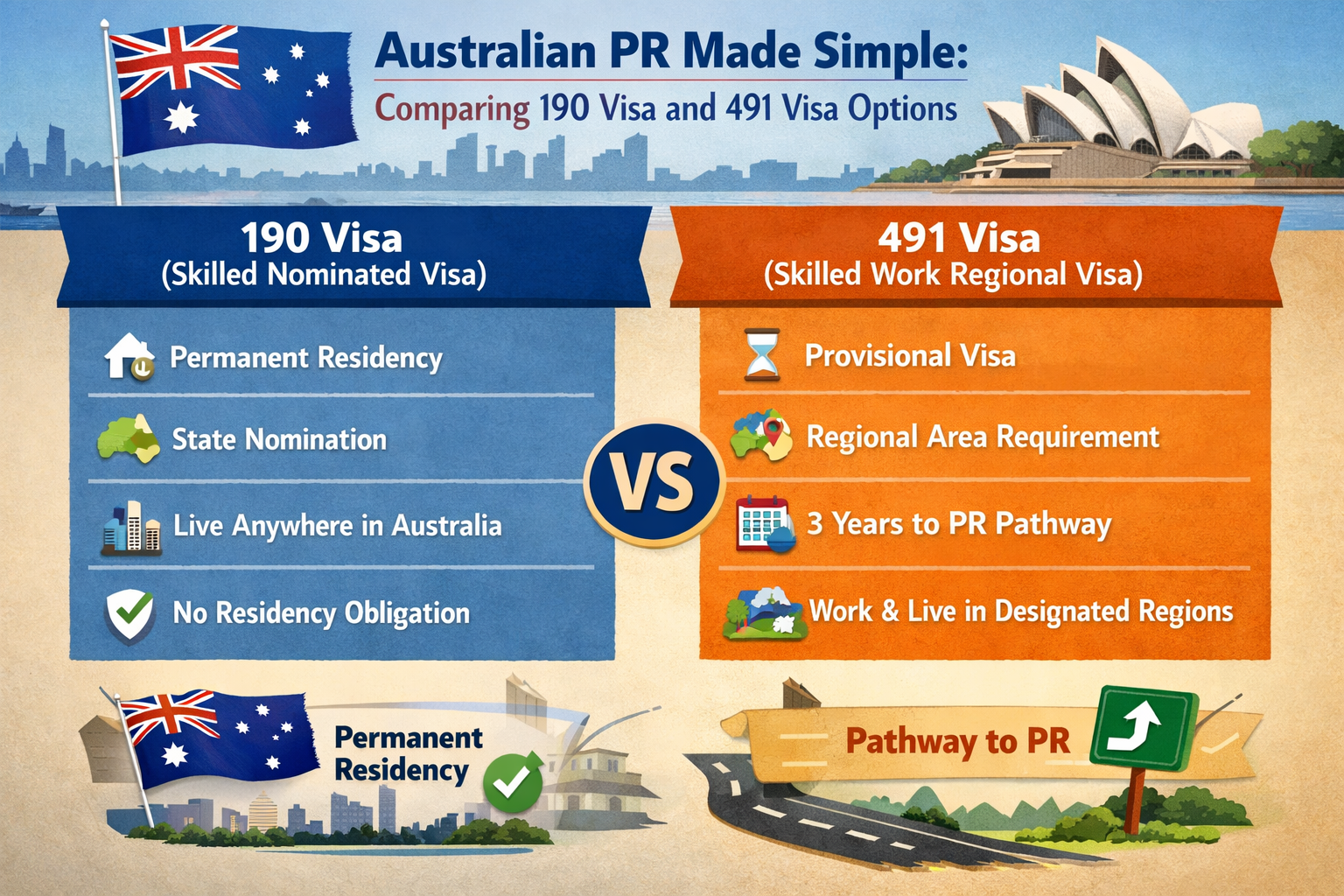
Choosing the right visa is a crucial step toward securing permanent residency in Australia. Among options for skilled migrants, the skilled nominated visa (subclass 190) and the skilled work regional provisional visa (subclass 491) are among the most sought-after pathways. While both visas target skilled workers, they differ in terms of benefits, eligibility, and long-term opportunities. Understanding these distinctions will help you plan your migration pathway according to your career goals.
Understanding the Skilled Nominated Visa Subclass 190
The 190 visa Australia is a Permanent Residency (PR) visa for skilled workers who receive a nomination from an Australian state or territory government. This visa allows applicants to live and work permanently in Australia, with an expectation to reside in the nominating state for at least two years.
Key points to know about the skilled nominated visa subclass 190:
- Grants immediate permanent residency
- Requires nomination from a state or territory
- Your occupation must be on the relevant skilled occupation list
- Minimum of 65 points is required for eligibility
- Suitable for applicants with in-demand skills or high points
The 190 visa Australia is ideal for skilled professionals seeking a direct and stable path to permanent residency.
What is the Skilled Work Regional Provisional Visa Subclass 491?
The 491 visa Australia is a provisional visa valid for five years, designed to encourage skilled workers to live and work in regional areas of Australia. Applicants can be nominated by a state or territory government or sponsored by an eligible relative residing in a designated region.
Key aspects of the skilled work regional provisional visa subclass 491 include:
- Valid for five years
- Requires applicants to live and work in a designated regional area
- Provides a pathway to permanent residency after three years via the subclass 191 visa
- Offers flexibility to include eligible family members
Unlike the 190 visa, the 491 visa Australia is region-specific and provides a longer-term pathway to permanent residency if regional and income conditions are met.
Key Differences Between 190 and 491 Visas

Eligibility Criteria
Both visas share several eligibility requirements:
- Age under 45 years
- Competent English (IELTS 6.0 or equivalent)
- Skills assessment in your nominated occupation at the time of invitation
- Occupation listed on the relevant skilled occupation list
Applicants should also review any additional state or regional requirements when lodging their visa applications.
Benefits of Both Visa Types
Benefits of Subclass 190:
- Immediate permanent residency
- Access to Medicare and social services
- Flexibility to live and work anywhere in Australia after two years in the nominated state
Benefits of Subclass 491:
- Multiple entry and exit flexibility during the visa validity
- Long-term pathway to permanent residency through Subclass 191
- Ability to include family members who meet health and character requirements
Which Visa Should You Choose?
If you are willing to live in a specific regional area for at least three years, the skilled work regional provisional visa subclass 491 is a suitable option. However, if you prefer flexibility to live in different cities and want a faster route to permanent residency, the skilled nominated visa subclass 190 is the better choice.
Seek Expert Guidance
A professional Immigration Consultant or Migration Agent Adelaide can provide personalized advice, assess your eligibility, and guide you through the state nomination and application process for both visas. With expert guidance, you can make informed decisions that align with your long-term migration goals in Australia.