Sign up with Google
 Sign in with Zoho

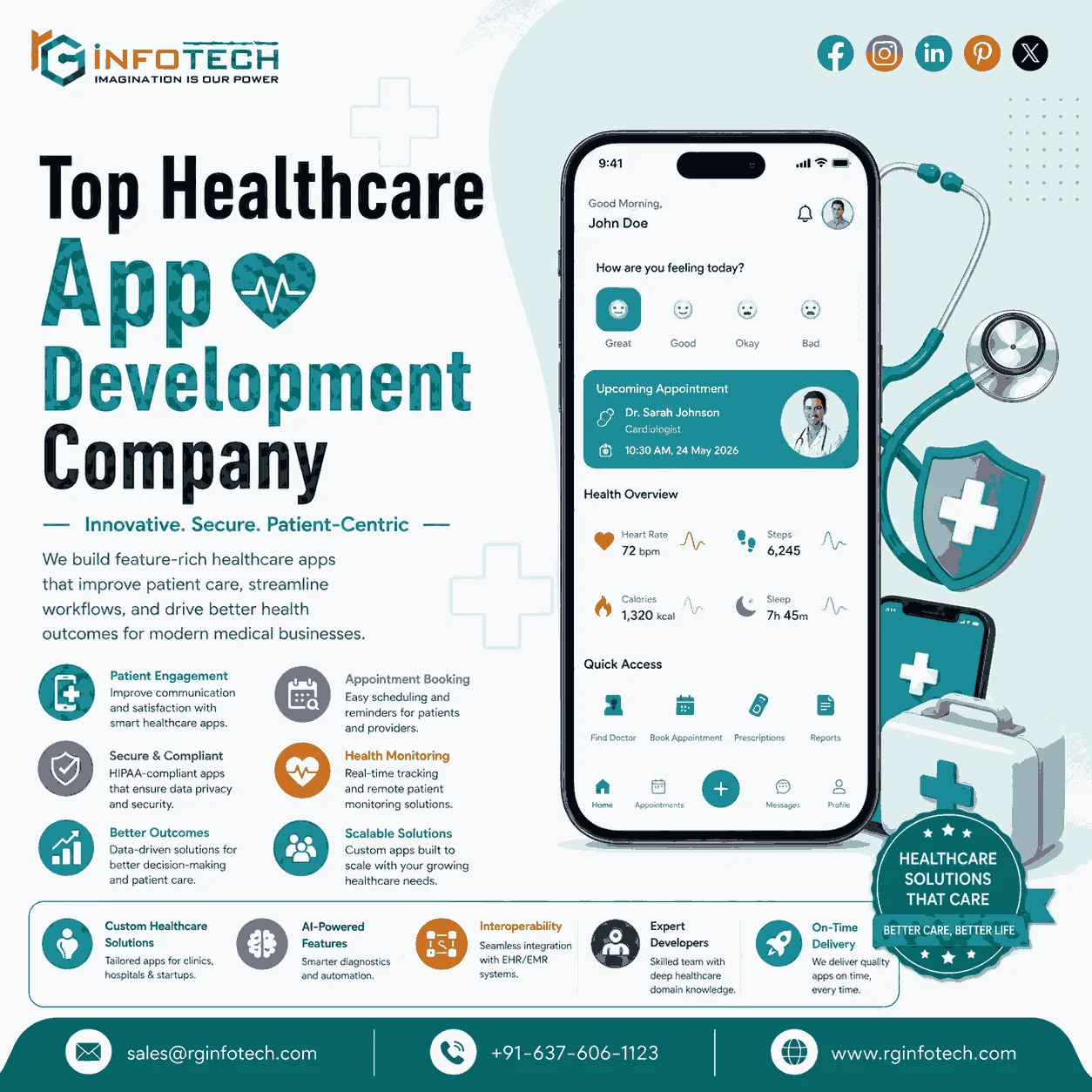
Healthcare businesses are increasingly investing in digital platforms to improve patient engagement, streamline operations, and create new revenue opportunities. However, one important question remains: Is it better to build a custom healthcare application or use an existing SaaS solution?
SaaS healthcare platforms can reduce initial costs and speed up deployment. Custom solutions, on the other hand, require a larger upfront investment but can provide greater control, scalability, personalization, and long-term financial benefits.
The actual ROI depends on development costs, business objectives, user adoption, operational savings, revenue models, and the application's ability to scale. Let's compare both approaches and understand where custom development can deliver stronger returns.
Understanding ROI in Healthcare App Development
Return on investment measures how much financial value an application generates compared with the amount invested in building and operating it.
A basic ROI formula is:
ROI = (Net Return − Investment Cost) ÷ Investment Cost × 100
For healthcare applications, ROI isn't limited to direct revenue. It can also come from:
- Reduced administrative costs
- Lower operational expenses
- Increased patient retention
- Higher appointment bookings
- Improved staff productivity
- Subscription or membership revenue
- Reduced dependency on third-party platforms
- Better resource utilization
- Faster healthcare service delivery
A healthcare business should therefore evaluate both financial returns and operational improvements when comparing custom software with SaaS.
What Does SaaS Healthcare Software Offer?
SaaS platforms are ready-made solutions that healthcare businesses can subscribe to monthly or annually. They typically provide standard features such as appointment management, patient communication, billing, analytics, and basic administrative tools.
The biggest advantage is the lower initial investment. Businesses don't need to build the platform from scratch, and deployment can often happen much faster.
However, SaaS comes with recurring subscription costs. As the number of users, providers, locations, or transactions increases, expenses may also increase.
Businesses may also encounter limitations when they need highly specific workflows or integrations.
How Custom Healthcare Apps Can Improve ROI
A custom healthcare application is designed around the organization's specific requirements. Although development costs are usually higher initially, the platform can become a long-term digital asset.
A reliable Healthcare App Development Company can create features and workflows specifically aligned with business operations instead of forcing the organization to adapt to a generic platform.
1. Lower Long-Term Operating Costs
SaaS solutions usually involve recurring subscription payments. Over several years, these expenses can become significant.
With custom software, the business invests heavily upfront but gains greater control over the platform. After development, maintenance and infrastructure costs can be managed according to actual requirements.
For organizations with thousands of users or multiple branches, avoiding increasing SaaS subscription fees can significantly improve long-term ROI.
2. Better Patient Retention
Healthcare apps can offer personalized experiences through appointment reminders, medication notifications, health tracking, teleconsultation, digital records, and secure communication.
A smoother patient experience can encourage users to continue using the platform rather than switching to competitors.
Higher retention means businesses can generate more value from existing users while reducing the cost associated with acquiring new patients.
3. Increased Revenue Opportunities
Custom applications can support business-specific monetization strategies.
For example, healthcare organizations can introduce:
- Premium healthcare subscriptions
- Telemedicine consultations
- Online pharmacy services
- Wellness programs
- Diagnostic bookings
- Personalized health plans
- Corporate healthcare packages
Because custom software can be designed around these revenue models, businesses have more freedom to experiment and optimize their income streams.
Customization Can Create Competitive Advantages
One of the biggest limitations of SaaS is that competitors may be using the same platform and similar features.
Custom development allows businesses to introduce unique functionality.
An experienced Healthcare App Development Company can integrate AI-powered recommendations, wearable-device connectivity, advanced analytics, automated workflows, multilingual support, or specialized healthcare modules based on the organization's requirements.
These capabilities can differentiate the application and create additional value for patients and healthcare providers.
Scalability Also Affects ROI
A SaaS platform may work well when a healthcare organization is small. But rapid growth can create challenges involving pricing, customization, integrations, and performance.
Custom applications can be architected with future expansion in mind.
For example, a healthcare startup may initially support a few hundred patients but eventually expand to thousands or millions of users. A scalable architecture can accommodate increasing traffic, additional providers, new locations, and expanded services without requiring the organization to completely replace its platform.
This long-term flexibility can make custom development more financially attractive.
Data Ownership and Integration
Healthcare businesses work with sensitive information and often need integrations with electronic health records, payment systems, laboratory platforms, wearable devices, insurance systems, and other healthcare technologies.
Custom applications provide greater control over how these integrations are implemented.
A Healthcare App Development Company can also build APIs and data workflows around the organization's existing infrastructure, reducing dependence on a single software vendor.
Better integration can reduce manual data entry, eliminate repetitive administrative tasks, and improve productivity—all of which contribute to ROI.
When SaaS May Deliver Better ROI
Custom development isn't always the right answer.
SaaS can provide better ROI when:
- The business has a limited initial budget
- Standard healthcare features are sufficient
- The application needs to launch quickly
- The organization doesn't require extensive customization
- User volume is relatively small
- The business wants predictable short-term expenses
For a startup testing a new healthcare concept, SaaS can be a practical way to validate demand before making a larger technology investment.
When Custom Development Makes More Financial Sense
Custom development becomes more attractive when a business expects long-term growth and requires specialized functionality.
It can be particularly valuable when:
- User numbers are expected to grow rapidly
- SaaS subscription costs become expensive at scale
- Unique workflows are essential
- Multiple systems need integration
- Advanced security and compliance requirements exist
- The application is a core business product
- New revenue streams depend on customization
The right Healthcare App Development Company can help businesses evaluate these factors before development begins and create a solution based on measurable business objectives.
How to Calculate Potential ROI
Before selecting an approach, healthcare organizations should estimate both costs and potential returns.
Consider:
Initial Investment: Development, UI/UX design, testing, infrastructure, and deployment.
Operating Costs: Hosting, maintenance, security, updates, support, and third-party services.
Revenue: Subscriptions, consultations, bookings, premium features, and other monetization channels.
Savings: Reduced administrative work, fewer manual processes, improved staff productivity, and lower platform fees.
For example, if a custom application costs $100,000 to develop but generates $180,000 in additional revenue and savings during its measured period, the net return is $80,000.
ROI would therefore be:
($180,000 − $100,000) ÷ $100,000 × 100 = 80%
The example is illustrative; actual returns depend on the healthcare business model, adoption rate, operating costs, and implementation strategy.
Final Thoughts
Custom healthcare app development can deliver stronger long-term ROI than SaaS when the application is central to the business, requires specialized functionality, and is expected to scale significantly.
SaaS remains valuable for businesses seeking fast deployment and lower upfront costs. However, recurring fees, limited customization, integration restrictions, and vendor dependency can affect profitability over time.
The best decision isn't simply about choosing the cheaper option. It is about selecting the technology strategy that generates the highest long-term business value.



 (1).webp)