Sign up with Google
 Sign in with Zoho

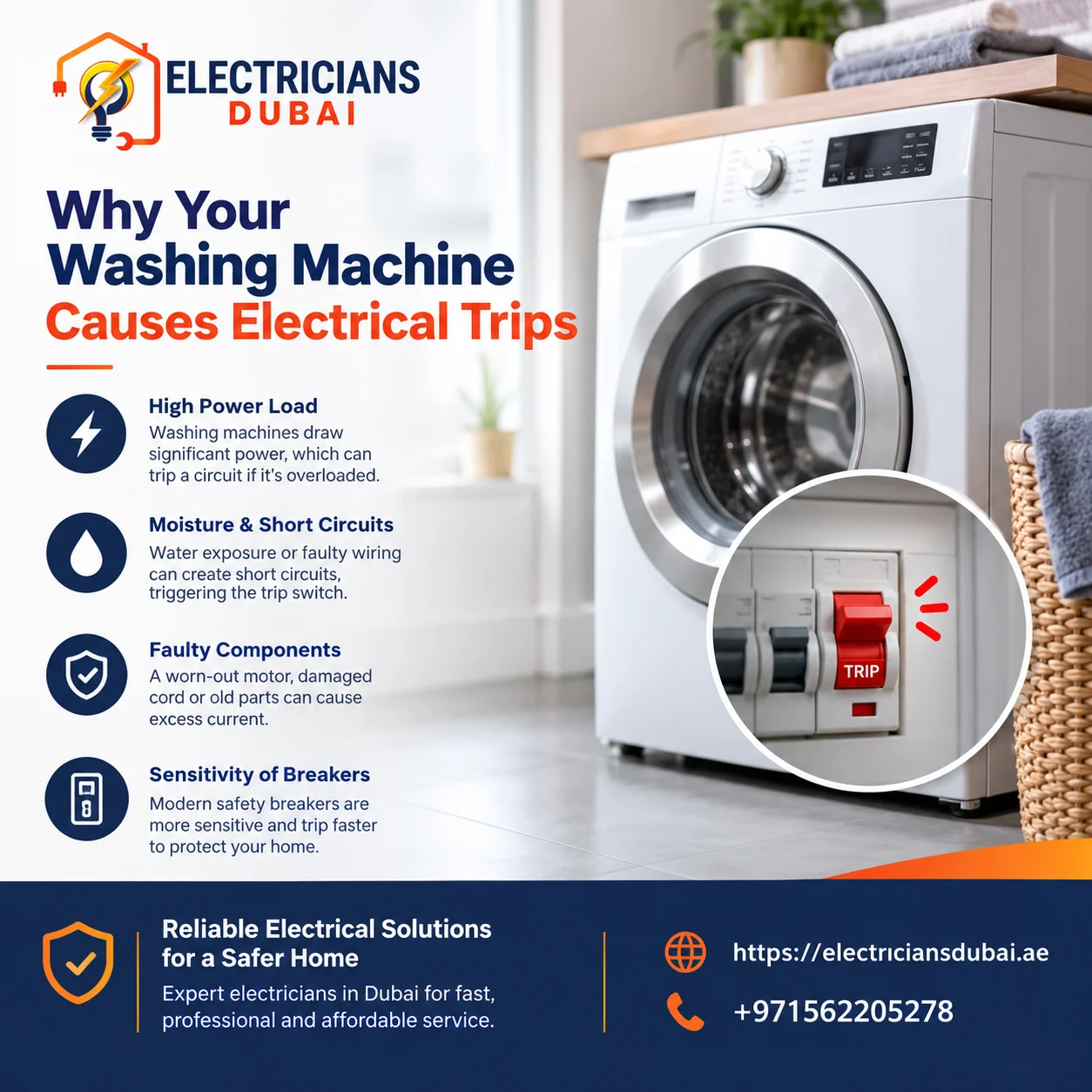
You press start, the drum fills, and thirty seconds later the whole laundry area goes quiet. Annoying, right? We’ve been called out for this exact problem in villas, apartments, and shared staff rooms all over the city, and the cause is rarely as scary as it looks. Still, a breaker that trips again and again is telling you something. If you’re hunting for an Electrician Dubai residents can rely on, start here. This guide covers why washers trip the power, what you can safely check on your own, and when it’s smarter to pick up the phone.
Why a Washing Machine Trips the Breaker: What an Electrician Dubai Sees Most
A washer mixes electricity and water in one box. That’s the whole problem in a sentence. The motor, the pump, and the heating element all sit close to moisture, so even a tiny fault gets noticed quickly. The breaker isn’t being difficult when it cuts out. It’s stopping a shock before one happens.
Which Breaker Flipped?
Check your distribution board before anything else. A regular MCB usually drops when too much power is being pulled or when there’s a short. An RCD (some people say ELCB) drops when current leaks to earth, which points to damaged insulation or water where it shouldn’t be. Then think about the timing. Did it trip while filling, heating, draining, or spinning? That small detail often names the broken part before anyone opens the machine.
Common Causes Behind Washing Machine Electrical Trips
The Heating Element Gave Up
This one tops the list on most visits. Dubai’s hard water leaves limescale on the element, and over time the coating cracks. Current then leaks into the water and the RCD reacts. Here’s the giveaway: cold washes run fine, but hot cycles trip it around the ten-minute mark.
Water Got Into the Wiring
A cracked door seal or a loose hose can send water drip by drip toward the motor or terminals. See a small puddle under the machine? Combine that with trips during filling or draining and you’ve likely found it.
Too Many Appliances on One Line
Plenty of laundry sockets share a circuit with a split AC, a microwave, or a kettle. On a 45-degree afternoon, the AC pulls hard, the washer starts up, and the MCB says enough. If trips happen mostly in the heat of the day, suspect overload.
Smaller Culprits Worth Knowing
Some faults are less common but still real:
- Cable or plug: A kink, a cut, or a plug that feels warm and looks discoloured means a loose connection.
- Motor: A grinding or humming sound during the spin cycle usually means worn bearings dragging extra current.
- The breaker itself: Older devices weaken with age and can trip at loads they once handled easily.
Real Cases From Dubai Homes
A Marina apartment owner told us the RCD kept dropping about ten minutes into hot washes. Cold ones were fine. The element was coated in scale; we replaced it, and the trips stopped that day.
A villa in Al Barsha had the washer plugged into a socket shared with two split units. Every summer afternoon, same story. A dedicated circuit solved it for good.
And in a Deira rental, the utility room stayed humid all year. The old socket had corroded from the inside. A moisture-rated outlet took care of it in under an hour.
Safe Checks Before You Call
You can try a few things without any tools. Keep it simple:
- Unplug the machine before touching anything.
- Look over the cable and plug for cuts, scorch marks, or heat.
- Reset the breaker once. Doing it repeatedly can make hidden damage worse.
Also wipe up any water near the socket and glance at the hoses for drips. Please don’t open the casing or bypass the breaker. Both end badly, and quickly.
When to Call a Professional
If the trip comes back after one reset, stop experimenting. The same applies if you notice sparks, a burning smell, or a tingle when touching the metal body. Switch the machine off at the wall and leave it alone.
A licensed electrician brings proper test equipment to measure earth leakage and check insulation. There’s a neat rule of thumb, too. When the circuit tests clean, the fault is inside the washer. When the washer tests clean, the wiring or breaker needs attention. Knowing which side the problem sits on saves money on repairs you never needed.
Keeping the Trips From Coming Back
Prevention doesn’t take much effort. Give the washer its own circuit if the layout allows it. Skip extension cords and multi-plugs, since both run hot under constant load. Descale the machine every few months, glance at hoses and seals now and then, and book a yearly electrical check, especially in an older building.
Conclusion
A tripping washing machine isn’t just a nuisance. It’s an early warning, and catching it early protects the appliance and everyone at home. Whether the cause is a worn element, a crowded circuit, or a tired socket, a proper diagnosis beats guessing every time. If your breaker keeps clicking, contact Electricians Dubai today. As an Electrician Dubai households trust, our certified team will test the circuit, find the fault, and fix it safely. Contact us now and book your visit.



.webp)