Sign up with Google
 Sign in with Zoho

Introduction
Walk into any busy warehouse or distribution centre in the UK and you'll quickly notice how much activity is happening at once. Forklifts move pallets between storage locations, delivery vehicles arrive and depart throughout the day, and employees work across different zones to keep operations running smoothly.
While this constant movement is essential for productivity, it can also create safety challenges. Operators often navigate narrow aisles, work around pedestrians, and transport loads that may partially block their view. In these situations, maintaining clear visibility becomes critical.
This is one of the main reasons many UK warehouses are now adopting forklift camera systems. By giving operators a clearer view of their surroundings, these systems help reduce blind spots, improve manoeuvrability, and support safer day-to-day operations.
The Reality of Forklift Safety in Modern Warehouses
Most warehouse managers understand that even a minor forklift incident can have significant consequences. A collision with racking can damage stock worth thousands of pounds, while an accident involving a pedestrian can result in far more serious outcomes.
The challenge is that warehouse environments are constantly changing. Pallets are moved, inventory levels fluctuate, and workers frequently cross operational areas. Even highly experienced forklift operators can encounter situations where visibility is limited.
Common issues include:
- Loads obstructing the driver's forward view
- Blind corners at aisle intersections
- Congested loading bays
- Busy pedestrian walkways
- Restricted operating space
Because of these challenges, many businesses are looking beyond traditional mirrors and warning systems to improve visibility around forklifts.
Why Better Visibility Makes a Difference
Visibility directly influences how safely and efficiently a forklift can be operated.
Consider a typical pallet retrieval task. Without a clear view of the fork position, an operator may need to make several adjustments before aligning correctly. Multiply this across dozens of movements every shift and the lost time quickly adds up.
A forklift camera system provides real-time visual feedback, helping operators position loads more accurately and navigate with greater confidence.
The benefits extend beyond productivity. Better visibility also means:
- Earlier hazard detection
- Improved pedestrian awareness
- Reduced likelihood of collisions
- Less damage to stock and infrastructure
- Safer reversing manoeuvres
How Camera Systems Support Everyday Operations
Unlike some safety technologies that are only used in specific situations, forklift camera systems provide value throughout the working day.
Operators can use them when:
- Reversing in busy warehouse areas
- Handling pallets at height
- Working in narrow aisles
- Loading and unloading vehicles
- Navigating congested operational zones
Having an additional visual perspective helps operators make informed decisions without relying solely on mirrors or direct line of sight.
A Growing Trend Across UK Distribution Centres
As warehouse operations become larger and more complex, businesses are increasingly investing in technologies that improve both safety and efficiency.
Forklift camera systems are now commonly used across:
- Distribution centres
- E-commerce fulfilment hubs
- Manufacturing facilities
- Third-party logistics operations
- Retail warehouses
For many organisations, these systems are no longer viewed as optional accessories. Instead, they are becoming part of a broader strategy to reduce risk and improve operational performance.
Why Businesses Are Choosing Advanced Forklift Camera Systems
As warehouse operations become more demanding, many UK businesses are investing in visibility solutions that help operators work more safely and efficiently. Modern forklift camera systems provide real-time monitoring, improved blind-spot awareness, and better control during loading, unloading, and reversing operations.
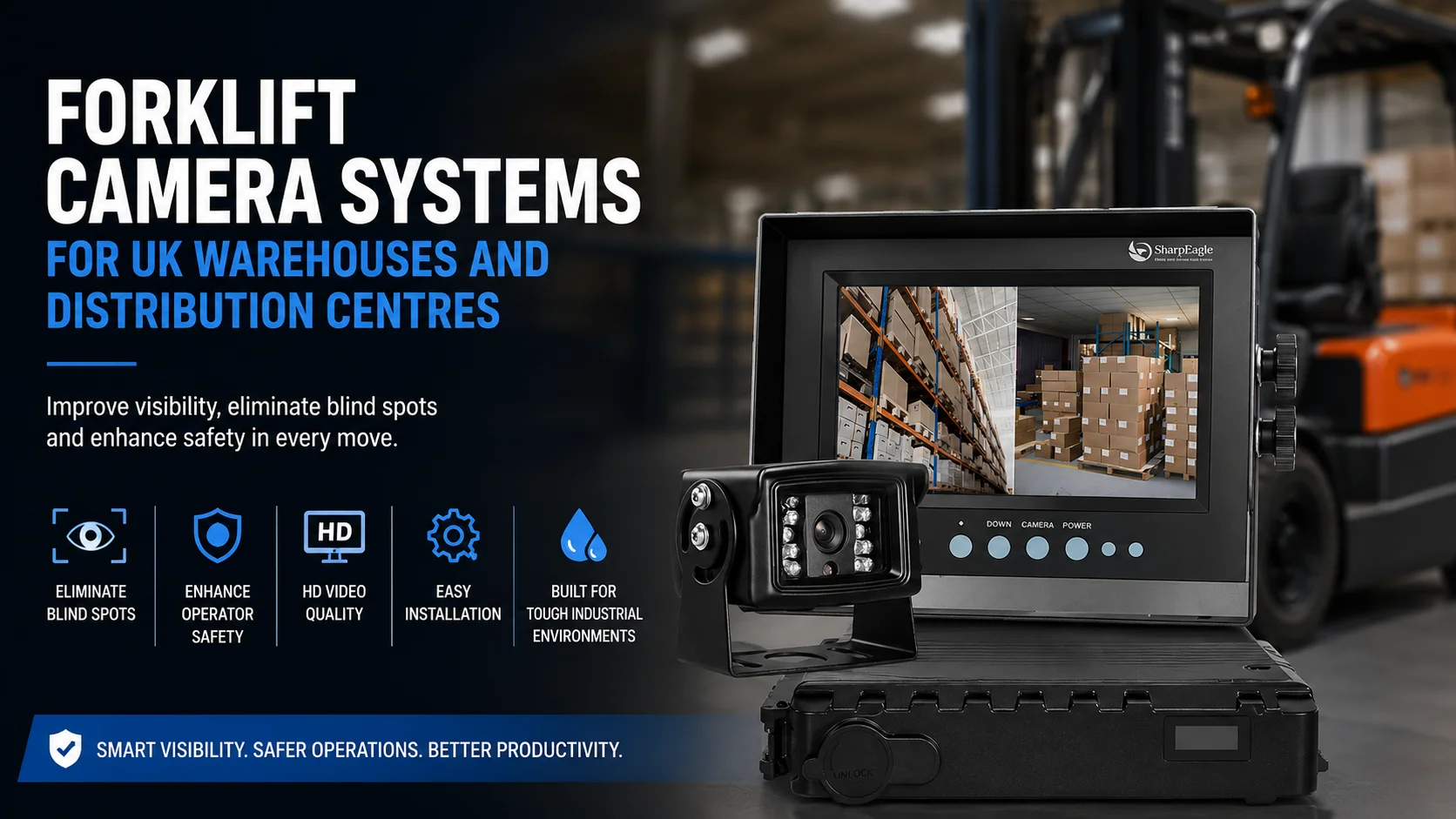
Companies such as SharpEagle have developed forklift camera solutions specifically for industrial environments, helping warehouses improve visibility around forklifts and reduce the risks associated with restricted operator sightlines. Features such as HD video quality, real-time monitoring, blind-spot coverage, and durable industrial construction make these systems suitable for warehouses, logistics hubs, manufacturing facilities, and distribution centres.
How SharpEagle Supports Warehouse Safety
For organisations looking to strengthen forklift safety, SharpEagle offers a range of forklift visibility solutions designed for demanding warehouse and distribution environments. Its forklift camera systems help operators monitor blind spots, improve awareness around pedestrians and obstacles, and maintain better visibility during daily material-handling tasks.
Key advantages include:
- Real-time video monitoring
- Enhanced blind-spot visibility
- Improved reversing awareness
- High-definition image quality
- Durable industrial-grade construction
- Easy integration with existing forklift fleets
By combining visibility technology with practical safety features, these systems help warehouses reduce operational risks while supporting smoother and more efficient forklift operations.
Request a Consultation
Every warehouse has unique operational challenges, from narrow aisles and busy loading bays to high pedestrian activity. Choosing the right visibility solution can make a significant difference to both safety and productivity.
Request a consultation with SharpEagle to discuss your warehouse safety requirements and explore the most suitable forklift camera system for your operation. Our specialists can assess visibility challenges and recommend a tailored solution designed to improve operator awareness and reduce workplace risks.
Contact SharpEagle today to learn more about forklift camera systems for UK warehouses and distribution centres.