Sign up with Google
 Sign in with Zoho

Introduction
Warehouses and distribution centres across the UK are under constant pressure to move goods faster than ever before. With the rise of e-commerce, same-day deliveries, and increasing customer expectations, forklift trucks have become indispensable for keeping operations running smoothly.
However, the increased movement of forklifts also brings significant safety challenges. In busy warehouse environments where pedestrians, pallet trucks, and forklifts often share the same space, even a momentary lapse in awareness can lead to accidents, injuries, or costly damage to equipment and infrastructure.
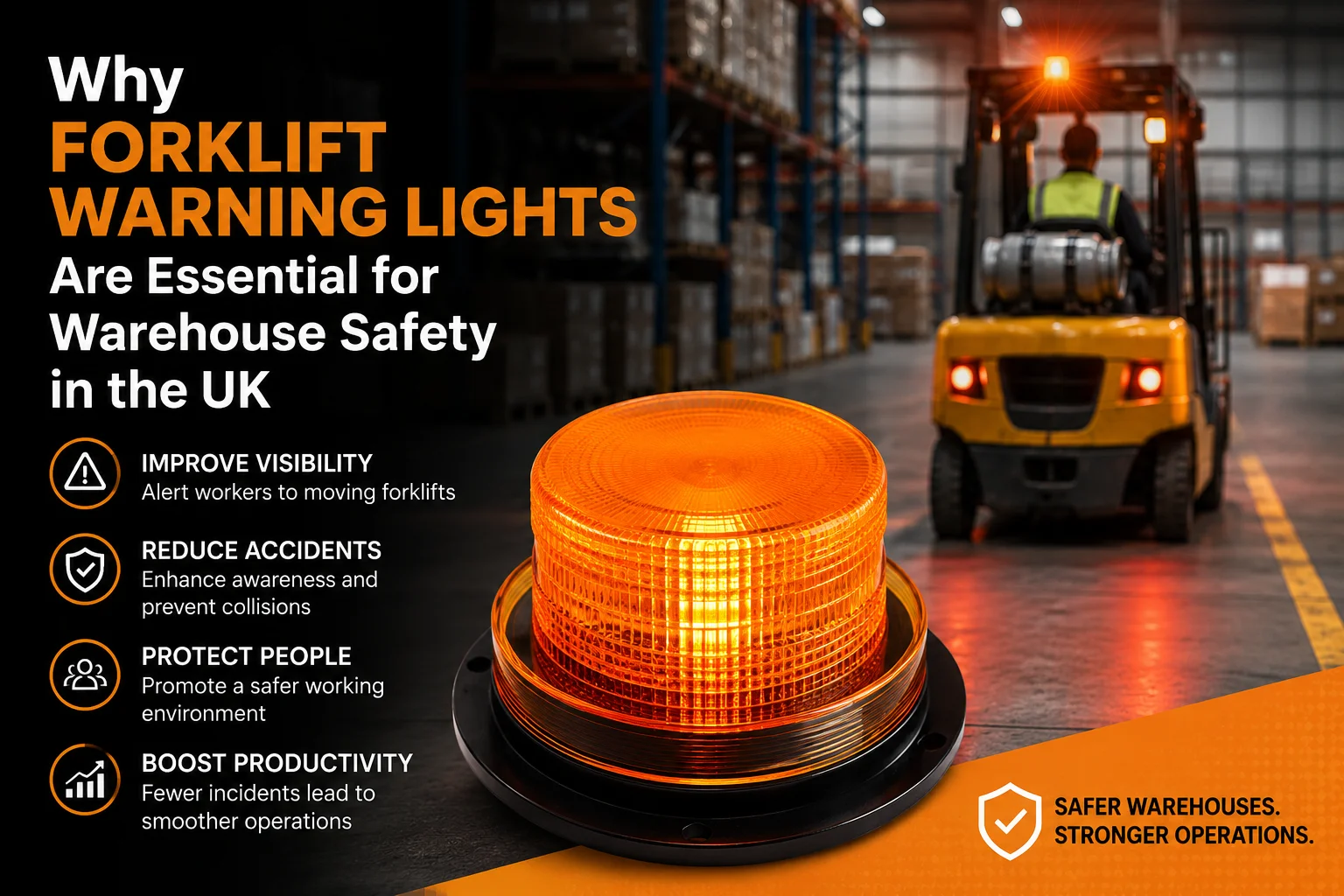
One of the most effective ways to improve visibility and reduce these risks is by using forklift warning lights. These simple yet powerful safety devices provide a clear visual warning of moving vehicles, helping workers stay alert and maintain a safe distance from forklift operations.
Why Visibility Matters in Warehouse Safety
Poor visibility remains one of the leading causes of forklift-related incidents. While operators receive extensive training, warehouse environments are dynamic and often unpredictable.
Consider a typical warehouse setting. Employees are picking orders, moving stock, checking inventory, and navigating narrow aisles. At the same time, forklifts are transporting heavy loads between storage locations. In such conditions, relying solely on audible alarms is often not enough.
Several factors can reduce visibility and increase risk:
Busy and Noisy Work Environments
Warehouses are filled with operational noise from conveyors, machinery, packaging equipment, and vehicle movement. Audible warnings can easily be missed during peak activity.
Blind Corners and Racking Systems
Tall shelving units and storage racks frequently create blind spots where operators and pedestrians may not see each other until it's too late.
High Pedestrian Activity
Warehouse staff, contractors, maintenance personnel, and visitors often work close to forklift traffic routes, increasing the need for clear visual alerts.
Obstructed Views
Large or oversized loads can restrict an operator's field of vision, making it more difficult to spot people or obstacles nearby.
Fast-Paced Operations
Modern logistics facilities prioritise speed and efficiency. Employees focused on meeting deadlines may not always notice an approaching forklift without additional visual cues.
These challenges make enhanced visibility an essential part of any warehouse safety strategy.
What Are Forklift Warning Lights?
Forklift warning lights are high-intensity LED safety devices mounted on forklifts and other material handling equipment. Their purpose is simple: to make moving vehicles more visible and alert nearby workers to potential hazards.
Unlike traditional alarms that rely on sound, warning lights use bright visual signals that remain effective even in noisy industrial environments.
They are commonly installed in:
- Warehouses
- Distribution centres
- Manufacturing plants
- Retail fulfilment facilities
- Logistics hubs
- Industrial processing sites
By providing a highly visible warning signal, these lights help improve awareness and reduce the likelihood of accidents.
Key Benefits of Forklift Warning Lights
Increased Pedestrian Awareness
One of the biggest advantages of warning lights is their ability to capture attention instantly. Workers can identify moving forklifts from a greater distance and react accordingly.
Reduced Collision Risks
Better visibility means more reaction time. Both pedestrians and forklift operators can identify potential hazards sooner, helping prevent collisions and near misses.
Improved Workplace Safety Culture
When employees consistently see visible safety systems in place, it reinforces safe working practices and encourages greater awareness around vehicle movements.
Reliable Performance in Noisy Facilities
Unlike audible alarms that may be drowned out by background noise, LED warning lights remain clearly visible regardless of environmental conditions.
Better Traffic Management
Clearly visible forklifts help employees navigate warehouse spaces more safely, reducing congestion around loading areas, intersections, and pedestrian walkways.
Why More UK Businesses Are Adopting Warning Light Systems
Across the UK, organisations are placing greater emphasis on workplace safety and risk reduction. Forklift warning lights have become a popular safety upgrade because they deliver immediate benefits without requiring major operational changes.
Businesses are investing in these systems to:
- Improve employee safety
- Reduce accident-related costs
- Minimise equipment damage
- Prevent operational disruptions
- Increase workplace awareness
- Support health and safety initiatives
For many warehouse operators, warning lights represent a practical and cost-effective way to enhance forklift safety while maintaining productivity.
Common Types of Forklift Warning Lights
Different warning light systems are available depending on operational requirements and risk levels.
Beacon Lights
Beacon lights use flashing or rotating LED patterns to attract attention and signal vehicle movement in busy work environments.
Strobe Lights
These lights generate powerful flashes that remain highly visible even in large warehouses and distribution facilities.
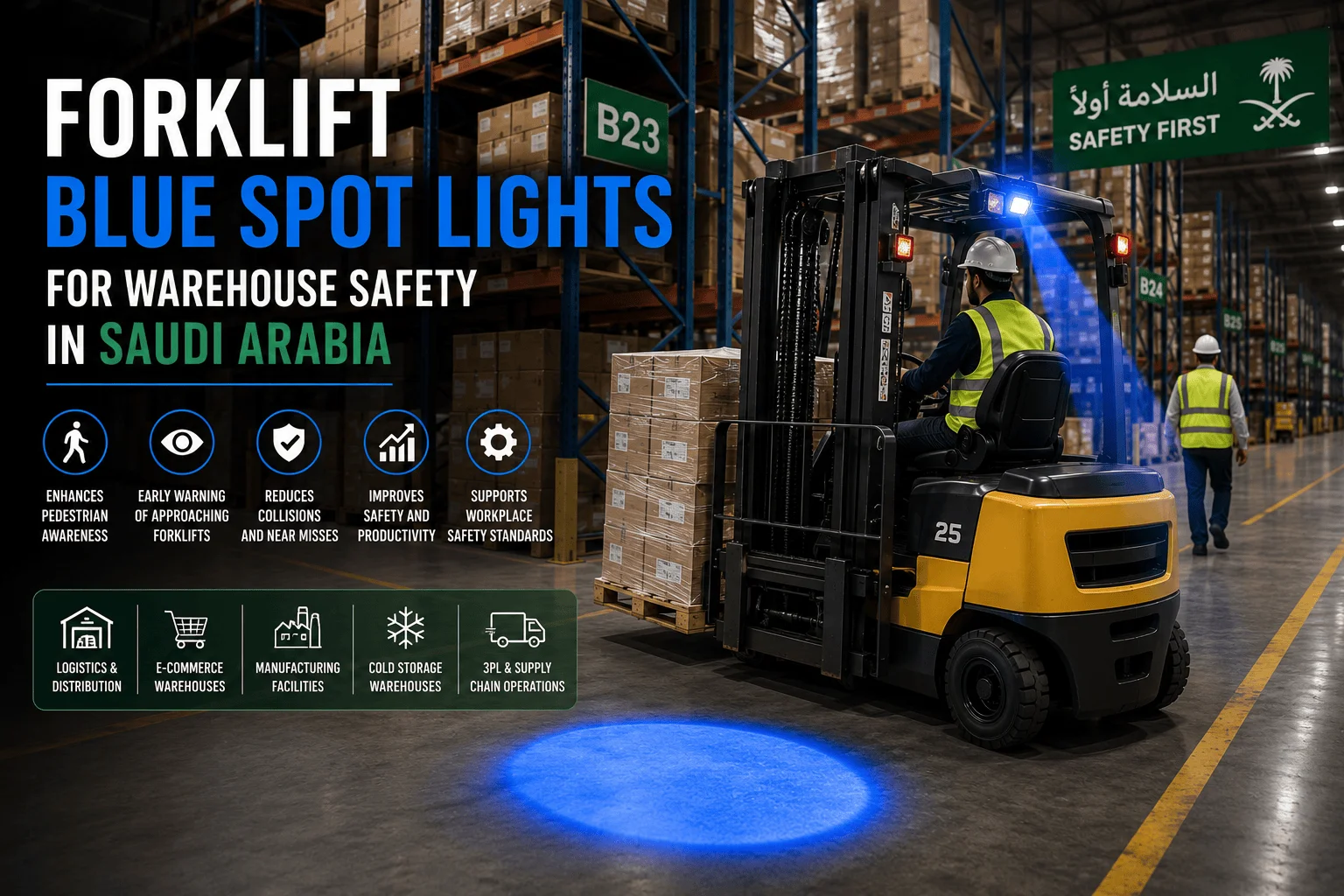
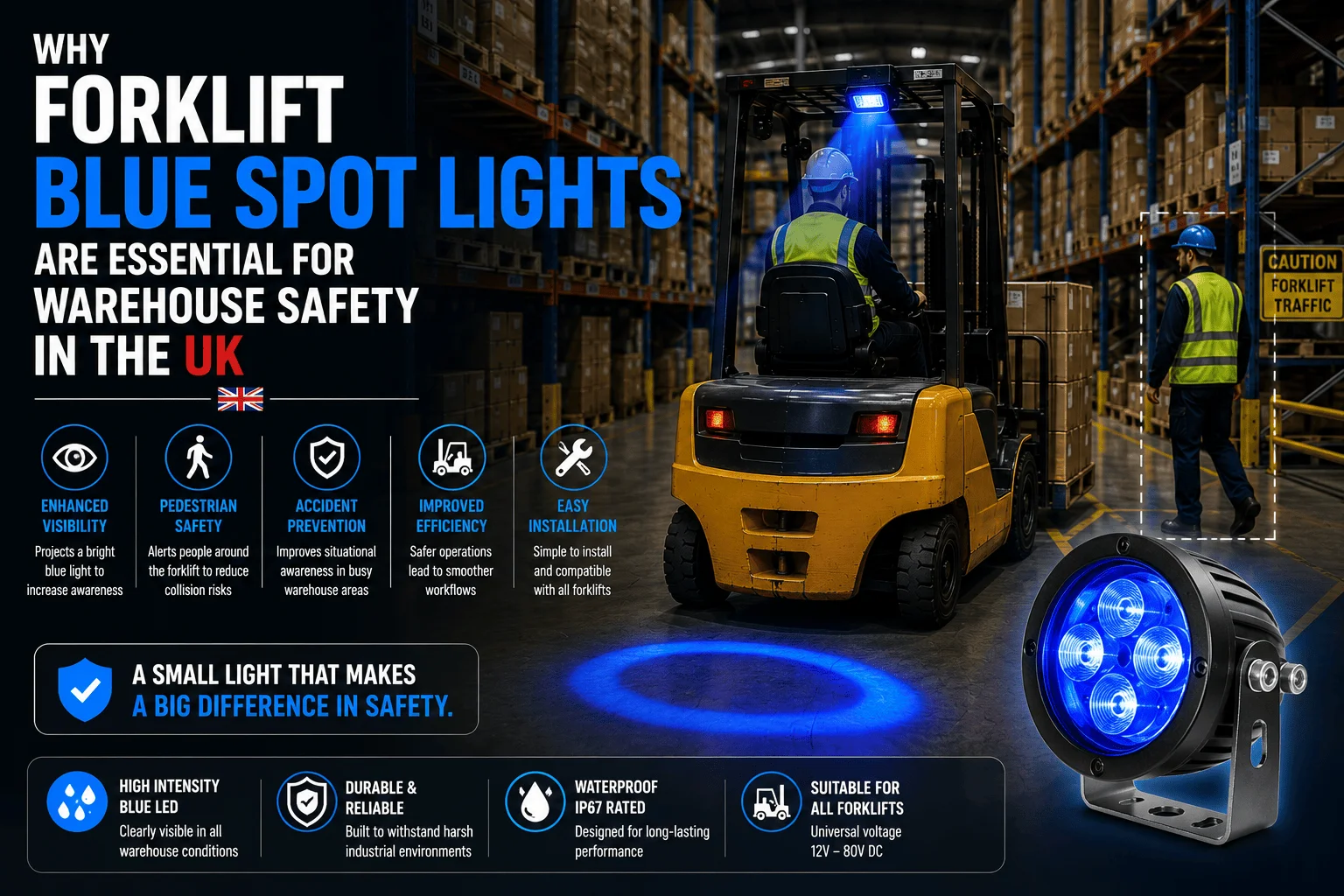
Blue Spot Lights
Blue spot lights project a bright blue warning spot onto the floor ahead of or behind the forklift, providing an early visual indication of approaching equipment.
Red Zone Lights
Red zone lights create a visible safety boundary around the forklift, helping pedestrians maintain a safe distance from operating vehicles.
Many facilities combine multiple warning systems to create a layered approach to warehouse safety.
How SharpEagle Helps Improve Forklift Safety
At SharpEagle, we understand the challenges faced by modern warehouses, manufacturing plants, and logistics facilities. Our Forklift Warning Lights are engineered to provide reliable visibility in demanding industrial environments where safety cannot be compromised.
Built using high-performance LED technology and rugged industrial-grade construction, SharpEagle warning lights help businesses improve awareness around moving equipment and reduce the risk of workplace incidents.
To further strengthen forklift safety, SharpEagle also offers a comprehensive range of solutions including:
- Blue Spot Lights
- ARC Safety Lights
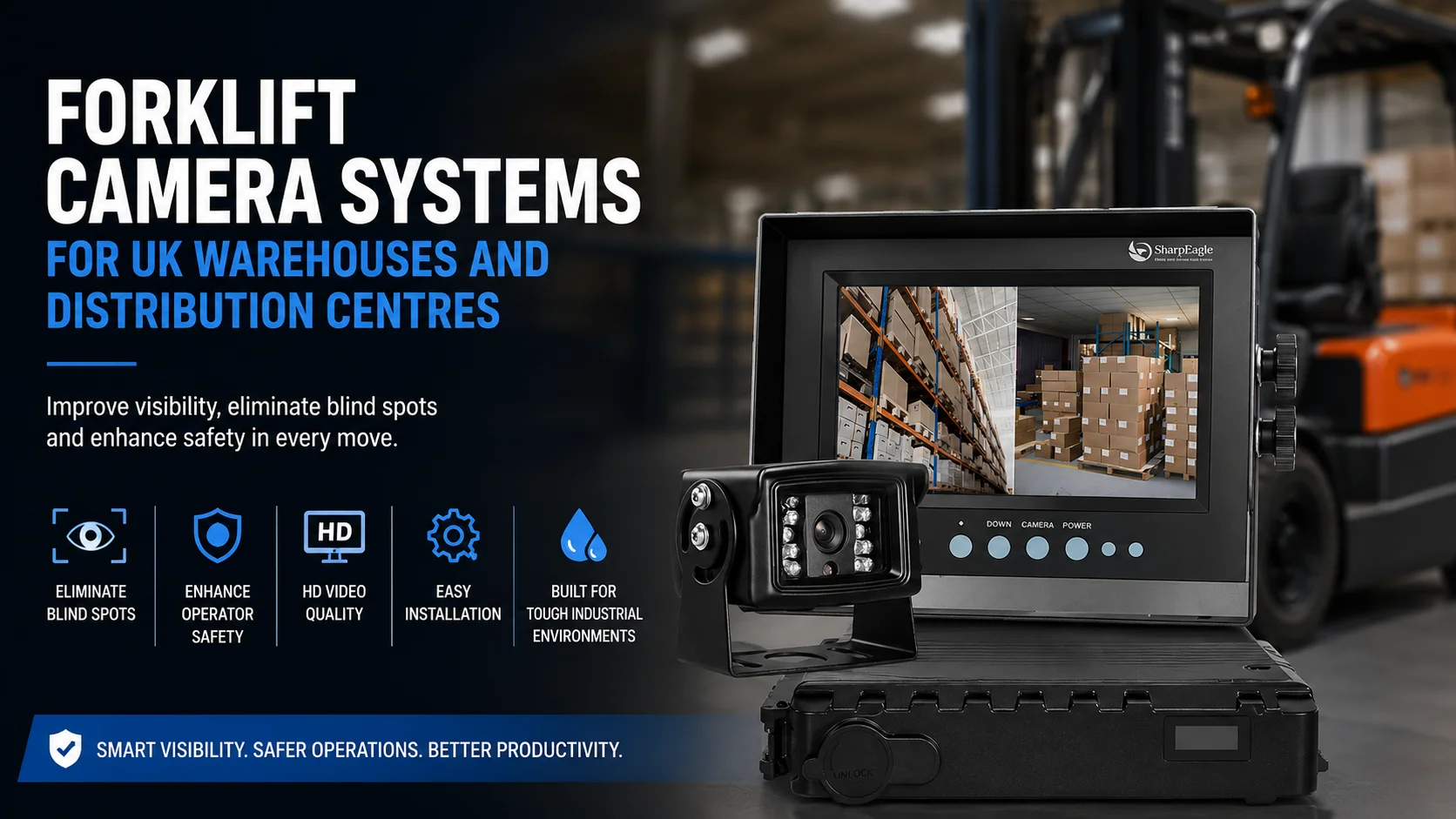
- ForkView Camera Systems
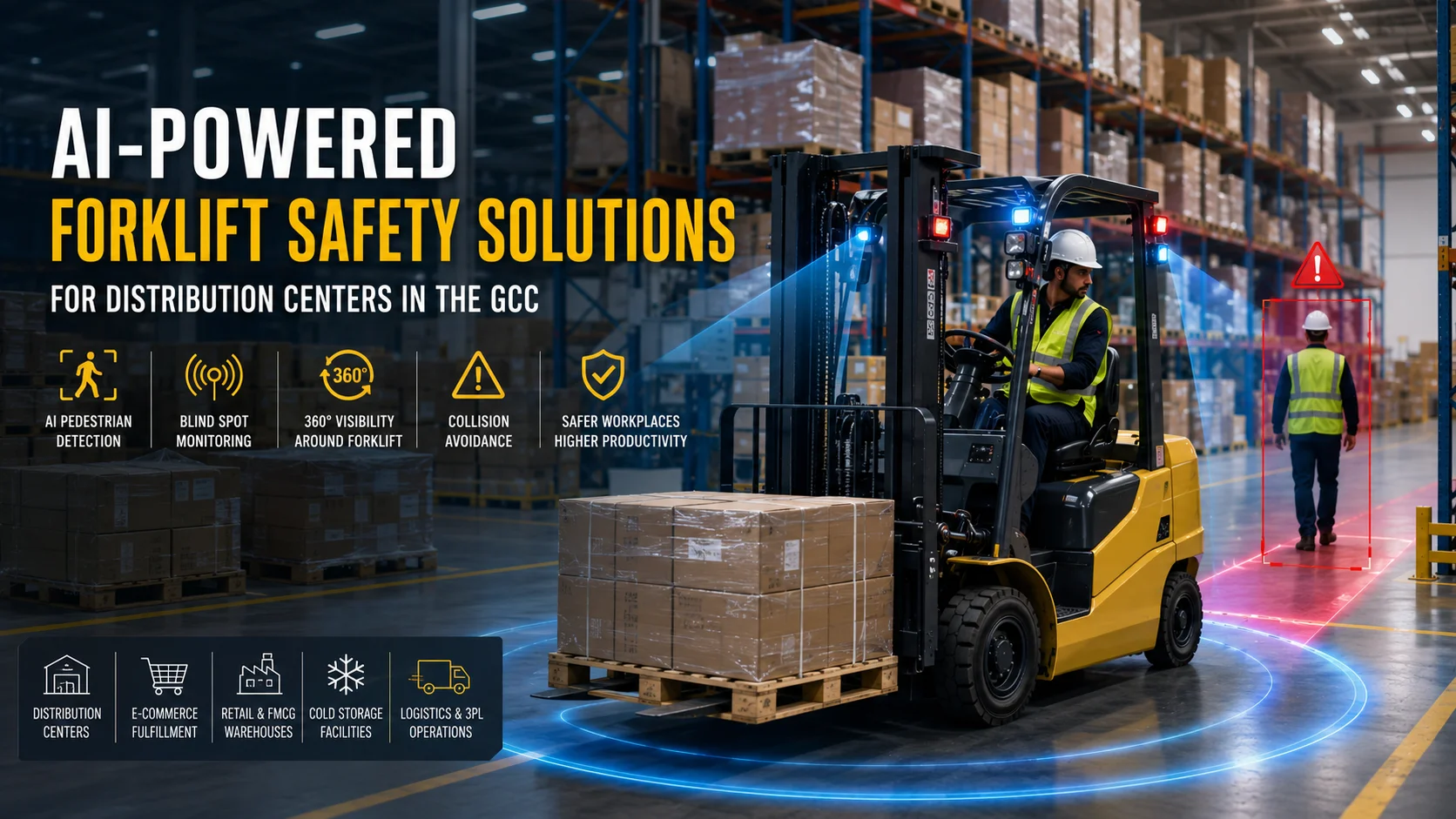
- AI Forklift Camera Systems
- Forklift Reverse Sensor Systems
Together, these technologies provide enhanced visibility, improved operator awareness, and greater protection for both personnel and equipment.
Industries That Benefit Most
Forklift warning lights can improve safety across a wide range of sectors, including:
Warehousing and Distribution
Where constant vehicle movement requires clear visual alerts.
Manufacturing Facilities
Where forklifts regularly operate near production staff and machinery.
Logistics and Freight Operations
Where maintaining safe vehicle movement is essential for efficiency.
Retail Fulfilment Centres
Where high order volumes create increased forklift activity.
Food and Beverage Warehouses
Where busy operations demand strong safety measures without affecting productivity.
Contact SharpEagle UK
Improving forklift visibility is one of the most effective steps businesses can take to reduce workplace risks and create safer operating environments.
SharpEagle provides a complete range of forklift safety solutions tailored to the needs of UK warehouses, distribution centres, and industrial facilities. Whether you're looking to upgrade existing equipment or implement a comprehensive safety strategy, our team can help you find the right solution.
Contact SharpEagle UK today to learn more about our Forklift Warning Lights and advanced forklift safety systems.
Conclusion
Forklift warning lights may seem like a small addition, but their impact on workplace safety can be significant. By improving visibility, increasing pedestrian awareness, and helping prevent collisions, these systems contribute to safer and more efficient warehouse operations.
As UK warehouses continue to grow in size and complexity, investing in reliable visual warning systems is becoming an increasingly important part of modern forklift safety management.