Sign up with Google
 Sign in with Zoho

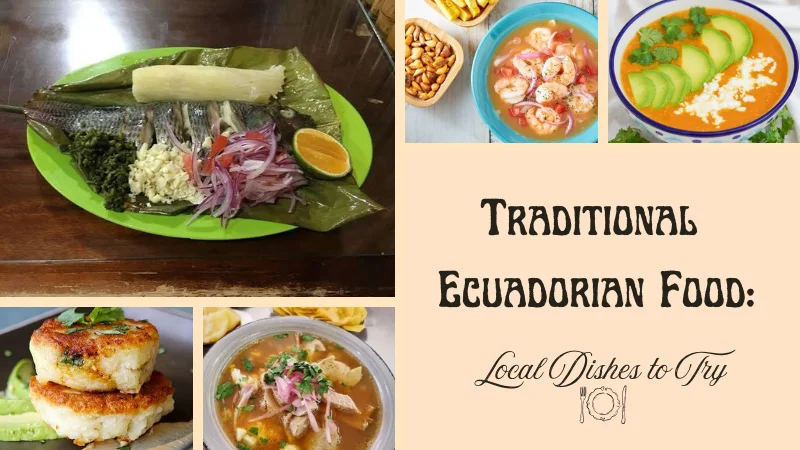
Ecuadorian food changes completely every few hours you spend on the road, because the country climbs from the Pacific surf up into cold Andean peaks before dropping into the deep Amazon basin. Ecuadorian cuisine isn’t about overly complicated techniques; it is built on fresh, earth-to-table ingredients like native corn, slow-roasted meats, rich plantains, and coastal seafood. Here are seven dishes to try.
1. Locro de Papa (Andean Potato & Cheese Soup)
If you arrive in a high-altitude city like Quito or Cuenca on a cool, misty afternoon, your first stop should be a local restaurant for a bowl of Locro de Papa. This isn’t a thin, watery broth; it’s a thick, velvety soup made from starchy native potatoes and melted cheese, enriched with a touch of achiote for a bright golden color. It’s traditionally served piping hot, topped with fresh slices of buttery avocado and a spoonful of spicy local ají (chili sauce).
2. Llapingachos (Pan-Seared Potato Cakes)
A staple of highland market stalls and family Sunday lunches, Llapingachos are fried potato patties stuffed with cheese. They are seared on a flat griddle until the exterior develops a beautiful, crispy golden crust while the inside stays completely soft and gooey. They are rarely eaten alone; a proper plate comes loaded with a fried egg, a grilled chorizo sausage, avocado, and a generous pour of rich peanut sauce.
3. Encebollado (A Coastal Fish Soup)
Encebollado is often called Ecuador’s national dish. This heavy, deeply savory fish soup is made from fresh albacore tuna, slow-boiled yuca (cassava), and plenty of pickled red onions and cilantro. It’s highly acidic, incredibly hearty, and known across the country as a hangover cure. Locals traditionally crush handfuls of crunchy Chifles (plantain chips) directly into the bowl before digging in.
4. Ecuadorian Ceviche (Citrus-Cured Seafood)
Do not confuse Ecuadorian ceviche with the famous Peruvian version. Ecuadorian ceviche is more like a cold soup, with orange juice and tomato in the broth. The seafood, often plump local shrimp or black clams, comes in a bright broth of lime juice, fresh orange juice, sliced onions, and tomatoes. It’s light, sweet, and tangy, always served with a side of toasted corn kernels (tostado) or popcorn.
5. Bolón de Verde (Green Plantain Dumplings)
If you want a breakfast that will fuel a full day of exploring, look for a street vendor frying up Bolón de Verde. Literally translating to “big green ball,” this coastal favorite is made from green plantains that are boiled, mashed, and compressed into a fist-sized sphere. The dough is mixed with salty white cheese, crispy pork chicharrón, or both, and then fried until the outside is crisp. Pair it with a cup of strong black coffee.
6. Hornado (Slow-Roasted Whole Pig)
Step into any traditional indoor market in the Andes, and you will find an aisle dedicated entirely to Hornado. Traditional vendors spend hours roasting whole pigs over wood fires until the meat falls off the bone and the skin turns crisp. A standard market portion gets you a big pile of tender shredded pork, a piece of the crispy skin, and Mote (large hominy corn kernels), all dressed in a sweet-and-sour onion sauce called Agrio.
7. Maito de Pescado (Amazonian Leaf-Wrapped Fish)
To taste the flavours of the rainforest, you have to try Maito. This Amazonian dish takes fresh river fish, seasons it with salt, and wraps it tightly in thick bijao leaves. The entire parcel is then laid directly over open charcoal embers. The leaf seals in all the natural juices, steaming the fish while infusing the meat with a distinct, smoky, and earthy herbal flavor. It’s typically served split open alongside boiled yuca.
💡 Where to Find the Best Bites
Skip the high-end tourist bistros if you want the real deal. The best food in Ecuador is found inside the bustling municipal markets (mercados centrales) and small, unassuming family-run eateries known as picanterías. Just look for the stalls with the longest lines of locals—that is where you want to pull up a plastic stool and order.
Note: While planning your travel logistics, make sure to verify any entry paperwork or visa specifications required for your specific nationality ahead of time via official government travel portals before arrival.