Sign up with Google
 Sign in with Zoho
The first person a visitor meets sets the tone for the whole building, and for its security. A concierge who greets warmly while quietly verifying identity achieves what neither a receptionist nor a guard can do alone. This guide explains how concierge security services in London work, what the rules require and how to judge whether they suit your premises.
What Concierge Security Actually Means
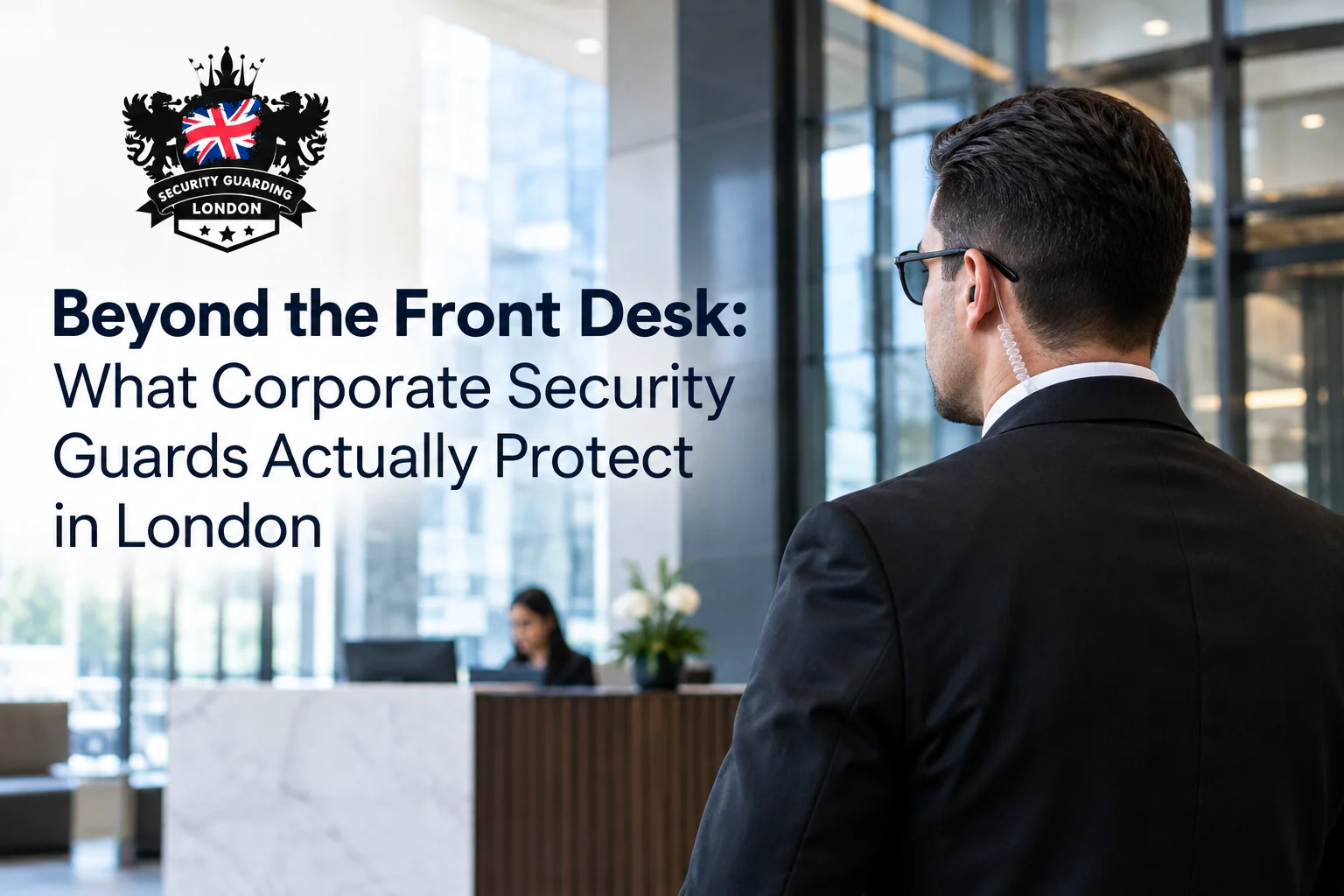
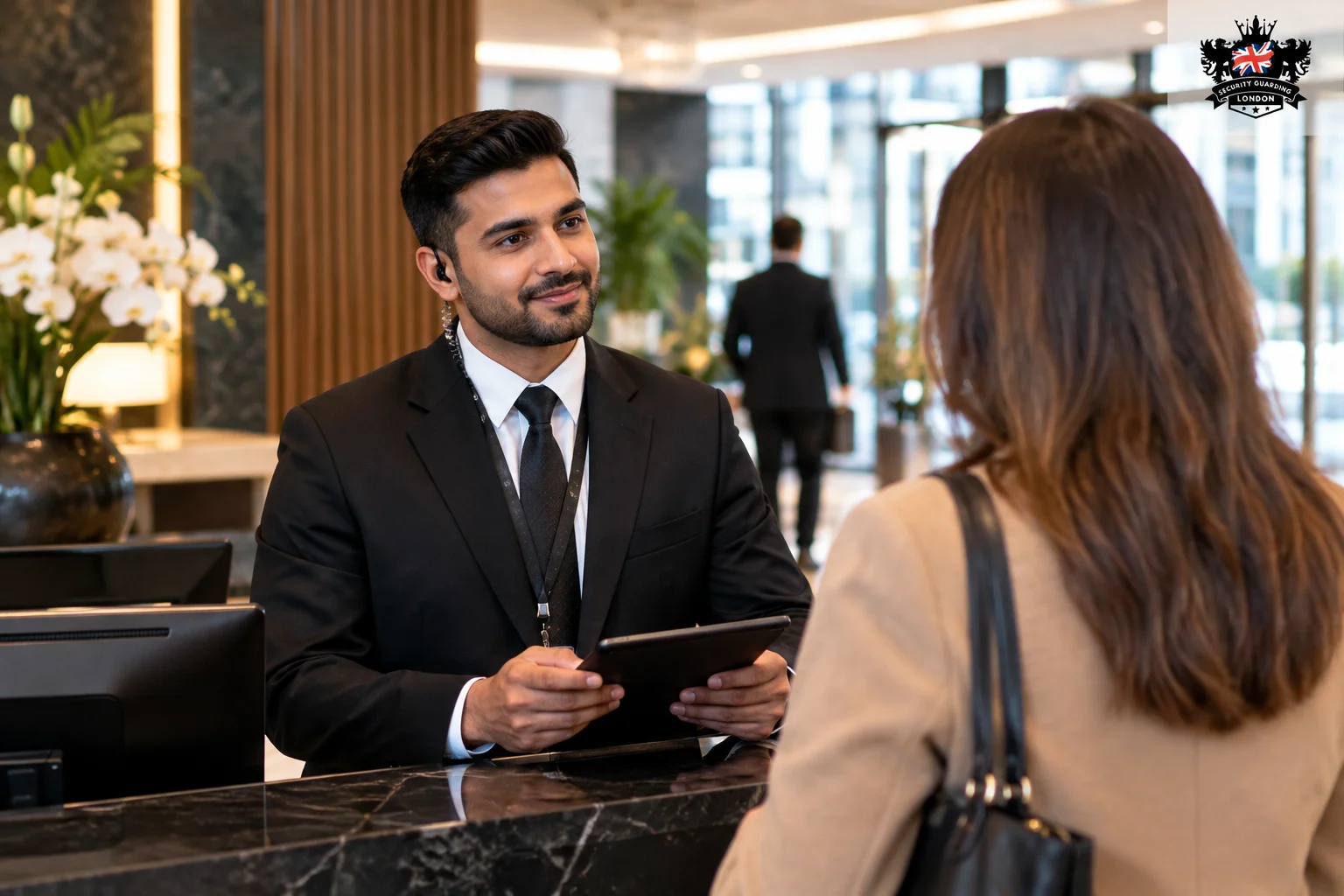
Concierge security services in London blend hospitality with protection. An officer sits or stands at the front of the house, welcoming guests, checking credentials, managing deliveries and watching the lobby, all in a polished, approachable manner.
Core Duties at the Front Desk
- Visitor management: logging arrivals, issuing passes and calling hosts.
- Access control: confirming who may enter which floors.
- Deliveries and couriers: checking, recording and routing parcels.
- Incident awareness: spotting unusual behaviour and escalating early.
Done well, the role feels like service. Underneath, it is risk management.
Why Traditional Front Desks Fall Short
A reception desk records visitors; it rarely questions them. Paper logs are skimmed, pass systems are bypassed and busy periods let tailgaters slip through. Passive CCTV helps afterwards but offers no challenge at the door.
Supply can be a problem too. Among the security guard companies in London, some need weeks to vet and brief staff, which is no use when a tenant moves in, a refurbishment ends or a high-profile event approaches.
Reactive front desks log problems. Proactive concierge teams prevent them.
Law, Licensing and Data Care
Front-of-house security is regulated. Officers carrying out licensable guarding or door supervision under contract must hold a valid SIA licence, and responsible clients verify it on the SIA’s public register before anyone starts.
Visitor records are personal data, so UK data protection rules apply. Logs should be accurate, kept securely and retained only as long as needed.
Counter-terror duties matter for publicly accessible buildings. Martyn’s Law, the Terrorism (Protection of Premises) Act, uses a Standard tier for mid-capacity premises and an Enhanced tier for larger ones. Home Office statutory guidance, including Section 27, and ProtectUK training show what good preparation looks like, and front-of-house staff are often the first to notice something wrong.
Blending Technology with a Human Welcome
Technology handles the routine; people handle the exceptions.
Systems Behind the Desk
Digital visitor management replaces paper, access control limits movement by role and time, and live CCTV monitoring gives operators eyes beyond the lobby. Video-verified alarms add a check before any response is sent.
Officers Who Read the Room
People supply judgement. Trained security guards in London notice nerves, unusual questions and mismatched stories, then respond politely and firmly. Their discretion matters as much as their vigilance, especially in premium buildings.
The table compares the two models.
Where Concierge Teams Work Best
Different buildings need different emphasis:
- Corporate offices: controlled access, visitor flow and a confident first impression.
- Hotels: guest welcome, lobby watch and discreet control of service areas.
- Residential blocks: resident recognition, parcel handling and out-of-hours reassurance.
- Private homes and estates: discreet screening of visitors and trades.
- Luxury retail: polite door presence with quiet loss prevention.
Many organisations pair a front desk with corporate security support for wider coverage.
Events, Launches and Busy Periods
Receptions, product launches and open days put extra strain on a lobby. Event security in London adds guest-list checks, queue management and clear entry and exit routes, while concierge officers keep the welcome smooth. Licensed door supervisors are trained to refuse entry politely when needed, protecting both safety and the host’s reputation.
After Hours: Grounds, Car Parks and Dogs
Premises with grounds or car parks need cover once the lobby closes. Dog security in London can support that role by patrolling perimeters, deterring approach and searching open areas quickly. Dog patrol teams work with cameras and on-call officers, and the Guard Dogs Act 1975 requires a competent handler to control the dog, or the dog to be secured, with warning signs displayed.
A Five-Step Lobby Review
Before appointing anyone, review the front of house:
- Watch the lobby: observe who enters, and who is challenged.
- Check the logs: are visitor records complete and secure?
- Test deliveries: see how parcels and couriers are handled.
- Rehearse incidents: confirm staff know evacuation and lockdown roles.
- Review after change: repeat when tenants, layouts or events change.
Findings from this review show where concierge security services in London would add the most value.
Questions to Ask Any Supplier
Compare providers on substance:
- Licensing: valid SIA licences for every officer.
- Hospitality training: customer care as well as security skills.
- Cover and speed: realistic start times, including short-notice requests.
- Supervision: named managers and a responsive control room.
Good providers describe their approach plainly and invite detailed questions. The best concierge security services in London are transparent about vetting, training and reporting.
Frequently Asked Questions
1. What are concierge security services?
Concierge security services combine front-desk hospitality with trained protection. Officers welcome visitors, verify identities, manage deliveries and monitor the lobby, creating a polished first impression while reducing risk.
2. Do concierge security officers need an SIA licence?
Yes, officers carrying out licensable security activities under contract must hold a valid SIA licence. Verify it on the SIA’s public register before any officer begins work.
3. How is concierge security different from reception?
Concierge security adds trained verification and risk awareness to a standard reception role. Officers check credentials, challenge unusual behaviour and escalate concerns, while still providing a welcoming service.
4. Are concierge officers suitable for events?
Yes, concierge officers suit receptions and launches because they greet guests politely while checking lists. Larger events usually add licensed door supervisors and crowd management.
5. Can concierge teams work with CCTV and dogs?
Yes, concierge teams work best as one layer alongside live CCTV monitoring and, for larger sites, dog patrols. Each layer covers a weakness in the others.
Three Lobbies, Three Outcomes
Imagine three lobbies. The first has a paper sign-in book and a distracted receptionist; a stranger walks straight to the lifts. The second adds a visitor system, and fewer people slip through. The third has a trained concierge officer, live monitoring and clear escalation, and the stranger is greeted, questioned and politely redirected. Generic security only records losses, while a proactive partner stops threats in progress. Organisations seeking a tailored approach can speak to Security Guards London Limited, an SIA-licensed provider delivering round-the-clock protection across Greater London, and begin with a short site assessment.