Sign up with Google
 Sign in with Zoho

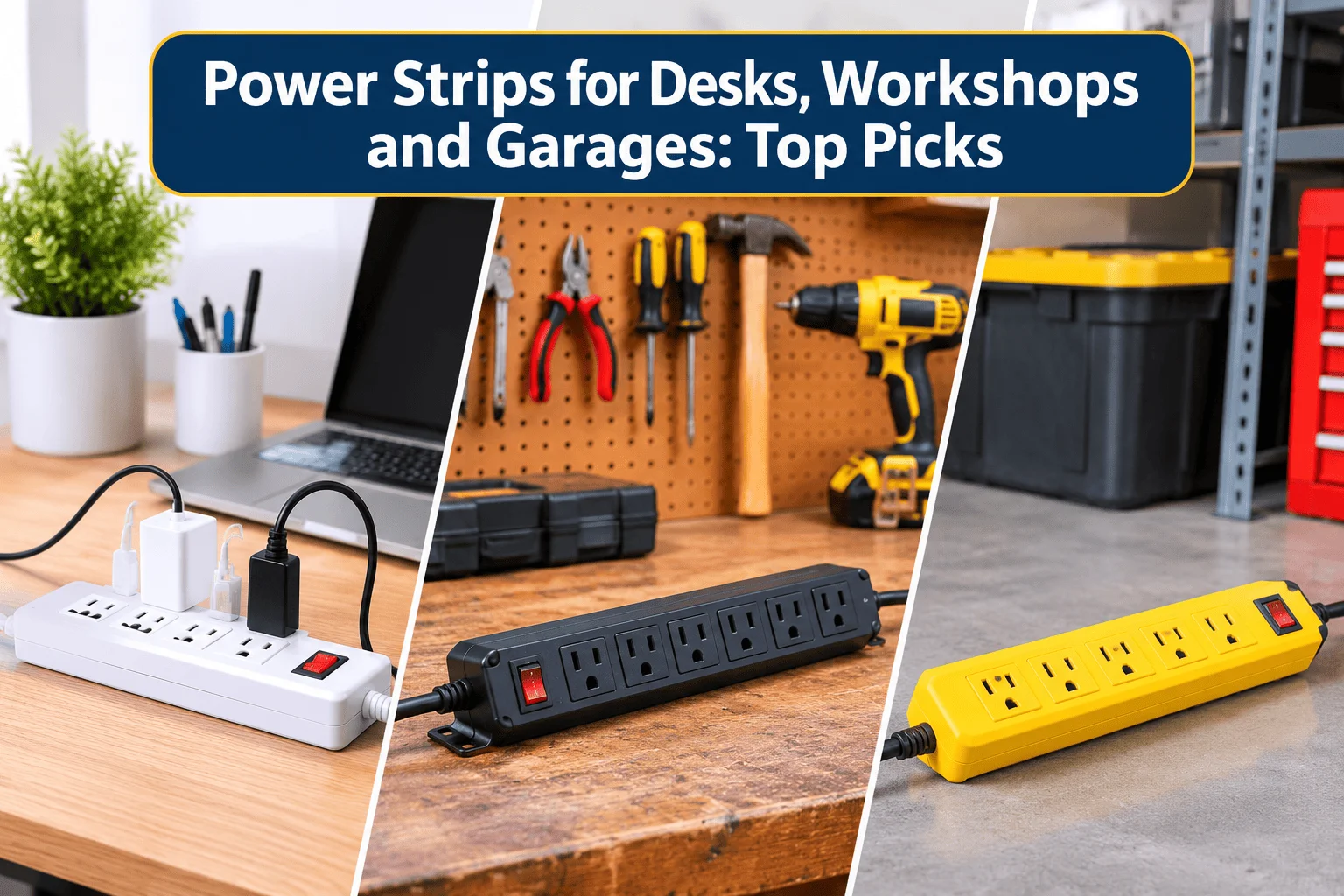
Ever count how many things you've got plugged into one wall socket? Laptop, phone charger, lamp, maybe a drill battery on the side. It adds up quick.
That's why power strips exist. They're cheap and they do the job. But here's the catch. The strip that's perfect for your desk might be a bad idea in your garage. Let's sort out which is which.
So, What Exactly Is a Power Strip?
It's a long plastic block with a row of outlets. You plug it into one wall socket and suddenly you've got four, six or even ten places to plug things in. Some folks call it a power board or an extension board. Same thing.
Plenty of them come with extras too. A switch, a surge guard, or a couple of USB ports for your phone. Small stuff, but handy.
Power Strip or Surge Protector?
People swap these names all the time, and honestly, it's easy to see why. They look almost the same.
A basic power strip just gives you more outlets. That's it. If a power spike comes through, your gear takes the hit.
A surge protector has a little part inside that soaks up sudden jumps in voltage. Those spikes can come from storms, or even from a big machine switching on down the street.
So if you're plugging in a computer or a TV, go for the surge protector. A cheap lamp? A plain strip is fine.
Check the Limits Before You Buy
Look at the label on the strip. You'll see two numbers, amps and watts. They tell you how much power the thing can take.
Go over that limit and the strip heats up. Hot enough, and the plastic can melt or even catch fire. Not great.
So add up what you want to plug in first. And one more thing. Don't plug heaters, kettles or air conditioners into a strip. They pull a lot of power. Put them straight into the wall.
What Works at a Desk
Most desks hold a laptop, a monitor, a charger and a lamp. None of those use much power, so you don't need anything fancy.
Still, a few things make life easier.
Surge protection is a good idea, since computers don't like spikes. USB ports are nice too, because you can charge your phone without hunting for an adapter. If your devices are newer, USB C is worth looking for.
Cord length matters more than you'd think. Two metres or more lets you tuck the strip somewhere sensible. And check the spacing between outlets. Chunky plugs can block the socket next door, which is really annoying.
Some desk strips even clip onto the table edge. It sounds like a small thing, but it keeps cables off the floor and makes plugging in a breeze.
What Works in a Workshop
Workshops are rougher. You've got saws, sanders, drills and chargers, and they all want power. Add dust and noise, and a flimsy strip won't last long.
Go for something heavy duty. A tough metal or thick plastic body can handle knocks and drops. Check the amp rating against your biggest tool, and the tool's label will tell you what it needs.
A circuit breaker is a smart feature. If you overload the strip, it trips and cuts the power. Then you just press a button to reset it. A master switch is handy as well, so you can shut everything off at the end of the day in one go.
Oh, and keep the strip away from sawdust and metal shavings. Fine dust gets inside and can cause sparks.
What Works in a Garage
Garages are tricky because they're not like any other room. They can be damp in winter and baking hot in summer. There's dust, oil and sometimes water on the floor.
A weather resistant strip is a good pick here, especially one with covers over the outlets. Mounting the strip on the wall also helps. If water ever gets in, your power isn't sitting in it.
Garages often have a freezer, tools and chargers all running together, so surge protection is worth having. And since garages are big, a long cord saves you from dragging extension leads everywhere.
Charging e-bike batteries or power tool packs out there? A strip with a timer can stop the charge after a set time. That's a nice safety bonus.
Extras That Are Nice to Have
You don't need all of these. But they're worth knowing about.
Some strips have a switch for each outlet, so you can turn off one thing without touching the rest. Others connect to your phone and work with smart controls. You might also see cord clips to cut down on tangles, child safety shutters on the outlets, or mounting holes for the wall.
Pick what fits how you live and ignore the rest.
Things to Steer Clear Of
Some habits cause real problems, so here's what to skip.
Never plug one power strip into another. It's called daisy chaining, and it can overload the wall socket quietly.
Avoid cheap no name strips. Check the label for a safety mark. In Australia, that's an approval mark. Other places have their own.
If a cord looks frayed or a plug looks cracked, replace it. Don't wait.
And don't bury a strip under a rug or a pile of clothes. It needs air to stay cool. Also, keep it indoors unless it says it's rated for outdoor use.
Using Your Strip Safely
It's pretty simple really. Plug it straight into the wall, don't overload it, and don't run the cord across a spot where people walk.
Every few months, give it a quick look. Scorch marks, loose plugs or a burning smell mean it's time to stop using it. If you're heading away for a long trip, pull the plug. It saves power and removes any risk.
How Long Will It Last?
A basic strip can go for years. A surge protector is different, because it wears out. Every surge uses up a bit of its protection, like a sponge that slowly fills.
Most last around three to five years. Some have a small light that tells you when the protection is gone. If that light changes, swap it out.
Quick Guide to Picking One
Still not sure? Here's the short version.
For a home desk, a surge protected strip with USB ports is a good match. For a workshop, grab a heavy duty one with a circuit breaker. For a garage, look for a sturdy wall mount strip that can handle dust and damp.
Whatever you choose, check three things on the label: the amp rating, the cord length and the safety marks. They tell you most of what you need to know.
Final Thoughts
A power strip isn't exciting. But it quietly keeps your desk tidy, your tools running and your devices safe.
Whether you're shopping for power strips for a home office, a workshop or a garage, take a minute to check the limits and features. It's a small step that can save you money and a lot of stress later.

.webp)