Sign up with Google
 Sign in with Zoho

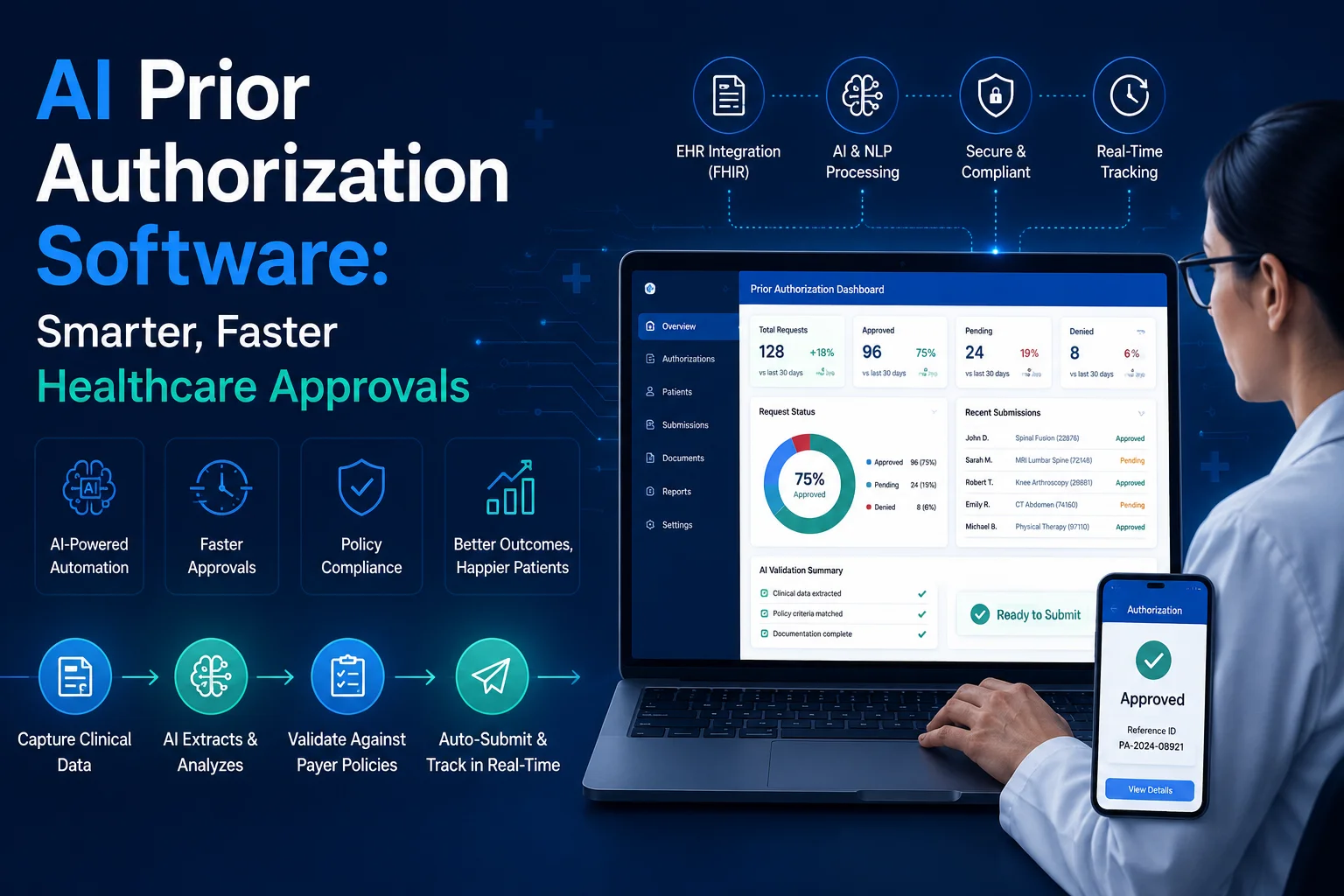
Healthcare organizations are under constant pressure to deliver quality patient care while managing increasing administrative workloads. Among the most time-consuming processes is prior authorization, where providers must obtain approval from insurance companies before treatments, procedures, or medications can be administered. Traditionally, this process involves manual documentation, fax communications, phone calls, and repetitive data entry, often resulting in delays and unnecessary costs. AI-powered prior authorization software is revolutionizing this workflow by introducing intelligent automation, improving efficiency, and reducing approval times.
Modern AI prior authorization platforms leverage technologies such as Optical Character Recognition (OCR), Natural Language Processing (NLP), Machine Learning (ML), and Large Language Models (LLMs) to extract valuable information from unstructured medical records. Since a significant portion of healthcare data exists in free-text clinical notes and scanned documents, AI can intelligently process these records and convert them into structured data for faster decision-making.
A major advantage of AI prior authorization software is its ability to integrate seamlessly with Electronic Health Record (EHR) systems using standards like SMART on FHIR and HL7 FHIR. This enables healthcare professionals to initiate authorization requests directly from their existing workflows without switching between multiple applications. The result is a faster, more streamlined experience for both providers and patients.
Another key feature is intelligent payer policy matching. Insurance requirements frequently change, making manual verification difficult and error-prone. AI-powered platforms continuously analyze payer guidelines, validate patient eligibility, identify missing documentation, and generate complete authorization requests before submission. This minimizes claim denials, reduces administrative overhead, and accelerates reimbursement cycles.
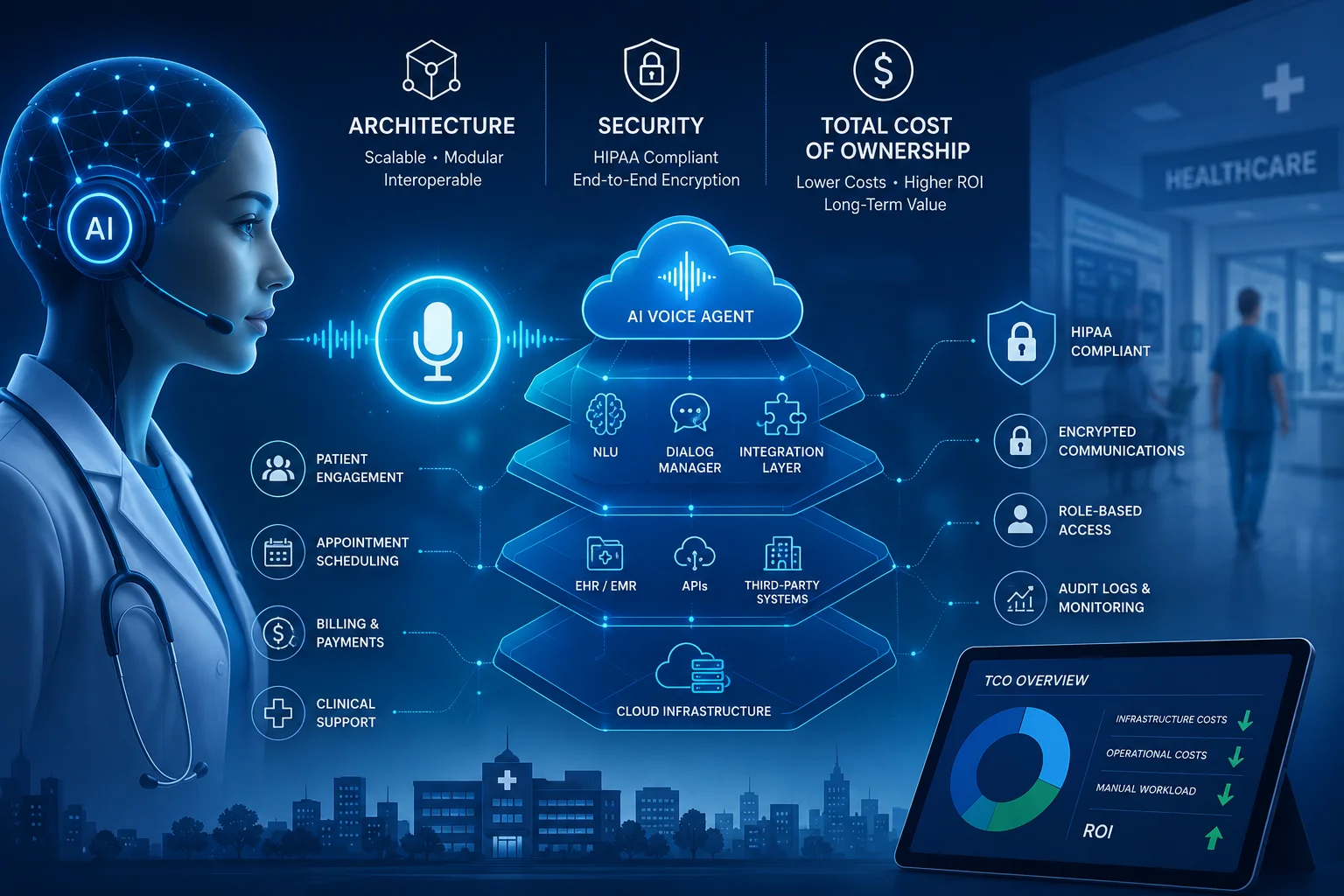
Security and regulatory compliance are equally important. Modern solutions are designed with HIPAA-compliant cloud infrastructure, encrypted communication channels, secure access controls, and comprehensive audit trails. These measures help healthcare organizations protect sensitive patient data while meeting stringent compliance standards.
Building an enterprise-grade AI prior authorization platform also requires strong interoperability with both modern APIs and legacy healthcare systems. Whether integrating with Epic, Oracle Health, Athenahealth, or older EDI-based payer networks, a scalable architecture ensures reliable communication across the healthcare ecosystem.
As healthcare regulations continue to evolve and digital transformation accelerates, investing in AI-powered prior authorization software has become more than a competitive advantage—it is a strategic necessity. Organizations that embrace intelligent automation can significantly reduce administrative burdens, improve operational efficiency, shorten approval cycles, and deliver better patient outcomes.
If you're planning to build a secure, scalable, and compliant AI prior authorization solution, explore our detailed guide covering the essential features, technology stack, development process, integrations, and cost considerations.