Sign up with Google
 Sign in with Zoho

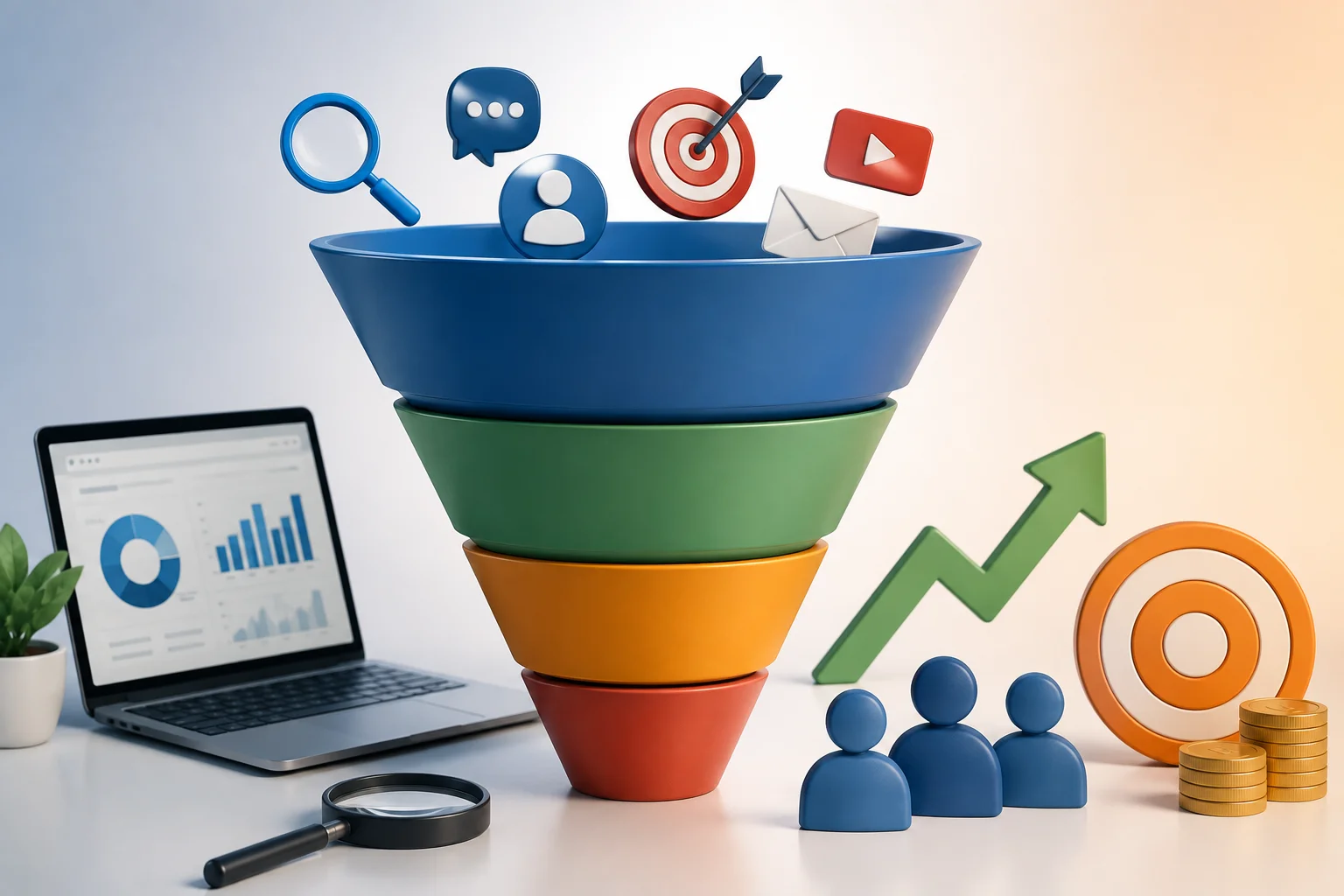
A Digital Marketing Strategy is a plan that connects your marketing activities with a customer's journey, from the first time they hear about your brand to the point where they buy from you and come back again.
A full-funnel strategy makes this journey easier to understand.
Instead of posting on Instagram, running Google Ads, writing blogs and sending emails separately, you connect them. Each activity has a job.
For example, someone may first discover your brand through a Google search. A few days later, they see your Instagram post. Then they read a blog, visit your service page and finally fill out an enquiry form.
That is a funnel.
Quick Answer
A full-funnel digital marketing strategy covers three main stages: awareness, consideration and conversion. After conversion, a good strategy also focuses on retention and repeat business.
The key is to give people the right content and marketing message at each stage instead of trying to sell to everyone immediately.
What Is a Full-Funnel Digital Marketing Strategy?
A marketing funnel represents the different steps a potential customer takes before making a decision.
A simple funnel looks like this:
Awareness → Consideration → Conversion → Retention
Each stage has a different purpose.
This is where many businesses make a mistake.
They focus heavily on getting attention but do not think about what happens after someone clicks.
A person can see your Instagram Reel 20 times and still not buy.
Why?
Maybe they do not understand your service yet. Maybe they do not trust the brand. Or perhaps there is no clear next step.
A full-funnel approach looks at all of these gaps.
Why Does Full-Funnel Marketing Matter?
Not everyone is ready to buy the first time they discover your business.
Imagine you run a digital marketing institute.
A student searches for:
"What is SEO?"
They are probably not ready to enrol in a course yet.
A week later, they search:
"SEO course fees in Nagpur."
Now their intent is different.
Later, they may search:
"Best Digital Marketing Course in Nagpur."
They are much closer to making a decision.
If your marketing strategy only targets people who are ready to buy, you miss the earlier stages of the journey.
That is why your content should answer different questions at different stages.
Step 1: Understand Your Target Audience
Before choosing platforms or creating content, understand who you want to reach.
Ask:
- Who is your ideal customer?
- What problem are they trying to solve?
- What do they search on Google?
- Which social platforms do they use?
- What stops them from buying?
- What information do they need before making a decision?
For example, a fitness brand and a B2B software company cannot use the same funnel.
A fitness brand may get strong results from Instagram and YouTube.
A B2B software company may depend more on Google Search, LinkedIn, webinars and email.
Start with the audience, not the platform.
Step 2: Build the Awareness Stage
At the top of the funnel, people may not know your brand.
Your job is to become visible and useful.
Good awareness channels include:
- SEO blogs
- YouTube
- Educational videos
- Google Ads
- Podcasts
- Display advertising
Your content should answer simple questions and introduce problems your audience actually faces.
For example, a digital marketing institute could publish:
- What Is Digital Marketing?
- How Does SEO Work?
- SEO vs PPC: What's the Difference?
- Digital Marketing Skills You Need in 2026
- Career Options After Learning Digital Marketing
Do not make every post a sales pitch.
If every Instagram post says "Join our course today," people may stop paying attention.
Teach first.
Sell when the person is ready.
Step 3: Build Interest and Trust
Now we move into the consideration stage.
The person knows about your brand, but they are comparing options.
This is where trust becomes important.
People may ask:
- Is this company genuine?
- Are the services worth the price?
- What do other customers say?
- Does this solution actually fit my needs?
- What makes this business different?
Your content should help answer these questions.
Useful content at this stage includes:
- Detailed blog posts
- Case studies
- Customer reviews
- Testimonials
- Comparison pages
- Webinars
- Educational videos
- FAQs
- Expert interviews
- Product or service demonstrations
For an education business, a student success story can be more useful than another promotional poster.
For a clinic, detailed service information and patient FAQs may help build confidence.
Real information works better than exaggerated claims.
Step 4: Create a Conversion Strategy
At the conversion stage, the customer is considering taking action.
This action could be:
- Buying a product
- Booking an appointment
- Calling a business
- Filling out an enquiry form
- Downloading a guide
- Registering for a course
- Requesting a quotation
Your job is to make the next step clear.
Check your landing page.
A good landing page should quickly explain:
- What you offer
- Who it is for
- What problem it solves
- Why people should consider you
- What they should do next
For example, if someone clicks an ad for a digital marketing course, do not send them to a generic homepage if a dedicated course page would answer their questions better.
The landing page should match the ad.
This small detail can make a big difference.
Step 5: Use SEO Across the Funnel
SEO is not only about ranking blog posts.
You can use SEO at different stages.
Awareness keywords
These usually answer informational questions.
Examples:
- What is digital marketing?
- How does SEO work?
- What is social media marketing?
Consideration keywords
These show stronger interest.
Examples:
- SEO course syllabus
- Digital marketing career options
- Digital marketing course comparison
Conversion keywords
These often show stronger buying intent.
Examples:
- Digital marketing course in Nagpur
- SEO course fees in Nagpur
- Digital marketing institute near me
Your keyword strategy should reflect this journey.
Step 6: Connect Social Media With Your Funnel
Social media should not operate separately from your website and other marketing channels.
Suppose you publish a detailed blog about SEO.
You can turn that one topic into:
- An Instagram carousel
- A LinkedIn post
- A short video
- A YouTube Short
- An email
- A Pinterest post
Then link interested users back to the detailed article or relevant service page.
This gives your content a longer life.
It also helps you avoid the constant pressure of thinking, "What should I post today?"
Step 7: Use Paid Ads at the Right Stage
Paid advertising can work across the funnel, but your message should change.
Awareness ads
Focus on introducing your brand or solving a common problem.
Consideration ads
Show useful information, reviews, demonstrations or comparisons.
Conversion ads
Give users a clear reason to take action.
For example:
Awareness: "Want to understand how digital marketing works?"
Consideration: "See what you'll learn in our digital marketing program."
Conversion: "View the course syllabus and enquire about the next batch."
The audience may be similar, but the message serves a different purpose.
Step 8: Do Not Forget Retention
The funnel should not end after a purchase.
Existing customers already know your brand. That makes them valuable.
Retention activities can include:
- Email newsletters
- Helpful follow-up content
- Loyalty programs
- Customer support
- Product education
- Feedback requests
- Repeat-purchase reminders
- WhatsApp communication where appropriate
For example, an online course provider can continue helping students after enrolment with learning resources, career tips and updates.
That relationship can be more valuable than constantly searching for new customers.
Common Full-Funnel Marketing Mistakes
Trying to sell immediately
Not everyone who discovers your brand is ready to buy.
Give people time to understand what you offer.
Creating content without a purpose
Before publishing something, ask:
Which funnel stage does this support?
If you cannot answer that, rethink the content.
Ignoring landing pages
A good advertisement cannot fix a poor landing page.
Make sure the page delivers what the ad promised.
Tracking only likes and followers
Followers can be useful, but they do not tell the whole story.
Look at:
- Website traffic
- Leads
- Conversion rate
- Cost per lead
- Sales
- Revenue
- Repeat customers
Using the same message everywhere
Your Instagram post, Google Ad, and email do not need identical wording.
The core message can stay consistent while the format and level of detail change.
How Do You Measure a Full-Funnel Strategy?
You need different metrics at different stages.
Google Analytics 4, Google Search Console, advertising platforms and CRM data can help bring these numbers together.
Do not look at one metric in isolation.
For example, a blog may bring thousands of visitors but very few enquiries. Another page may bring less traffic but generate more leads.
Traffic is not always the final goal.
A Simple Way to Build Your Funnel
If you are starting from scratch, try this process:
Step 1: Define your target customer.
Step 2: Map the questions they ask before buying.
Step 3: Group those questions into awareness, consideration and conversion.
Step 4: Create content for each stage.
Step 5: Connect your website, SEO, social media and paid campaigns.
Step 6: Add clear calls to action.
Step 7: Track results.
Step 8: Improve the parts where people drop off.
You do not need ten marketing channels from day one.
Start with the channels your audience actually uses.
How Can Beginners Learn Full-Funnel Marketing?
If you are new to digital marketing, learning individual skills is useful.
But you should also understand how those skills work together.
For example:
Keyword research → SEO content → Website visit → Landing page → Lead → Email follow-up → Conversion
Now you can see the bigger picture.
This is one reason practical Digital Marketing Training can be useful for beginners. Instead of learning SEO, social media, Google Ads and analytics as completely separate topics, you can learn how they connect within a real marketing campaign.
If you are searching for the Best Digital Marketing Course in Nagpur, don't only compare course fees.
Check whether the training includes:
- Live projects
- SEO
- Google Ads
- Social media marketing
- Analytics
- Content marketing
- Keyword research
- Landing page basics
- Reporting and measurement
- Practical assignments
A certificate may look good on your resume, but practical experience is what helps you understand how marketing actually works.
Frequently Asked Questions
What is a full-funnel digital marketing strategy?
A full-funnel digital marketing strategy covers the customer's journey from discovering a brand to considering its offer, taking action and becoming a returning customer. It connects channels such as SEO, social media, paid advertising, email and content marketing so each channel supports a specific stage of the customer journey.
What are the main stages of a marketing funnel?
The main stages are awareness, consideration and conversion. Many businesses also include retention after conversion. Awareness helps people discover your brand, consideration helps them evaluate their options, conversion encourages them to take action, and retention focuses on keeping existing customers engaged.
Which digital marketing channel is best for the awareness stage?
There is no single best channel for every business. SEO, social media, YouTube, content marketing, and paid advertising can all support awareness. Your choice should depend on where your audience spends time and how they search for information. A local service business may benefit from local SEO, while a visual brand may rely more heavily on social media.
How does SEO fit into a full-funnel strategy?
SEO can support every stage of the funnel. Informational content can attract people who are researching a problem. Comparison and service content can help people evaluate options. Commercial pages can target users who are ready to enquire or purchase. This makes SEO more than a traffic channel.
How do I measure whether my digital marketing strategy is working?
Start by connecting your goals with measurable actions. Track organic traffic, engagement, leads, sales, conversion rates, cost per lead and repeat customers. Tools such as Google Analytics 4 and Google Search Console can help. The right metrics depend on your business goal, so avoid judging your entire strategy only by traffic or social media engagement.
Is full-funnel marketing useful for small businesses?
Yes, but small businesses do not need to use every available channel. Start with the platforms that your customers actually use. For example, a local business might focus on Google Search, its website, Google Business Profile and one social media platform. Build a simple funnel first, measure the results and expand when there is a clear reason to do so.
Final Thoughts
A full-funnel Digital Marketing Strategy is really about understanding how people make decisions.
They usually do not see one post and immediately become customers.
They search. They compare. They read reviews. They visit websites. They ask questions. Sometimes they disappear for a few weeks and come back later.
Your job is to be useful at each step.
Start small.
Understand your audience. Create content around their real questions. Make your website easy to use. Give people a clear next step. Then measure what happens.
That is a much better starting point than simply posting every day and hoping something works.