Sign up with Google
 Sign in with Zoho
Introduction
As businesses continue to embrace digital transformation, it ensuring the long-term authenticity and integrity of electronic documents has become increasingly important. Organizations handle thousands of contracts, agreements, invoices, employee records, and legal documents that must remain valid and verifiable for years. This is where eSignature software plays a important role.
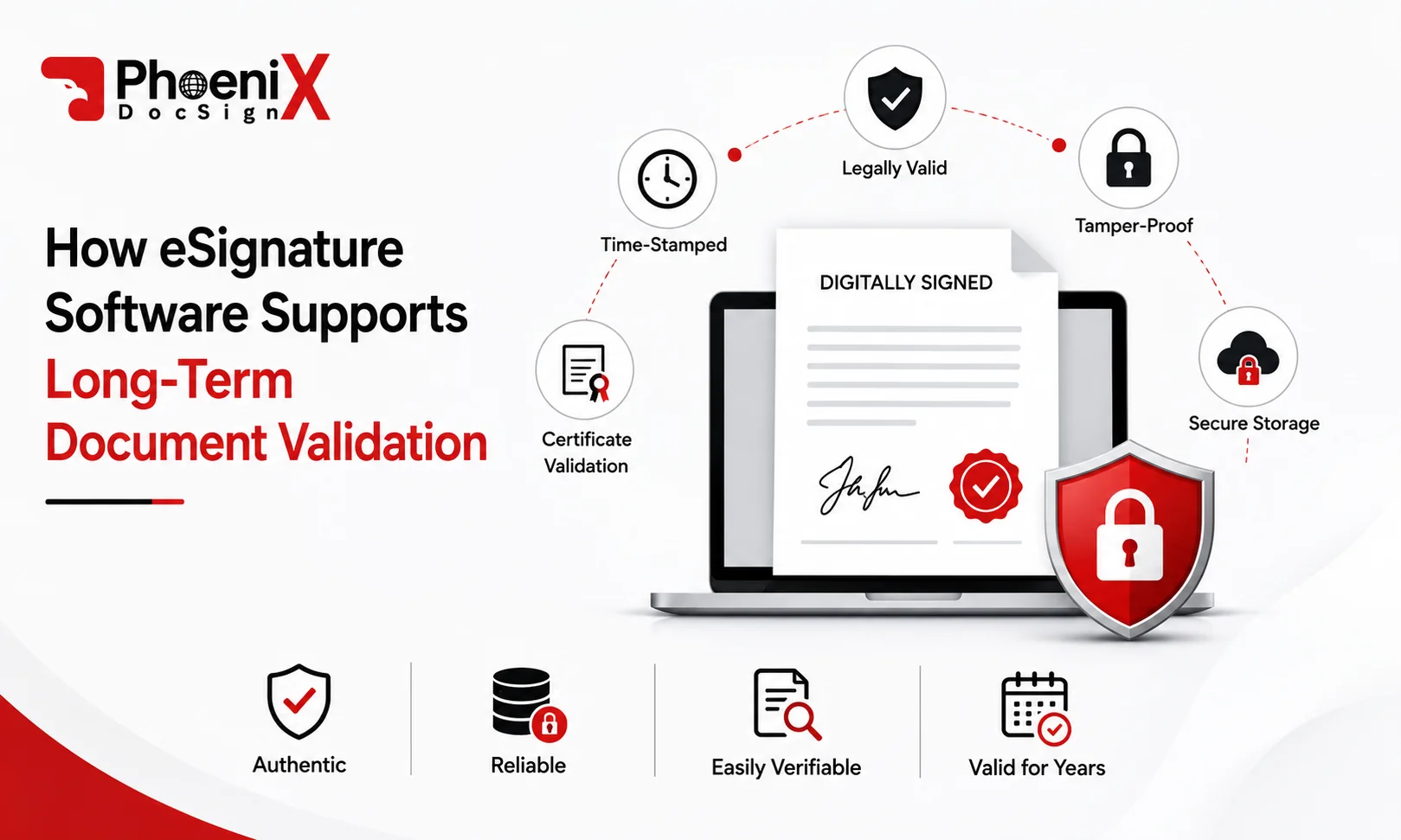
The modern eSignature software do much more than capture electronic signatures. They provide advanced security features, digital certificates, encryption, audit trails, and long-term document validation (LTV) capabilities that preserve the authenticity of signed documents throughout their lifecycle.
What Is Long-Term Document Validation?
Long-term document validation (LTV) is the process of ensuring that a digitally signed document remains authentic, verifiable, and legally valid even years after it has been signed. Unlike paper documents, digital files require cryptographic validation to confirm that:
- The document has not been modified.
- The signer was authenticated.
- The digital certificate was valid at the time of signing.
- The signature remains legally enforceable over time.
Why Long-Term Validation Matters
Many industries must retain documents for several years due to regulatory requirements.
Examples include:
- Employment contracts
- Financial agreements
- Tax documents
- Medical records
- Government filings
- Procurement contracts
- Legal agreements
How eSignature Software Supports Long-Term Document Validation
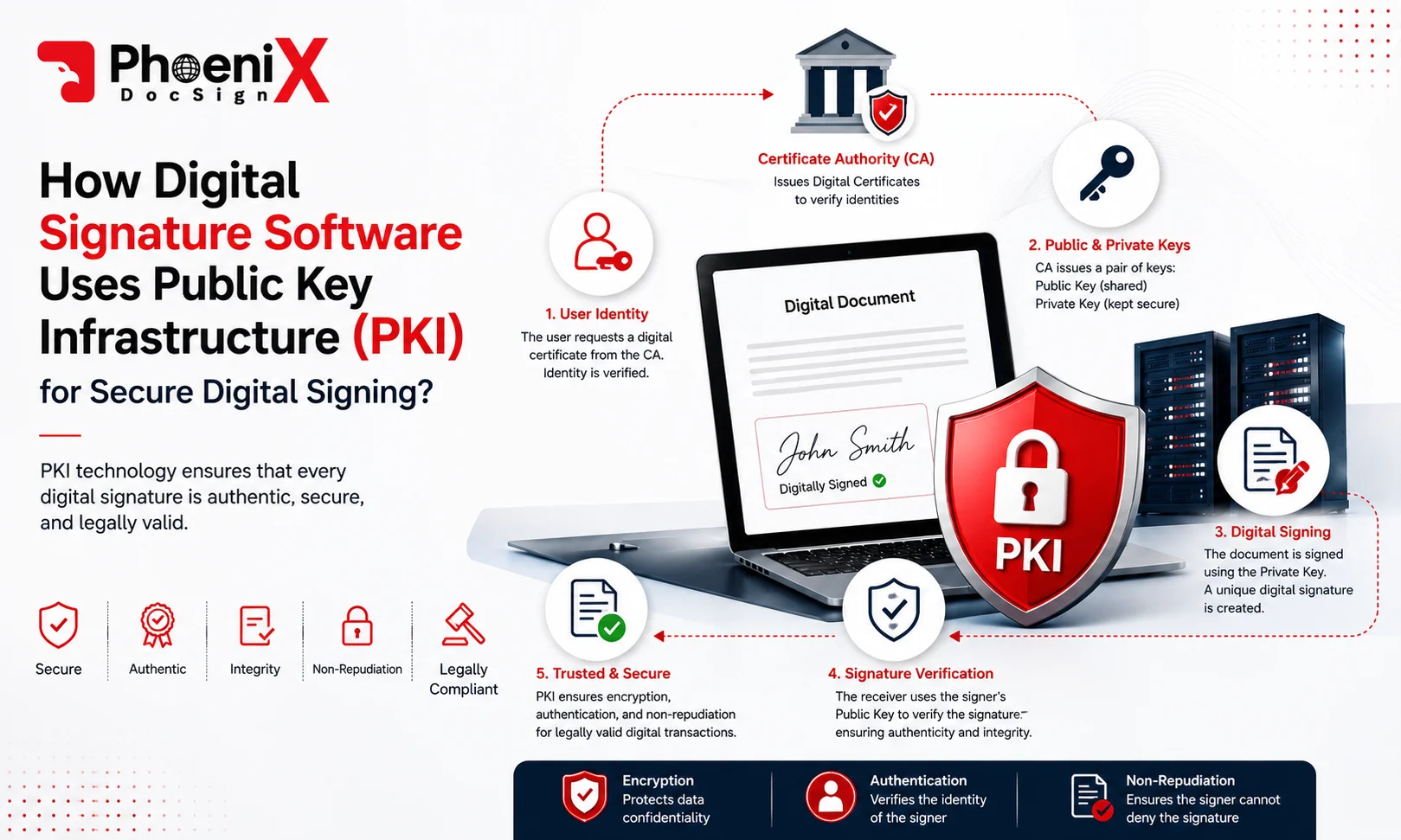
1. Uses Digital Certificates
Every secure electronic signature is backed by a digital certificate issued by a trusted Certificate Authority (CA).
The certificate verifies:
- Signer's identity
- Organization details
- Certificate authenticity
- Signature validity
2. Timestamping Documents
One of the most important features of professional eSignature software is trusted timestamping. A timestamp records:
- Exact signing date
- Exact signing time
- Trusted timestamp authority verification
Benefits include:
- Strong legal evidence
- Better compliance
- Long-term trust
3. Preserves Document Integrity
After signing, the document is cryptographically sealed. If anyone changes:
- Text
- Images
- Clauses
- Signature fields
- Attachments
4. Maintains a Complete Audit Trail
Professional eSignature software automatically records every signing activity. Typical audit logs include:
- Signer information
- Email address
- IP address
- Device details
- Browser information
- Signing timestamps
- Authentication methods
- Document history
5. Supports Certificate Validation
Digital certificates eventually expire. However, advanced eSignature software stores certificate validation information along with the signed document. This includes:
- Certificate status
- Revocation information
- Validation data
6. Uses Strong Encryption
Security is essential for long-term validation. Modern eSignature software uses advanced encryption technologies to protect:
- Documents
- Signatures
- User identities
- Stored files
- Data transmission
7. Ensures Regulatory Compliance
Reliable eSignature software supports internationally recognized standards and compliance requirements, helping businesses meet legal and industry obligations. Common compliance areas include:
- Electronic signature regulations
- Data privacy requirements
- Industry-specific security standards
- Digital record retention policies
8. Enables Secure Cloud Storage
Long-term document validation also depends on secure storage. Modern eSignature platforms provide:
- Encrypted cloud storage
- Backup protection
- Version control
- Controlled access permissions
- Disaster recovery
9. Simplifies Document Retrieval
Years after signing, businesses should be able to quickly retrieve signed documents. eSignature software offers:
- Advanced search
- Metadata indexing
- Document categorization
- Instant access
- Secure sharing
10. Protects Against Future Security Risks
Cybersecurity threats continue to evolve. Professional eSignature software regularly updates its security framework to support:
- New encryption standards
- Updated certificate validation methods
- Improved authentication technologies
- Secure digital verification
This ensures documents remain protected well into the future.
Business Benefits of Long-Term Document Validation
Organizations using eSignature software benefit from:
- Faster document verification
- Strong legal evidence
- Reduced compliance risks
- Better document security
- Improved customer trust
- Simplified audits
- Lower operational costs
- Secure digital record retention
- Paperless document management
- Enhanced business continuity
Industries That Benefit Most
Long-term document validation is valuable across many sectors, including:
- Legal services
- Financial institutions
- Healthcare
- Human Resources
- Government agencies
- Real estate
- Insurance
- Manufacturing
- Education
- Technology companies
These industries rely on secure, verifiable records to meet compliance and operational requirements.
Best Practices for Long-Term Document Validation
To maximize the benefits of eSignature software:
- Choose a trusted eSignature platform.
- Use strong signer authentication methods.
- Enable trusted timestamping for every signed document.
- Store documents in encrypted repositories.
- Maintain complete audit trails.
- Regularly review document retention policies.
- Back up critical records securely.
- Ensure compliance with applicable regulations.
- Monitor certificate validity and renewal processes.
- Train employees on secure digital signing practices.
Conclusion
Long-term document validation is essential for maintaining the authenticity, integrity, and legal value of digital records. Modern eSignature software provides the technology needed to protect signed documents long after the signing process is complete. Through digital certificates, trusted timestamps, encryption, audit trails, and secure storage, organizations can confidently preserve business-critical documents for years.