Sign up with Google
 Sign in with Zoho

Tooth Extraction Instruments: Types, Uses, and How to Choose the Right Dental Tools
Tooth extraction is one of the most common procedures performed in dental practice, but successful extraction involves much more than simply removing a tooth. The right instruments can make a significant difference in visibility, control, efficiency, tissue preservation, and patient comfort.
From routine extractions to complex surgical cases, dentists rely on a carefully selected range of Tooth Extraction Instruments. These include Extraction Forceps, Dental Elevators, Dental Luxators, Root Forceps, Periosteal Elevators, Root Tip Picks, Cowhorn Forceps, Surgical Curettes, and other specialized Surgical Extraction Instruments.
Each instrument has a particular design and purpose. Choosing the appropriate tool depends on factors such as the tooth’s position, root anatomy, surrounding bone, periodontal condition, and whether the procedure is a simple or surgical extraction.
For dental professionals, clinics, distributors, and instrument buyers, understanding these differences is important when selecting reliable dental extraction instruments. Quality instruments should provide precise handling, appropriate strength, smooth operation, and dependable performance throughout repeated clinical use.
This guide explores the major types of tooth extraction instruments, their applications, and the factors that should be considered when selecting them for a modern dental practice.
Understanding Tooth Extraction Instruments
Tooth extraction instruments are designed to help dental professionals loosen, mobilize, grasp, section, and remove teeth while minimizing unnecessary trauma to surrounding tissues.
Although a basic extraction may appear straightforward, every case is different. A fully erupted tooth with strong crown structure may require a different instrument combination from a fractured molar, retained root, impacted tooth, or tooth surrounded by dense bone.
A typical extraction procedure may involve several stages:
- Assessing the tooth and surrounding structures.
- Separating soft tissue where necessary.
- Mobilizing the tooth or root.
- Expanding or preparing the socket.
- Grasping and removing the tooth.
- Inspecting and cleaning the extraction site.
- Managing the socket after removal.
Different instruments are designed for specific stages of this process.
For example, elevators can help create initial mobility, while extraction forceps are generally used to grasp and remove the tooth. In more complicated cases, luxators, root tip instruments, surgical curettes, and other specialized instruments may be required.
This is why a complete extraction instrument set should contain a variety of instruments rather than relying on a single type of forceps.
Essential Extraction Forceps and Root Instruments
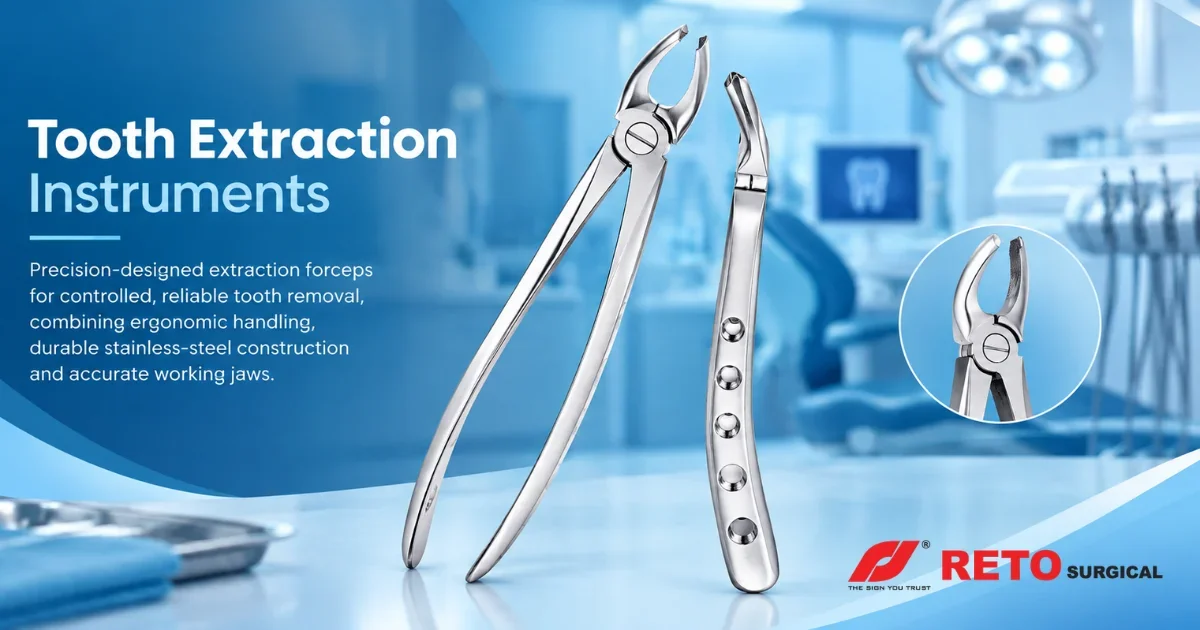
Extraction Forceps are among the most recognizable dental instruments. They are designed to grasp the tooth securely and allow the dentist to apply controlled movements during extraction.
Different forceps patterns are designed for different teeth and anatomical situations. Their beaks, angles, handles, and overall geometry can vary depending on whether they are intended for anterior teeth, premolars, molars, or other applications.
A well-designed forceps should provide:
- Secure tooth engagement
- Comfortable handling
- Appropriate mechanical strength
- Smooth opening and closing
- Accurate control during extraction
- Resistance to repeated sterilization
Instrument selection should always be based on the clinical situation rather than simply choosing the largest or strongest instrument available.