Sign up with Google
 Sign in with Zoho

Key takeaways
- A like-for-like bathroom can be quoted near $22,000 in one part of Sydney and near $45,000 in another, and margin is rarely the reason.
- Four things explain most of the gap: build era, how material reaches the room, what sits under the tiles, and whether the building is strata.
- The largest single variable is whether the wastes move. On a slab, that is a concrete job, not a tiling job.
- Search demand and property prices both point the wrong way. A suburb's bathroom band tracks its housing stock, not its median house price.
The same specification, priced twice
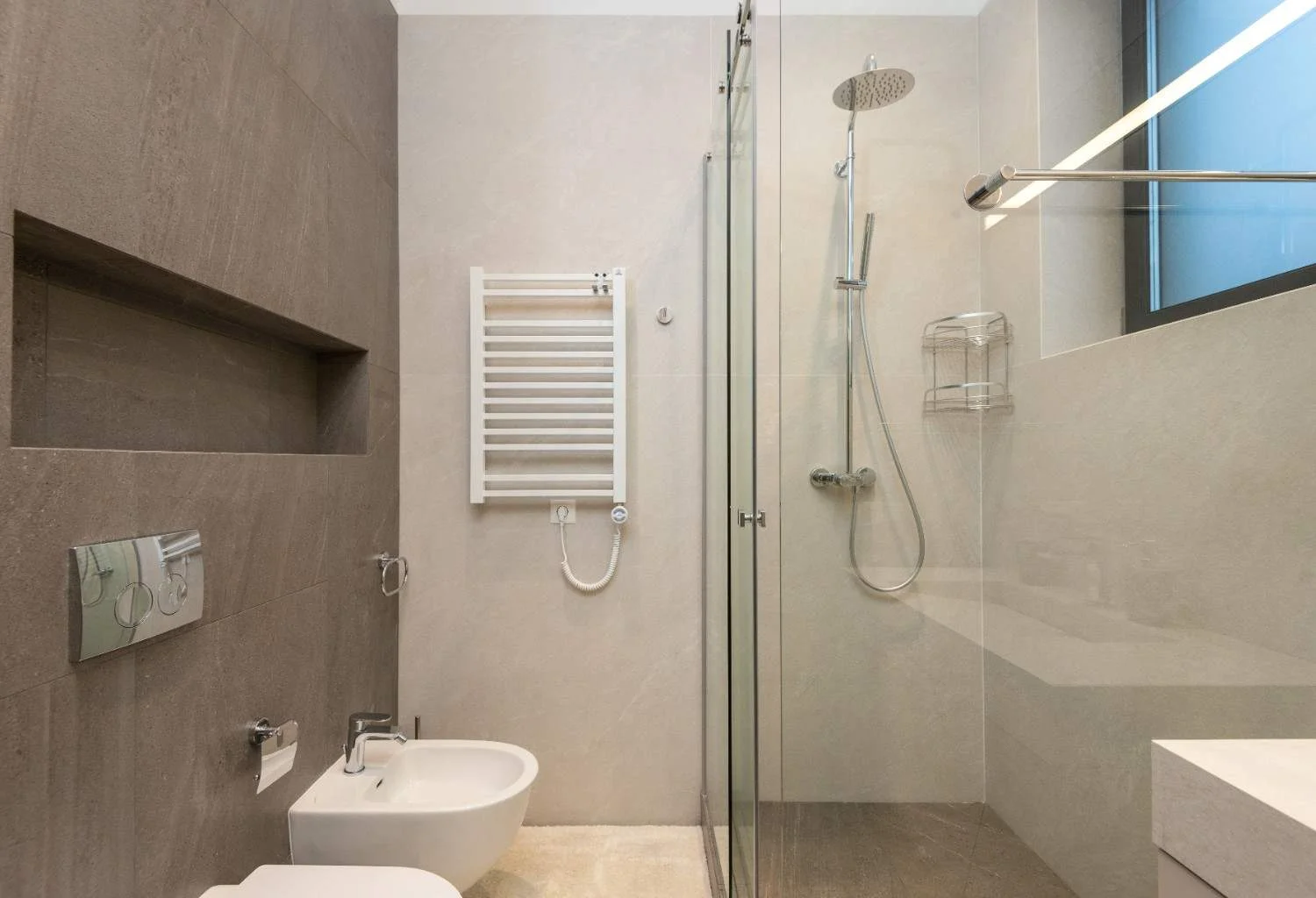
Two three-by-two bathrooms. Same tiles, same tapware, same 900mm vanity, same frameless screen. One sits in a nine-year-old estate house on the western edge of the city. The other is on the second floor of a 1970s walk-up twelve kilometres closer in.
The first might come in around $22,000 to $26,000. The second, for finishes you could swap between the two rooms without noticing, might land at $34,000 to $45,000. Owners reasonably assume the difference is either gouging or postcode snobbery. It is neither.
The honest answer is that the specification is identical and the job is not. What changes is how many labour hours, how many trades and how many weeks of calendar time the same tile requires before it goes on the same wall.
Why it is not margin
Metro-wide costs are remarkably flat. Tile layers, plumbers, electricians and licensed waterproofers charge broadly comparable rates from Blacktown to Surry Hills, because they work in the same labour market, under the same licensing scheme and the same insurance requirements.
What varies wildly is quantity: demolition hours, bins, sheeting, screeding, concrete cutting, supervision, inspections and waiting. A renovator's margin does not triple between two suburbs. The priced risk does.
The four cost drivers
01 Build era and housing stock
A 2015 estate bathroom and a 1975 brick-veneer bathroom fail in different ways. Modern rooms tend to be larger, upstairs, over a living area, on a slab, with tight side setbacks. Older rooms tend to be small and single-storey, with original plumbing, a bath under a window and forty years of steam in the sheeting. Neither is worse. They are different demolition problems with different hours attached.
02 Access
This is the most under-quoted line in the trade. A pallet cannot be forklifted over a house. Where the skip sits, where the ute parks, whether the side passage takes a sheet of 1800 fibre-cement, how many stairs or metres of common corridor the material travels - all of it converts into labour. A tight estate block and a second-floor apartment both cost more than a house with drive-through access, for the same reason.
03 Substrate and structure
On a slab-on-ground home, the shower, toilet and vanity wastes were cast into the concrete during the pour. Keep the layout and they cost nothing. Move a shower 400mm and you need a concrete cutter, a plumber working in the slab zone, a new screed to falls, a fresh membrane, and curing days where nothing else happens. Wall substrate matters just as much: tiles bedded on sand-and-cement, or stuck to water-resistant plasterboard, rarely come off cleanly, so wet-area walls get re-sheeted. In homes built before 1990, assume bonded asbestos somewhere in the mix - removing more than ten square metres of non-friable material is licensed work (asbestos.nsw.gov.au).
04 Strata
In a strata building, the bathroom arrives with a second approval process. Under NSW strata rules, a renovation that requires waterproofing is a major renovation: it needs owners corporation approval by special resolution, and that resolution must state who maintains the common property afterwards. Add lift bookings, protection of common corridors, restricted hours and a by-law, and the pre-construction phase alone can run for weeks.
What the four drivers do to one identical specification
Ranges below are drawn from quoting across the 36 suburbs in this piece, GST included. They are drivers and ranges, not quotes.
Stack the top three and an identical room moves from the low twenties into the high thirties before a single tile is chosen.
What the search data gets wrong
Across these 36 suburbs, monthly search demand for bathroom renovation terms runs from roughly ten searches in Pennant Hills and Glenwood to 260 in Castle Hill, with the umbrella Hills District term at 140, Baulkham Hills at 90, Kellyville at 50 and Box Hill at 40. Dural produces almost no measurable search signal at all, and it is one of the more expensive places in the set to build a bathroom.
Demand does not set your price. Access, stock and structure do. That is why a suburb nobody searches for can hold the most expensive room on the map.
Four suburb modules, one per housing-stock type
Editor's note: the four sections below are modules, one per housing-stock type. Swap the suburb name in the first sentence and the anchor at the end for any suburb of the same type; the surrounding prose does not depend on which suburb runs. The substitution table at the end lists all 36 options and their type.
Module 1 - Post-2005 estate house on a poured slab
In Box Hill the housing stock is the post-2005 estate house: slab-on-ground, main bathroom upstairs over a living area, side setbacks around a metre, one driveway. None of that is unusual, and it shifts the price in three predictable places - wastes are cast into the slab, so any layout change is a concrete job; the skip lives on the driveway while every sheet, bag and tile is carried in by hand; and the room sits above a ceiling that will show a membrane failure as a paint blister before the bathroom does. Ranges here tend to land mid-band, because the strip-out is simple and the structure gives nothing back. See Bathroom Renovations Box Hill for the suburb-level version of that scope.
Module 2 - Original bathroom in a 1960s–1990s brick home
In Castle Hill the stock is the 1960s-to-1990s brick or brick-veneer home, and the bathroom is usually the original: a small window, a bath with a shower over it, tiles bedded on a sand-and-cement mix, and a floor that has taken thirty to fifty years of shower steam. Strip-out is heavier and slower than owners expect, the sheeting behind the tiles rarely survives it, and the room is small enough that a walk-in shower means shifting the waste a few hundred millimetres - trivial on paper, expensive in concrete. This is where quotes diverge most, because the visible room looks identical and the substrate underneath does not. Bathroom Renovations Castle Hill sets out the same scope against that housing stock.
Module 3 - Acreage and large-lot home
In Dural the stock is the large-lot and acreage house: four or five bedrooms, two or three wet areas, a long driveway, and often a septic system or rainwater tank in the line of the works. Size is rarely the expensive part; sequencing is. Material arrives by ute-load rather than pallet, there is no kerbside space for a bin, and anything near a pump-out or drainage field has to be planned before a tile comes off the wall. Ranges here run higher and slower than the postcode suggests. The local detail sits in Bathroom Renovations Dural.
Module 4 - Apartment or walk-up in a strata scheme
In Surry Hills the stock is the apartment and the walk-up block, which adds a cost layer that has nothing to do with the bathroom itself: approval by special resolution, a by-law allocating membrane responsibility, a lift booking, protected common corridors and restricted working hours. Inside the unit, the room is small, the wastes sit in a service shaft and the ceiling below belongs to someone else. The result is a job with a modest demolition scope and an unusually long calendar - the opposite of the estate build, and often the pricier of the two. Bathroom Renovations Surry Hills covers the same scope for that building type.
What to ask any renovator, in any suburb
Price is the last thing to compare. Ask these first, in this order, and the comparison tends to make itself.
- "What is your licence number, and who signs the waterproofing certificate?" Waterproofing is separately licensed work in NSW, and the certificate should carry a name and a number.
- "Are strip-out, screed and re-sheeting separate lines?" If they are folded into one figure, the risk is unpriced and will find you later.
- "Does this price assume the wastes stay where they are?" Any layout change on a slab needs a number attached before you sign.
- "What happens if the substrate is worse than you assume - is that priced or discovered?" A good quote states its assumptions in writing.
- "How many days per stage, and which stages are waits rather than work?" Screed and membrane cure times cannot be compressed, so a one-week promise is a red flag.
- "What does the quote assume about access?" Bins, parking, stairs, lift and corridor protection all belong in the paperwork.
- "What is excluded?" In plain English, in writing, before deposit.
FAQ
Does a higher median house price mean a more expensive bathroom?
No. Bathroom cost is a function of what has to be demolished, removed, rebuilt and re-certified. Two suburbs $1.5 million apart on median house price can share the same bathroom band if they share the same housing stock. Price expectations change what owners choose to spend, not how many hours the room takes.
Why do quotes for the same bathroom differ by $15,000?
Usually because they describe different jobs. One strips to substrate, re-screeds, re-sheets and certifies. Another tiles over what is there or assumes the existing screed is sound. Ask each contractor what happens if the floor is out of fall, then compare the answers instead of the totals.
Do I need approval for a bathroom renovation in Sydney?
In a free-standing house, a like-for-like internal renovation generally needs no development approval. Moving walls, changing the wet-area footprint or altering the slab is a question for a certifier or council. In a strata building, assume approval is required: bathroom work involving waterproofing is a major renovation in NSW.
Is a fixed price realistic?
Yes, after a measure, and only with documented assumptions. A figure given over the phone is a placeholder, because it is priced on what nobody has seen yet. Fixed pricing works when the quote states what it assumes about substrate, wastes and access, and what happens if those assumptions fail.