Sign up with Google
 Sign in with Zoho

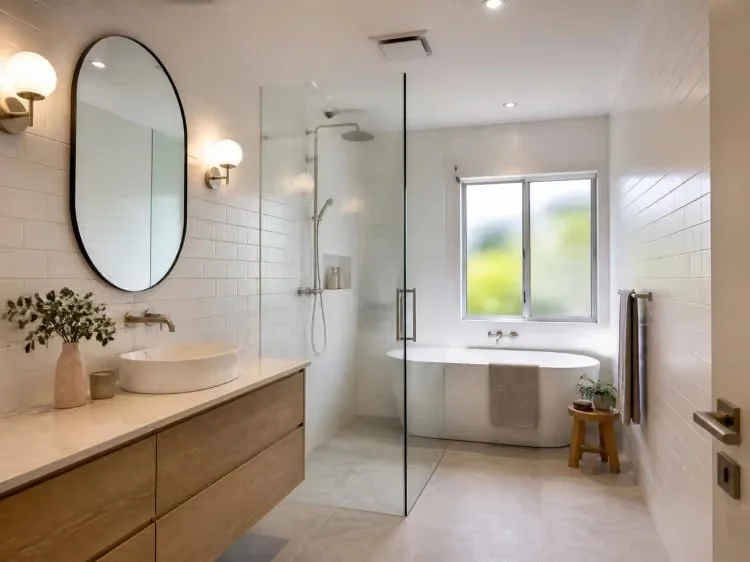
Most Castle Hill bathrooms weren't designed. They were built to a project-home spec between 1970 and 1995, and nobody expected the room to still be running now. Bathroom renovations in Castle Hill come down to what's under the tiles.
The room was built between 1970 and 1995
Most of the housing stock here is brick veneer from that window, and the original bathroom has barely changed. Tiles bedded in sand and cement. A small, high window. A bath with a shower over it, because that's what the plan allowed. The bed is the first problem: 40–60mm of mortar that comes out with a jackhammer, not a scraper. Patching over it is how you inherit a step in the floor. That's why Bathroom Renovations Castle Hill jobs get priced after a measure, not over the phone.
A walk-in shower moves the waste, not the glass
Everyone wants the bath gone and a walk-in shower in. The glass is the easy part. In these rooms the floor waste sits under the bath, so a walk-in usually means moving it a few hundred millimetres and setting a new fall through joists or slab. On brick veneer with a timber floor, that's the line between a refit and a rebuild. The NCC's wet-area provisions govern the floor, the fall and 1,800mm of wall membrane. A window that doesn't open properly undoes a lot of it.
The price band tracks three things
A full bathroom on this stock usually lands between $22,000 and $38,000. Where it lands depends on how many wet areas, what the strip-out exposes, and how far the services move. Fixtures and bathroom tiling matter less than people expect. Two wet areas priced together cost less than two separate jobs. Every cost should sit on its own line before demolition - a single number tells you nothing about what's inside it.
Three to four weeks, and a certificate at the end
The other thing that slips on older Castle Hill bathrooms is time. One crew, one supervisor, no re-booking between trades, and the room is finished in three to four weeks rather than three to four months. Waterproofing goes on to AS 3740, photographed coat by coat, with the compliance certificate handed over at the end. Ask for that certificate. Without it, the membrane is a guess.
None of this is unusual for the area. It's what the year of construction predicts, and it's easier to plan for than to discover mid-strip-out.