Sign up with Google
 Sign in with Zoho

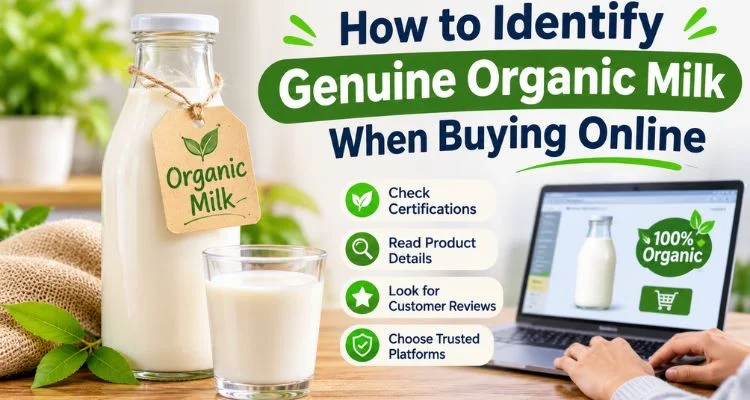
Buying milk online has become a convenient option for families who want fresh dairy products delivered directly to their homes. However, with many brands claiming to offer natural, pure, or organic milk, it can be difficult to know which products are genuinely organic. Checking certification, understanding the source, reading product labels, and evaluating the supplier’s transparency are important steps before making a purchase. When choosing Organic Cow Milk Chennai, consumers should look beyond attractive packaging and focus on the quality, farming practices, and information provided by the seller.
1. Check for Organic Certification
One of the first things to check when purchasing organic milk online is whether the product has a valid organic certification. Genuine organic products are expected to follow established standards for animal feed, farming practices, and production methods.
Look for certification details, the certifying agency's name, and relevant organic logos on the product packaging or website. In India, organic food products are regulated under recognised systems such as the National Programme for Organic Production (NPOP) and the Participatory Guarantee System for India (PGS-India), depending on the applicable requirements.
If a website claims its milk is organic but provides no certification details or supporting information, take time to verify the claim before placing an order.
2. Understand Where the Milk Comes From
The source of milk plays an important role in determining its quality and reliability. A trustworthy online dairy seller should provide information about its farms, cattle management practices, feeding methods, and milk collection process.
Some suppliers share details about their dairy farms, allowing customers to understand how the cows are raised and cared for. Transparency about sourcing helps buyers feel more confident about what they are consuming.
When shopping online, look for brands that explain their production process rather than relying only on promotional statements such as pure, healthy, or natural.
3. Read the Product Label Carefully
Product labels provide useful information that can help you make a better purchasing decision. Before adding milk to your cart, check the product description, ingredients, processing details, packaging information, and storage instructions.
Pay attention to whether the milk is pasteurised, homogenised, or sold in another form. Also, check the fat content and whether anything has been added to the product.
A clear and informative label reflects better transparency and makes it easier for customers to compare different milk options. Avoid products with vague descriptions that leave important details about their contents or processing unanswered.
4. Look for Freshness and Delivery Information
Milk is a perishable product, so freshness and proper handling are essential when ordering online. Reliable sellers should explain how milk is packed, transported, and delivered while maintaining the appropriate temperature conditions.
Check whether the supplier mentions delivery schedules, packaging methods, refrigeration requirements, and the expected shelf life. If the milk is delivered in chilled packaging, ensure that it arrives in good condition and is stored according to the instructions.
Customers looking for Fresh Milk in Chennai should pay particular attention to delivery timing and cold-chain handling, especially during warmer months when maintaining the correct temperature becomes even more important.
5. Evaluate the Seller’s Transparency
A genuine organic milk seller should be willing to answer questions about its products and farming practices. Look for a website that provides clear contact information, customer support details, product specifications, and information about its sourcing methods.
Transparency also includes explaining how the milk is processed and what quality checks are carried out. Brands that openly communicate their procedures make it easier for customers to understand what they are buying.
If a seller makes exaggerated health claims or promises that sound unrealistic, it is better to approach those claims with caution and look for reliable supporting information.
6. Compare Prices Without Compromising Quality
Organic milk may cost more than conventional milk because organic farming can involve additional requirements related to feed, farm management, certification, and production practices.
While comparing online prices, consider the quantity, packaging, delivery charges, certification, and sourcing details rather than focusing only on the cheapest option. A lower price does not automatically indicate poor quality, just as a higher price does not guarantee genuine organic milk.
Choose a supplier that offers reasonable pricing along with clear product information and dependable delivery.
7. Check Customer Reviews and Buying Experiences
Customer reviews can provide helpful insights into the overall buying experience. Read feedback about delivery consistency, packaging quality, freshness, customer service, and how the seller responds to concerns.
Rather than relying entirely on a few positive ratings, look for recurring comments across multiple reviews. Genuine customer experiences can help you understand whether a seller consistently meets expectations.
Reviews should be considered alongside certification and product information, not as a substitute for them.
Conclusion
Identifying genuine organic milk online requires more than trusting labels or attractive advertisements. Checking certification, understanding farm practices, reviewing product details, verifying freshness, and choosing transparent sellers can help you make a more confident decision. By paying attention to these details, families can make informed choices about the milk they purchase and include quality dairy products in their everyday routines.





.webp)