Sign up with Google
 Sign in with Zoho

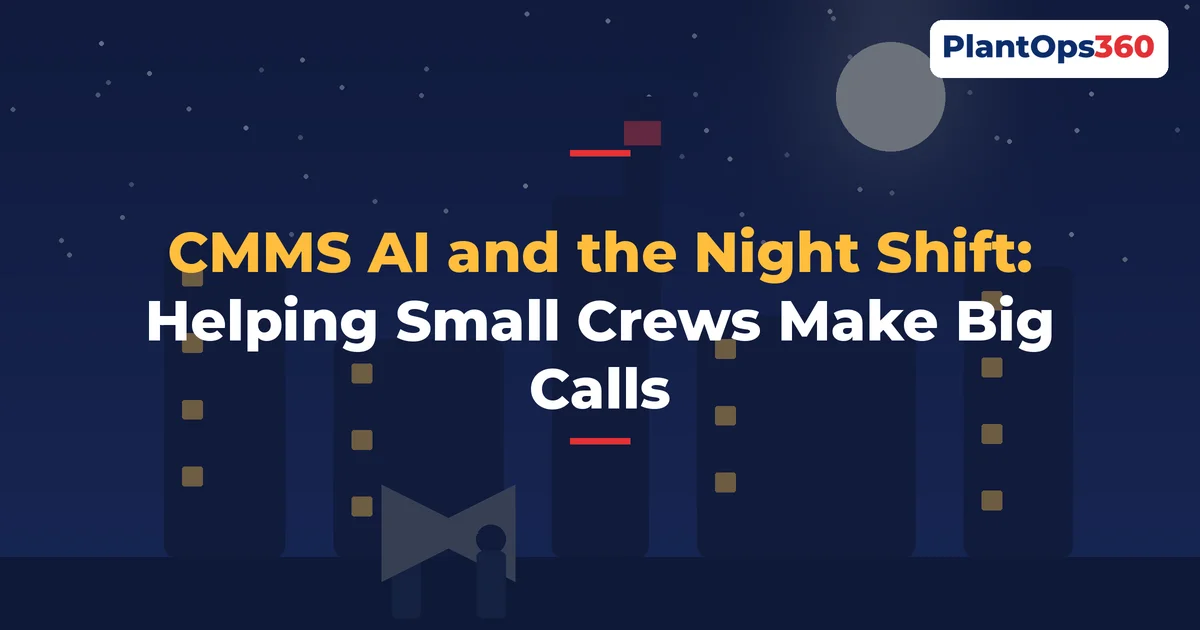
It is 2:40 a.m. at a plant on the outskirts of Pune. The day team went home hours ago. One maintenance technician and a shift supervisor are on duty. A gearbox on the main line is running hot, and the sound is slightly off.
Stop the line and lose the night's output? Or let it run and hope it holds until morning?
Nobody senior is around to ask. The call belongs to two people, and they have to make it with whatever information they can find in the next ten minutes.
Why Night Shifts Carry More Risk Than They Should
Most Indian plants running two or three shifts follow a similar pattern. Engineers, managers and specialists are present in the day. At night, crews are smaller and decisions land on fewer shoulders.
That is not a criticism of night crews. Many are highly skilled. But they work with less backup, fewer spare hands and often less information.
The risk comes from gaps. The day team noticed a vibration but told only the supervisor. A spare was ordered but nobody mentioned it. A task was half done and the notes stayed in someone's head. By midnight, the plant has forgotten things it knew at noon.
What Small Crews Actually Need at 2 a.m.
When a night technician faces a worrying machine, the questions are practical.
What is this machine's history?
Has this gearbox shown trouble before? When was it last serviced? Was anything replaced recently? A few lines of history can change the decision completely.
What was already noticed?
If the day shift logged a temperature rise two days ago, the night team is not starting from zero. They are continuing a story.
What is available right now?
Is the spare on the shelf? Which vendor can respond, and who is the contact? Knowing this before deciding is worth more than any gut feeling.
How CMMS AI Supports Better Night Decisions
Good CMMS AI does not make the call for the crew. It makes sure the crew has the right picture when they must make it.
In practice, that can look like this:
- Full asset history on a phone. The technician sees past faults, repairs and scheduled tasks at the machine.
- Early flags from patterns. Predictive maintenance can highlight assets drifting from their normal behaviour, so a hot gearbox is not a total surprise.
- Clear work orders. Open jobs, owners and due dates are visible, so half-finished work does not vanish at shift change.
- Spare and vendor visibility. The crew can check stock and contacts without waking three people.
This is where CMMS AI earns its place. It is not about replacing experience. It is about giving a small crew the memory of the whole plant.
Handovers: The Quiet Weak Point
Ask experienced plant engineers where problems start, and many will say shift handovers. A verbal note over tea, a line in a register or a WhatsApp message can all work, until they do not.
Make the record the handover
When tasks, observations and open issues are logged against the asset, the handover becomes a shared record instead of a conversation. The morning team can see exactly what happened overnight and why a decision was taken.
Learn from the call afterwards
If the crew chose to run the gearbox till morning, did it hold? If they stopped the line, was it the right decision? Recording the outcome turns each night call into learning for the next one.
Make logging easy
None of this works if recording is a burden. An offline-capable mobile app matters in areas of a plant where network coverage is weak. The technician logs the finding at the machine and it syncs later.
Beyond Breakdowns: Everything Else a Night Crew Touches
Night shifts do more than react. Many plants schedule planned servicing, calibration checks and energy-intensive operations after hours.
When calibration records, documents and energy readings sit in the same system as work orders, a night crew can complete these tasks with the right procedures in hand. Document management helps here, because the latest instruction sheet or checklist is available at the machine, not in a cupboard locked in a day-shift office.
People sometimes ask what the best preventive maintenance software looks like for a plant with thin night staffing. The honest answer is that it is the one your night crew will actually open, trust and keep updated.
Where PlantOps360 Fits
PlantOps360 is one example of AI-powered CMMS and EAM software that supports this way of working. It brings together asset management, preventive and predictive maintenance, work orders, spare parts inventory, calibration, energy, document management, an offline mobile app and a vendor portal. The point is a single shared record that every shift can read.
Practical Takeaways for Night Shift Readiness
- List the five assets that cause the most night-time stress, and review their history first.
- Make sure every abnormal observation is logged, even if it seems minor.
- Keep critical spares and vendor contacts easy to find after hours.
- Replace verbal handovers with a shared record of open tasks and concerns.
- Agree simple rules on when a crew can stop a line and who they should call.
- Review night-shift decisions weekly and share the lessons with the whole team.
Conclusion: Give Small Crews a Bigger Memory
Night shifts will always run with fewer people. That does not mean they should run with less information. The more a crew can see about an asset's past, the better its judgement will be when it counts.
Start with one line and one shift. Capture history, tasks and observations for a few weeks, then ask your night team what helped and what was missing. To understand how CMMS AI can support that routine, that is a good place to look.
The 2 a.m. call will still be a human one. It just does not have to be a blind one.