Sign up with Google
 Sign in with Zoho

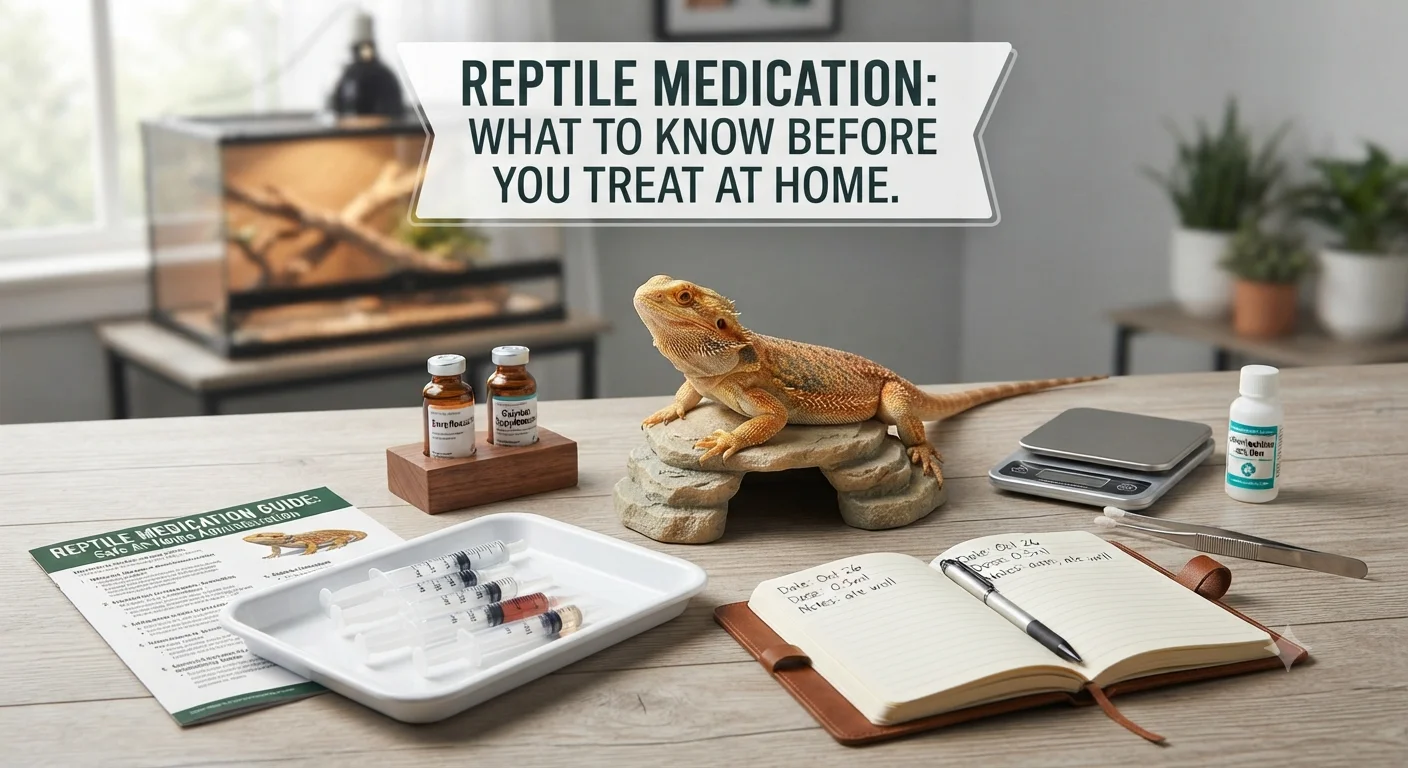
Reptile medication should start with a vet’s diagnosis. Reptiles hide illness, they do not run fevers like mammals, and many infections trace back to heat, humidity, or diet. A drug cannot fix a setup problem. Your vet picks the treatment, and you fix the habitat that caused the trouble.
Many owners search for reptile medication after they spot a runny nose or a bad appetite. That worry makes sense. This guide explains why the vet visit matters first, what the main drug types do, and how to support recovery at home.
Key Takeaways
- Only a vet can diagnose a reptile respiratory illness.
- Reptiles hide illness, so early signs are subtle.
- Antibiotics work best when a vet picks them based on testing.
- Treatment fails if husbandry stays wrong.
- Wash your hands after any contact with a reptile or its habitat.
Why the Vet Comes First
Reptiles are masters at hiding sickness. PetMD notes that early signs are often vague, such as a smaller appetite or mild sluggishness. Reptiles also do not run a fever the way many other pets do, because their body heat depends on their surroundings.
For respiratory infections, signs can include nasal discharge, a red mouth, faster breathing, or extra effort to breathe. PetMD says only a veterinarian can diagnose respiratory illness, and respiratory distress is a medical emergency.
Husbandry Often Causes the Problem
The MSD Veterinary Manual states that therapy without proper husbandry and nutrition will ultimately fail. It also says respiratory infections are more likely with unfavorable temperatures or humidity, poor ventilation, unsanitary conditions, malnutrition, and parasites.
PetMD calls a lack of suitable husbandry or routine vet care the top risk factor for reptile respiratory disease. So a sick reptile needs two things: treatment from a vet and a habitat check at home.
Some reptiles face extra risk. PetMD says overcrowded, unclean conditions and stress help respiratory disease spread, and that old, young, and immune-compromised reptiles are at greater risk. If your pet fits one of those groups, call your vet sooner rather than later.
Types of Reptile Medication
Antibiotics for Reptiles
Antibiotics only help bacterial infections. MSD recommends culture and susceptibility testing to choose the right therapy, so the vet matches the drug to the germ. PetMD adds that vets often give treatments by injection instead of by mouth, because that route is easier to give and absorbs better in reptiles.
That is why guessing at home can hurt. The wrong drug can fail, delay real care, and let an infection spread. If you shop for antibiotics for reptiles, buy only what your vet has prescribed or recommended.
How to Support Treatment at Home
Follow your vet’s plan exactly, and add these habits:
- Keep the enclosure temperature in the range your vet gives you. MSD says reptiles with respiratory infections are kept at the mid to upper part of their preferred temperature zone.
- Write down appetite, droppings, and breathing each day.
- Fix any husbandry gaps your vet points out, from lighting to diet.
- Give every dose on schedule and finish the full course.
- Call the clinic if your reptile gets worse or refuses treatment.
MSD also encourages owners to keep detailed records of husbandry changes, new animals, and past treatments. Bring those notes to every visit.
Questions to Ask Your Vet
Bring a short list so you leave with a clear plan:
- What is the diagnosis, and how sure are you?
- What does each medicine do, and how do I give it?
- What temperature range should I hold during treatment?
- Which husbandry changes should I make right away?
- When should my reptile be rechecked?
Recovery Takes Time
PetMD says recovery from a respiratory infection can take weeks or even months. Some reptiles are more prone to repeat infections, so routine vet checks and steady husbandry matter after the first round of treatment.
Stay Safe While You Treat
Reptiles can carry Salmonella even when they look healthy. The CDC advises keeping reptiles and their gear out of the kitchen and washing your hands after contact. Wash up after every dose, feeding, or cleaning.
Prevention Beats Treatment
Good habits cut the odds of needing drugs at all. MSD recommends quarantining new reptiles for 3 to 6 months, and PetMD stresses routine vet care. Pair that with steady heat, humidity, lighting, and diet, and many infections never start.
Frequently Asked Questions
Can I treat a reptile respiratory infection at home?
No. PetMD says there is no proven home remedy for upper respiratory infections in reptiles. A vet needs to diagnose the cause and choose treatment. Meanwhile, correct heat, humidity, and cleanliness.
Do reptiles get a fever when they are sick?
No, not like many other pets. PetMD explains that reptile body temperature depends on their surroundings. Watch for changes in appetite, energy, and breathing instead.
Why are some reptile medicines given as shots?
PetMD says injectable treatments are common because they are easier to give and absorb better in reptiles. Your vet will tell you if your pet needs shots or oral medicine.
Can I use leftover antibiotics on my lizard?
Do not. A leftover drug may not match the germ or the dose. MSD recommends testing to choose the right drug, so call your vet instead.
What should I bring to the vet visit?
Bring notes on temperature, humidity, lighting, diet, and any recent changes. MSD says vets need a clear husbandry history. Photos of the habitat help too.
Next Steps
Write down what you see today, check your enclosure temperature, and call a reptile vet. Then follow the treatment plan and fix the setup problem behind it.
This article is general information, not veterinary advice. Talk to a reptile veterinarian before you give any medicine.
#antibiotics for reptiles #antibiotics for lizards #reptile antibiotics