Sign up with Google
 Sign in with Zoho
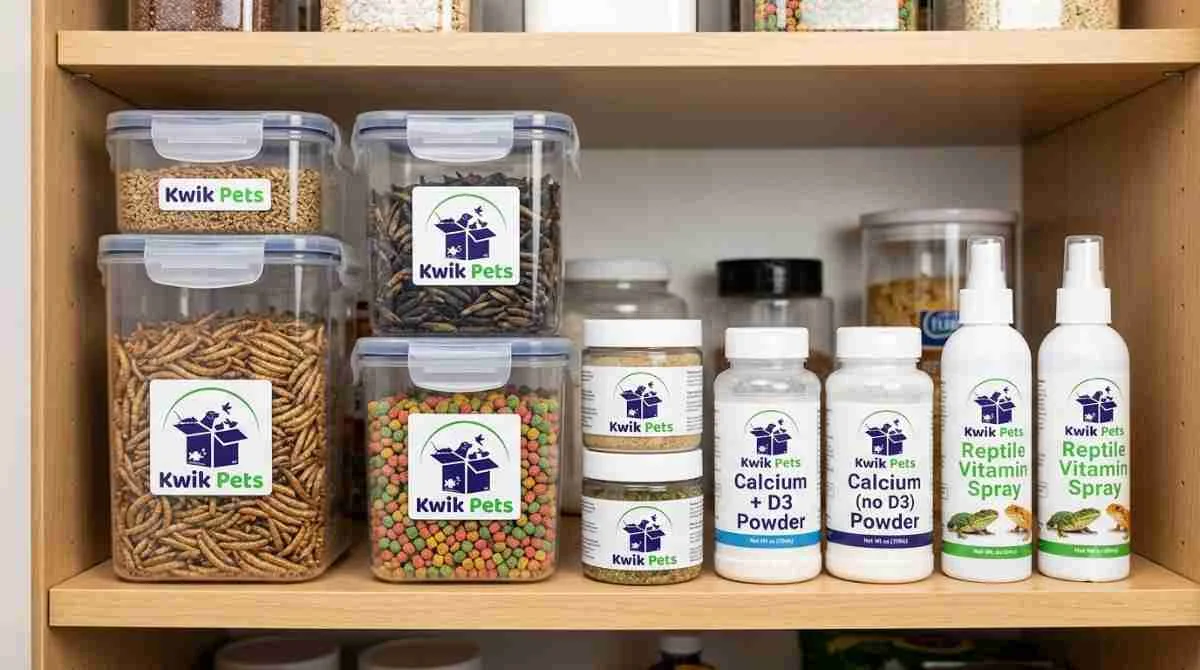
Reptile food doesn’t last forever, and bad storage can make your pet sick. Dry pellets, live insects, frozen prey, and fresh veggies all need different conditions. Whether you keep a bearded dragon, gecko, snake, or turtle, the right storage keeps food fresh, cuts waste, and makes feeding time easier.
How Should You Store Different Types of Reptile Food?
It depends on the food type, how much moisture it has, and what the package says. Dry food needs protection from heat and damp. Fresh and frozen food needs the right temperature.
How to Store Dry Reptile Food
Keep dry pellets, granules, and commercial diets in a cool, dry spot away from direct sun. Leave the food in its original bag if you can, and seal it tight after every feeding. Always check the maker’s storage instructions too.
The U.S. Food and Drug Administration (FDA) says to store dry pet food in a cool, dry place below 80°F (about 27°C). It also suggests keeping the food in its original bag. If you like, put that bag inside a clean, covered container.
Say you just opened a bag of bearded dragon pellets. Close it firmly after feeding and keep it away from sunny windows. Don’t pour fresh food on top of old leftovers, because then you can’t tell how old any of it is.
How to Store Opened Canned and Moist Reptile Food
Cover opened canned or moist food and put it in the fridge right away. Use it within the time shown on the label. Cold slows the growth of many harmful microbes, but it can’t fix food that’s already spoiled.
If the original packaging won’t close properly, switch to a clean, sealed container. Write the opening date on it. When the storage window ends, or the food looks off, throw it out.
How to Keep Live Feeder Insects Fresh
Crickets, mealworms, and roaches all need airflow, the right temperature for their species, and a source of food and moisture. Their needs differ, so don’t keep every insect in the same setup. Check reliable care guidance for each one.
Crickets do well in a ventilated enclosure with egg-carton hiding spots. Pull out dead ones every day or so. For mealworms, follow your supplier’s temperature and feeding tips. Too much moisture leads to mold and dead insects.
How to Store Frozen Prey
Frozen mice, rats, and other prey should stay frozen until you need them. Follow your vet’s advice and the supplier’s instructions. Keep the packages sealed to avoid contamination and freezer burn, and thaw only what you need for one feeding.
The fridge is a good place to thaw prey, in a sealed container. Don’t leave it sitting at room temperature for long. Don’t refreeze thawed prey unless the product instructions say it’s okay. Wash your hands and surfaces after handling raw prey.
How to Store Fresh Vegetables and Turtle Food
Refrigerate fresh greens and veggies as needed, wash them before prep, and keep them away from raw animal products. Store dry turtle pellets the way the package says. Cut fresh food into portions your pet can finish, so nothing gets left in the tank.
A simple setup for a turtle owner: dry pellets in a sealed, dry container, and leafy greens in the fridge. Take uneaten fresh food out of the habitat quickly. It spoils fast and dirties the water. Also make sure the food suits your turtle’s species and age.
What Conditions Help Keep Reptile Food Fresh?
Four things matter: heat, moisture, air, and handling. The ideal temperature changes with the food type, so follow the label and your vet’s advice.
Protect Food From Heat and Moisture
Heat can break down some nutrients. Moisture makes dry food clump or grow mold. Keep food away from sinks, humid enclosures, and sunny spots. Use scoops and containers that are clean and fully dry.
Check Expiration Dates and Package Instructions
Look at the best-before date when you buy, and check the packaging for tears, swelling, or leaks. Once it’s open, follow the maker’s storage and use directions. A future expiration date doesn’t mean the food is safe if it was stored badly.
How Can You Tell If Reptile Food Has Spoiled?
Watch for a strange smell, visible mold, odd color changes, damaged packaging, or a different texture. But spoilage isn’t always easy to see or smell. That’s why proper storage and handling matter so much.
Don’t feed food that looks spoiled or wasn’t stored correctly. Never taste it to check. Throw it out safely and don’t mix it with fresh food. Wash food containers and feeding tools often, and keep them apart from your own kitchen gear when you can.
What Are Common Reptile Food Storage Mistakes?
The usual ones: leaving bags open, using damp containers, skipping the package instructions, and letting uneaten fresh food sit in the habitat. All of these hurt food quality and add to waste.
Don’t buy more than you can use in the recommended time. Check dates before you combine old and new supplies. And don’t expect the fridge or freezer to rescue food that had already gone bad. Keep a simple note of when you opened each package.
How Should You Store Pet Lizard Food and Turtle Food?
Store it based on what your animal eats and what form the food comes in. Insect-eating lizards might get pellets, live insects, or other suitable foods. Many turtles need a species-specific mix of prepared diets and fresh foods.
A gecko keeper might keep dry food in a sealed package and house live insects in a separate enclosure. A turtle keeper might put greens in the fridge and pellets in a cool, dry cupboard. One method won’t work for every reptile.
Not sure about your pet’s diet, food prep, or feeding schedule? Ask a qualified reptile vet. Young animals and species with special needs often require their own feeding plans.
What Is a Simple Reptile Food Storage Routine?
A routine helps you catch problems early. Check food when you buy it, when you open it, and before every feeding.
- Check the package date and condition before you buy.
- Label opened packages with the date.
- Keep dry food cool and dry, and seal it after use.
- Refrigerate opened moist food and fresh produce as directed.
- Keep frozen prey frozen until you’re ready to prep it.
- Keep feeder insects in clean enclosures that suit their species.
- Remove uneaten fresh food and wash feeding dishes regularly.
- Throw out food that’s spoiled or was stored the wrong way.
Frequently Asked Questions About Reptile Food Storage
1. How long does reptile food last after opening?
It depends on the product, the ingredients, and how you store it. Follow the maker’s instructions for opened dry, canned, and refrigerated foods. Don’t assume they all last the same time.
2. Should reptile food pellets be refrigerated?
Usually not. Most dry pellets are fine in a cool, dry place in a tightly sealed package, unless the maker says otherwise.
3. How should frozen reptile food be stored?
Keep frozen prey sealed in a suitable freezer and follow the supplier’s instructions. Thaw only what you need, handle it hygienically, and don’t leave thawed prey out at room temperature for long.
4. Can live feeder insects be stored for several weeks?
Some can, if conditions are right. How long they last depends on species, temperature, airflow, food, and moisture. Follow care instructions for each species and remove dead or sick insects often.
5. How can I tell if pet lizard food has gone bad?
Look for mold, odd smells, color changes, damaged packaging, or texture changes. Food can be unsafe even with no visible signs, so follow storage instructions and toss anything you’re unsure about.
Your Next Step
Grab a marker and date every open package in your reptile food stash today. Then move any dry food away from heat and sunlight, and clear out anything past its window. Do a quick check before each feeding from here on, and you’ll catch most problems before your pet does.