Sign up with Google
 Sign in with Zoho

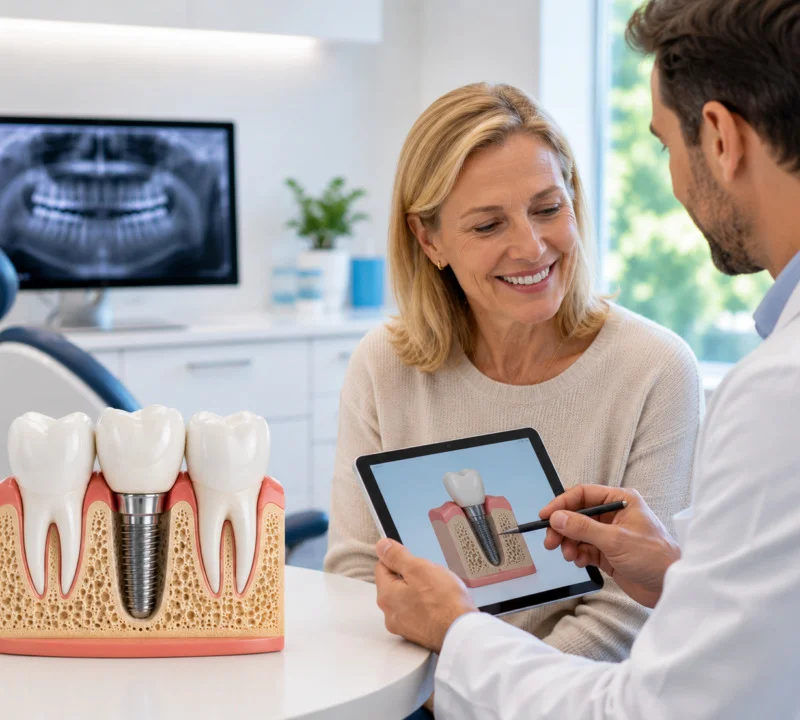
Losing a tooth can affect much more than your smile. It may make eating uncomfortable, change the way you speak, or leave you feeling self-conscious in social situations. Fortunately, modern dentistry offers several ways to replace missing teeth, and dental implants in Vancouver are one of the most durable and natural-looking options available.
But what does getting a dental implant actually involve? Is the procedure painful? How long does it take? And what should you expect during recovery?
If you're considering dental implants, understanding the process beforehand can make the experience feel much less overwhelming. Here's a practical, step-by-step look at what Vancouver patients can expect.
What Are Dental Implants?
A dental implant is a replacement for the root of a missing tooth. It typically consists of three main components: an implant post, an abutment, and a dental crown.
The implant post is placed into the jawbone, where it gradually integrates with the surrounding bone. Once healing is complete, an abutment connects the implant to a custom-made crown designed to resemble a natural tooth.
Unlike traditional dentures, implants are fixed in place rather than being removable. They can also help support the jawbone following tooth loss.
However, dental implants aren't automatically the right choice for everyone. Your dentist will need to evaluate your oral health, bone volume, medical history, and individual goals before recommending treatment.
Step 1: Start With a Dental Implant Consultation
The process starts with a consultation—not surgery.
During your appointment, your dental professional will examine your teeth, gums, and jaw. Digital X-rays or 3D imaging may also be used to assess the bone and determine the appropriate position for the implant.
This is also the time to discuss your expectations and concerns. You may want to know how long treatment will take, what recovery involves, or whether you need additional procedures before implant placement.
A detailed consultation is important because successful implant treatment depends on careful planning. The goal is to create a treatment plan based on your specific oral health rather than taking a one-size-fits-all approach.
Step 2: Prepare Your Mouth for Treatment
Some patients can move directly to implant placement. Others may need preparatory treatment first.
For example, gum disease should generally be treated before implant surgery. If a damaged or decayed tooth cannot be saved, it may need to be extracted.
Some patients may also have insufficient jawbone to support an implant. In these cases, a bone graft may be recommended to create a stronger foundation.
Needing additional treatment doesn't necessarily mean you aren't a candidate for dental implants. It simply means your treatment plan may involve an extra stage before the implant can be placed.
Step 3: Dental Implant Placement
Once your mouth is ready, the implant post is surgically placed into the jawbone.
The treatment area is typically numbed with local anaesthetic, so you shouldn't feel the procedure itself. Depending on your circumstances and the complexity of treatment, your dental professional may discuss additional options to help keep you comfortable.
After placement, the implant needs time to integrate with the surrounding jawbone. This process is known as osseointegration.
You can think of this as the foundation-setting stage. The implant needs to become securely connected with the bone before it can reliably support the final restoration.
Step 4: Allow Time for Healing
Healing is an important part of the dental implant process. The exact timeline varies from patient to patient.
Factors such as bone quality, oral health, the number of implants being placed, and whether additional procedures were required can all influence how long healing takes.
During this period, follow your dental professional's aftercare instructions carefully.
It is normal to experience some swelling, tenderness, or minor discomfort following oral surgery. These symptoms are generally temporary, but your dental team should explain what to expect and how to manage your recovery.
Maintaining good oral hygiene is also important. However, you may need to temporarily adjust how you clean around the treated area.
Step 5: Attach the Abutment and Dental Crown
Once the implant has healed sufficiently and your dental professional confirms that it is stable, the restoration stage can begin.
An abutment is attached to the implant and acts as the connector between the implant post and crown.
The final crown is then designed to fit comfortably within your mouth and complement your surrounding teeth. Your dentist will consider factors such as the size, shape, and colour of your natural teeth when planning the restoration.
The goal isn't simply to fill a gap. A properly planned implant restoration should restore function while looking as natural as possible.
How Long Does the Dental Implant Process Take?
"How long will the entire process take?" is one of the most common questions patients ask.
The answer varies.
A straightforward case may require less treatment time than a patient who needs an extraction, bone graft, or treatment for gum disease. Healing also takes time, and this biological process cannot always be shortened simply to make treatment faster.
Your dentist should provide an individualized timeline after evaluating your oral health and reviewing your imaging.
It's important to be cautious about guarantees that suggest every patient can complete treatment within exactly the same timeframe. Dental implant treatment is highly individualized, and proper healing is an important part of achieving a stable result.
Are Dental Implants Painful?
Feeling nervous about pain is completely understandable, especially if you've never undergone oral surgery.
During implant placement, local anaesthetic is used to numb the treatment area. After the procedure, you may experience soreness, swelling, or sensitivity as the tissues heal.
Most patients can manage post-treatment discomfort with the care and medications recommended by their dental professional. Your experience may depend on the complexity of the procedure and your individual tolerance for discomfort.
If pain becomes severe, gets worse rather than better, or is accompanied by unusual symptoms, contact your dental provider for advice.
How Should You Prepare for Dental Implant Treatment?
Knowing what to expect can make your treatment experience more comfortable. Before your procedure, ask your dental professional about:
- How many appointments you may need
- Whether an extraction or bone graft is necessary
- Your estimated healing timeline
- Temporary tooth replacement options
- Foods you should eat or avoid during recovery
- How to maintain oral hygiene after surgery
- Symptoms that are considered normal during healing
- When you should contact the dental office
- The expected treatment cost and potential insurance or benefit coverage
It's also important to provide your dental team with an accurate medical and medication history. Certain medications and health factors can affect treatment planning, so your provider needs complete information before recommending care.
Choosing the Right Dental Implant Provider in Vancouver
Choosing a qualified dental professional is an important part of the process.
When researching dental implants in Vancouver, don't base your decision solely on price or promotional claims. Look at the provider's qualifications, experience, approach to treatment planning, diagnostic technology, and willingness to explain your options.
A good consultation should give you an opportunity to ask questions and understand both the benefits and limitations of treatment.
You may also want to ask what happens if additional procedures become necessary or if an unexpected issue occurs during treatment.
Most importantly, you should feel comfortable with the treatment plan before moving forward.
Are Dental Implants Right for You?
Dental implants can be an effective long-term tooth replacement option for many patients, but they aren't the only solution.
Depending on your oral health and personal circumstances, a dental bridge or removable denture may also be appropriate. Factors such as bone structure, gum health, overall health, budget, lifestyle, and long-term goals can all influence the recommendation.
That's why an individual assessment is so important.
Rather than choosing a treatment based solely on an online article or a comparison of prices, speak with a qualified dental professional who can evaluate your mouth and explain the options available to you.
Conclusion
The dental implant process may seem complicated when you're first researching it, but understanding the individual stages can make the journey much easier to navigate. From your initial consultation and preparation to implant placement, healing, and the final crown, each step has an important purpose.
If you're considering dental implants in Vancouver, take the time to learn about your options and ask questions before making a decision. A thorough consultation can help determine whether implants are suitable for you, what your treatment timeline may look like, and what you can realistically expect throughout the process.
The right treatment isn't necessarily the fastest or most heavily advertised option. It's the one that fits your oral health, needs, and long-term goals. With professional evaluation, careful planning, and appropriate aftercare, you can approach your tooth replacement journey with greater confidence and a clearer understanding of what lies ahead.