Sign up with Google
 Sign in with Zoho

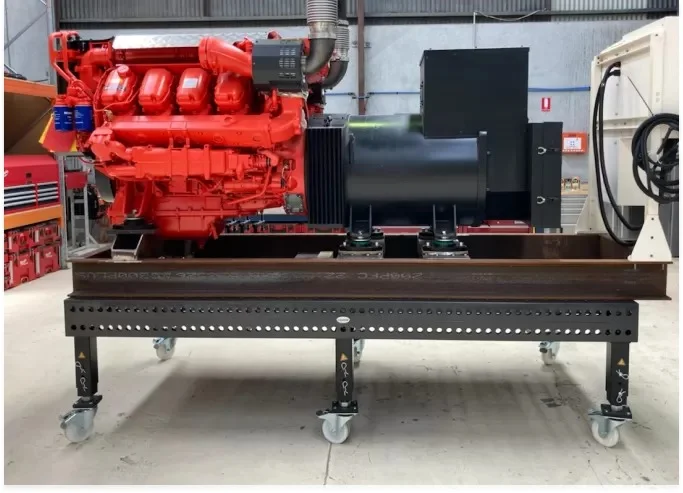
A good welding table can make a noticeable difference to the way fabrication work is carried out. It gives you a solid place to position components, check measurements, add clamps and make adjustments before striking an arc. The challenge is choosing one that actually suits the work in your workshop.
There is no need to buy the biggest or most elaborate table available. A better approach is to look at what you fabricate, how much space you have, how often the table will be used and how much control you need over positioning. Those details will tell you far more than a long list of specifications.
Start With the Jobs You Actually Do
Think about the workbench you use now. What causes the most frustration?
Perhaps there is not enough room for larger frames. Maybe components move while you are trying to tack them together. Or you spend too much time making temporary stops and clamps because your current setup does not give you many options.
These everyday problems are useful when comparing tables.
A business doing occasional repairs may have little reason to invest in a large precision setup. A fabrication workshop producing frames, brackets and repeat assemblies may benefit considerably from a more adaptable workholding system.
The important thing is to choose around your real workload rather than buying equipment simply because it has more features.
Get the Size Right
A larger work surface sounds appealing, particularly when you regularly fabricate large components. It gives you more room to spread out materials and position fixtures.
There is a catch, though. A table that takes up too much of the workshop can make everything around it harder to access.
Measure the available floor area before choosing a size. Leave enough space for the operator to move around the workpiece and reach clamps or tools without awkward positioning.
If your projects vary considerably in size, consider how the table will be used for smaller jobs as well. A practical setup should not become inconvenient every time you work on something compact.
A Flat Surface Is More Than a Nice Feature
When several pieces need to form a square frame or line up with one another, the surface beneath them matters.
A flat, rigid table provides a more reliable reference point during setup. It does not eliminate the need to measure and check your work, but it gives you a much better starting position.
This is particularly useful when making multiple assemblies that need to be consistent. Once you have established a reliable setup, stops and fixtures can help reproduce the same positioning instead of starting from scratch each time.
For precision fabrication, look at the manufacturer's stated tolerances and construction details rather than assuming every table will offer the same level of accuracy.
Don't Overlook the Hole Pattern
For many fabricators, the fixture system is one of the most useful parts of a modern table.
A regular pattern of holes allows clamps, stops and other accessories to be placed around a component. Instead of figuring out how to hold every new job with whatever happens to be available, you have a more organised way to secure the work.
But hole size and spacing matter. Accessories designed for one system may not suit another.
Before buying, check what fixtures are available for the table and whether they match the type of work you normally undertake. If you already own useful clamps and accessories, compatibility could save you from replacing equipment unnecessarily.
Think About Rigidity
A table needs to stay put when you are working on it.
Heavy sections, clamps and repeated fabrication work can place considerable demands on the structure. A table that flexes or shifts can make accurate assembly more difficult.
Pay attention to the construction of the legs, frame and working surface. A strong table is not simply one that feels heavy. The way its components are designed and supported has a major influence on how stable it is during use.
At the same time, avoid assuming that the heaviest option is automatically the right option. Your choice should reflect the materials and assemblies you normally handle.
Your Working Height Matters Too
Fabrication can involve long periods of standing, leaning and reaching. The height of the work surface can therefore affect how comfortable a job feels.
For some workshops, a fixed-height table will be perfectly adequate. Others may prefer an adjustable setup, particularly where different operators or applications are involved.
Think about the jobs you perform most often. If a component regularly requires access from several sides, the ability to position yourself comfortably can be just as useful as having additional table space.
A sensible workstation should make the job easier without forcing the operator into awkward positions.
Will It Work for More Than One Type of Job?
A fabrication business rarely does exactly the same thing every day.
One morning might involve a small repair. The afternoon could involve assembling a frame or preparing several components for production. A table that can accommodate different fixtures and workholding arrangements gives you more freedom to change between tasks.
That does not mean every workshop needs an elaborate modular system. If your work is straightforward, a simpler table may be the better investment.
The question is whether the equipment gives you enough flexibility for the work you expect to do over the next few years.
Consider Maintenance and Workshop Conditions
Welding creates a tough environment for equipment. Hot metal, sparks, grinding dust and spatter are part of normal fabrication work.
The surface will need regular cleaning. Keeping holes and fixture points clear is especially important when they are used for positioning components.
It is also sensible to think about replacement fixtures and support. A table is easier to live with over the long term when compatible accessories remain available and worn components can be replaced rather than forcing you to replace the entire setup.
Don't Choose on Price Alone
Price will naturally influence the decision, but it should not be the only comparison.
A basic table can be a sensible choice for occasional work. Spending more may make sense when the table is used every day, when repeatability matters, or when a wider range of fixtures can save significant setup time.
Think about what you are paying for. Is the additional cost buying useful rigidity, better accuracy, more practical workholding or greater flexibility? If the answer is yes, it may be worthwhile. If not, a simpler option could be enough.
A Practical Choice for a Changing Workshop
The best equipment purchase is rarely about having the most features. It is about solving a problem without creating another one.
A table that fits your workshop, supports the materials you handle and works with the fixtures you need can become a dependable part of the fabrication process. It can also help make setups more repeatable, which becomes increasingly useful as workloads grow.
There is also a practical sustainability benefit to buying thoughtfully. Equipment that remains useful for many years is less likely to need early replacement. Good maintenance and sensible purchasing decisions can therefore make both financial and environmental sense.
Conclusion
Choosing a welding table should begin with the way you work, not with a catalogue of features. Size, surface accuracy, rigidity, hole configuration, fixture compatibility and operator comfort all deserve attention, but their importance will vary from one workshop to another.
Take time to consider the jobs you handle now and where your fabrication work is heading. That will help you avoid buying something unnecessarily large or discovering later that your setup cannot accommodate the fixtures you need.
At Modern Tools, we understand that workshop equipment needs to be practical as well as capable. Choosing the right fabrication setup can make everyday work easier to organise, more consistent to complete and better suited to the demands of a busy Australian workshop.