Sign up with Google
 Sign in with Zoho

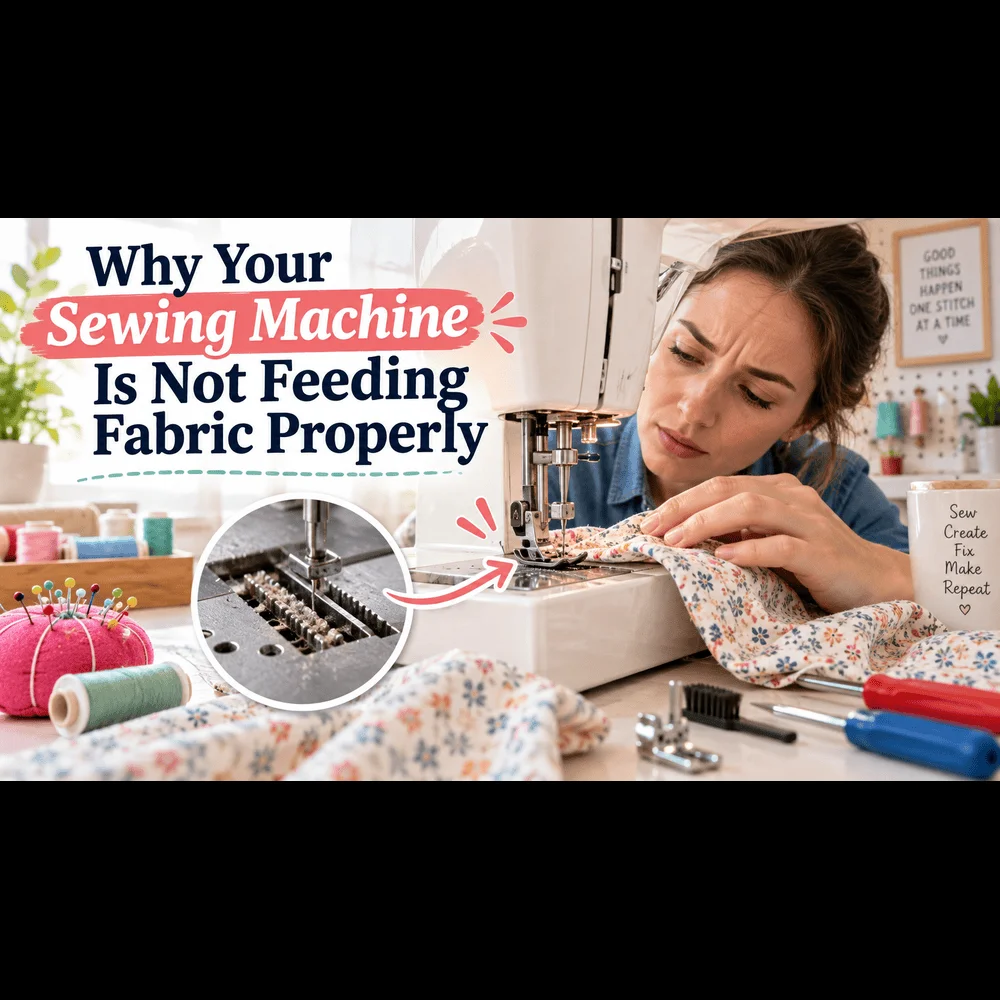
It is frustrating when the needle moves but the fabric barely goes anywhere. Sometimes the material stays in one spot, bunches under the presser foot, or feeds unevenly instead of moving smoothly.
Most feeding problems come from simple setup or maintenance issues. Start with the easiest checks first and work through them one at a time.
Start With the Feed Dogs
Feed dogs are the small metal teeth beneath the needle plate that grip the fabric and move it forward. If they are lowered, blocked, or not moving correctly, the fabric will not feed as expected. Check that the feed dogs are raised above the needle plate. Many machines allow them to be lowered for free-motion sewing or darning, so they may simply have been left down.
Turn the handwheel toward you and watch the feed dogs. They should rise, move backward, drop, and return forward in a repeating motion. If you are still learning the controls on different sewing machines, check the manual to confirm where the feed dog control is located and how it should be set.
Check the Presser Foot
The feed dogs cannot move fabric effectively if the presser foot is not applying enough pressure from above.
Make sure the foot is fully lowered before sewing. Also check that it is attached correctly and sitting flat against the fabric. A loose, damaged, or tilted foot can cause slipping and uneven movement.
Clean Around the Feed Dogs
Lint, loose thread, and fabric fibers can collect beneath the needle plate and between the feed dog teeth. Over time, this buildup can reduce their grip.
Turn off the machine and remove the needle plate according to the manual. Use a small lint brush to clean around the feed dogs and bobbin area.
Avoid forcing sharp tools into the mechanism. Keeping basic sewing supplies nearby, such as a lint brush and spare needles, makes routine maintenance easier.
Inspect the Needle
A bent, dull, or incorrectly installed needle can affect stitch formation and make feeding feel uneven.
Replace the needle if it shows damage or has already been used through several projects. Make sure the new needle is fully inserted and facing the correct direction.
Needle type matters too. A fine needle may struggle with denim or multiple layers, while knits and delicate fabrics often need more suitable needle styles.
Check the Stitch Length
A very short stitch length means the feed dogs move the fabric only a tiny distance with each stitch. This can make the material appear stuck even when the machine is working.
For general sewing, try a stitch length of about 2.5 mm as a starting point. Test on scrap fabric and adjust as needed. Heavier materials may work better with a longer stitch.
Adjust Presser Foot Pressure
Some machines allow you to change how firmly the presser foot presses against the fabric. If the pressure is too low, the feed dogs may not grip the material well enough.
Increase it slightly if ordinary fabric keeps slipping. For lightweight fabrics, too much pressure can create drag or puckering, so reducing it may help.
Make one adjustment at a time and test the result. Hands-on sewing classes can also help you understand machine setup, fabric handling, and basic troubleshooting.
Consider the Fabric Type
Some materials are naturally harder to feed. Thick seams, slippery fabric, stretchy knits, and several layers may need a different approach.
A walking foot can help with quilts, denim, or layered projects because it assists with feeding from above. Slippery fabrics may benefit from slower sewing and careful pinning or clipping.
Do not pull the fabric from behind the machine. Guide it lightly and let the feed dogs do most of the work.
Check Threading and Tension
Threading problems can sometimes look like feeding problems. Very tight thread or a developing thread nest can stop the fabric from moving normally.
Rethread the upper thread with the presser foot raised and make sure the bobbin is inserted correctly. Return the tension to the normal setting recommended in the manual before making small adjustments.
If thread begins bunching under the needle plate, stop and clear the tangle before continuing.
Quick Fabric Feeding Checklist
Before assuming there is a mechanical fault, check the basics:
- Feed dogs are raised and moving.
- Presser foot is lowered and attached correctly.
- Feed dog area is clean.
- Needle is straight and suitable for the fabric.
- Stitch length is appropriate.
- Presser foot pressure is suitable.
- Threading and tension are correct.
- Fabric is being guided rather than pulled.
Testing after each change makes it easier to identify what solved the problem.
When Professional Service May Be Needed
If the feed dogs are raised but do not move, the presser foot mechanism is not working, or the fabric still refuses to feed after basic troubleshooting, there may be an internal issue.
Worn feed components, timing problems, or internal linkages are better handled by a technician. A professional repair service can inspect the feeding mechanism without risking damage from unnecessary adjustments at home.
Keep Fabric Moving Smoothly
Fabric feeding problems are common, but many are simple to correct. Start with the feed dogs and presser foot, clean the machine, check the needle and stitch length, and then consider whether the fabric needs a different foot or pressure setting.
Working through the problem in order saves time and prevents unnecessary changes. Once the cause is corrected, your fabric should move smoothly again and your sewing can get back on track.