Sign up with Google
 Sign in with Zoho

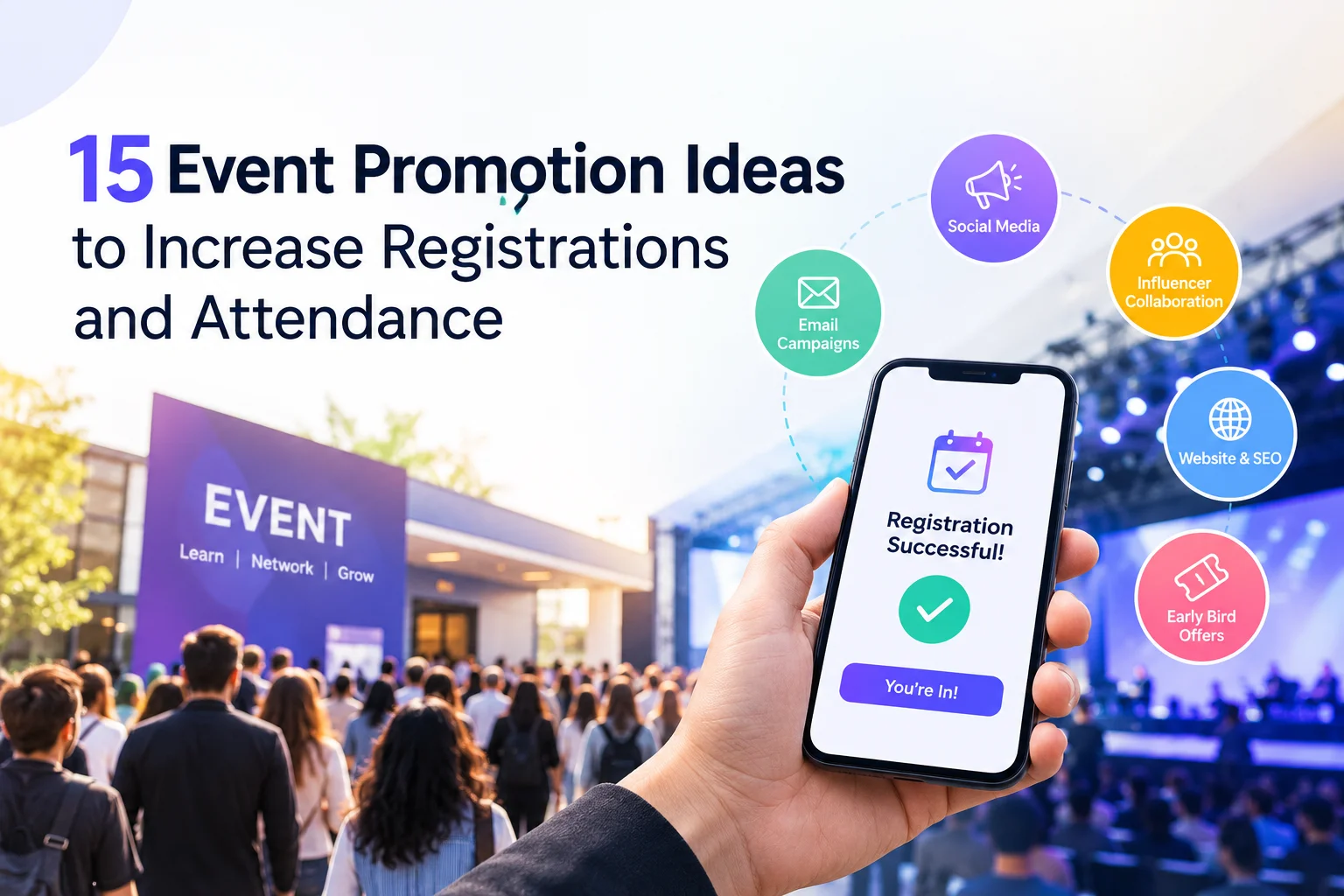
Getting people to register for your event is only half the job. The bigger challenge is turning those registrations into actual attendance.
As an event organizer, you need a promotion strategy that creates awareness, gives people a reason to register, and keeps your event on their radar until the day arrives. The good news is that you do not have to rely on one promotional channel to achieve this.
From early-bird offers and social media content to speaker promotion, personalized emails, and last-minute reminders, the right event promotion ideas can help you build momentum throughout the event journey.
Here are 15 practical ideas you can use to increase both registrations and attendance.
TL;DR Pointers
- Start promoting early and create a clear reason for people to attend.
- Use multiple channels, including email, social media, websites, partnerships, and paid campaigns.
- Make your speakers, sponsors, attendees, and existing community part of your promotion strategy.
- Create urgency through early-bird pricing, limited spots, deadlines, and exclusive experiences.
- Keep communicating with registered attendees so they don't forget about your event
- Track registrations, engagement, and attendance to understand which right event promotion ideas pro are actually working.
1. Start Promoting Early
Do not wait until the last few weeks to promote your event.
Start building awareness as soon as your date, topic, or key details are confirmed. Early promotion gives potential attendees enough time to understand the event, discuss it with their teams, and make plans.
You can begin with a simple save-the-date announcement and gradually reveal more details as the event approaches.
2. Create a Clear Event Value Proposition
Before promoting your event, answer one important question:
Why should someone attend?
Your promotional message should clearly explain what attendees will gain. Depending on your event, this could be:
- Expert insights
- Networking opportunities
- Product demonstrations
- Industry knowledge
- Entertainment
- Exclusive experiences
- Certifications or learning opportunities
A clear value proposition makes your other event promotion ideas much more effective.
3. Build a High-Converting Event Landing Page
Your event website or landing page is where interest turns into registration. Keep it simple and make the important information easy to find by including:
- Event date and location
- Key speakers
- Main topics or activities
- Benefits of attending
- Ticket or registration details
- FAQs or essential event information
- A clear registration button
Avoid making people search through multiple pages before they can register.
4. Use Early-Bird Offers to Create Urgency
An early-bird offer gives people a reason to register now instead of “later.”
Set a clear deadline and communicate what attendees save by registering early.
You can also use limited registration tiers or exclusive early-access benefits to create urgency.
The important part is to make the deadline genuine. Constantly extending an “early-bird” offer can reduce its impact.
5. Turn Social Media Into a Conversation
Do not use social media only to post event announcements.
Create content that starts conversations around your event topic. You could share:
- Speaker introductions
- Short videos
- Event-related statistics
- Behind-the-scenes content
- Audience questions
- Previous event highlights
- Polls and quizzes
- Countdown posts
Use different content formats across platforms and encourage your audience to comment, share, and tag people who may be interested.
6. Let Your Speakers Promote the Event
Your speakers already have an audience that may be relevant to your event.
Give them ready-to-use promotional material, such as social media graphics, registration links, suggested captions, and email copy.
You can also create speaker-focused content highlighting what they will discuss.
This turns your speakers into additional promotional channels without requiring you to build every audience yourself.
7. Use Email Marketing Strategically
Email remains useful for reaching people who already know your organization or have attended previous events.
Instead of sending the same email repeatedly, create a simple sequence. For example:
Announcement → Value-focused email → Speaker highlight → Early-bird reminder → Final registration reminder
Segment your audience where possible so you can send more relevant messages to different groups.
8. Use Your Previous Attendee Database
Your previous attendees are one of your most relevant audiences.
If someone enjoyed your previous event, they may already understand the value of attending another one.
Send personalized invitations to previous attendees and highlight what's different or new this time.
You can also offer returning attendees early access, loyalty pricing, or other relevant benefits.
9. Create Shareable Content Around the Event
Give people something worth sharing before they register.
For example, if you are organizing a business conference, publish a short industry report, checklist, interview, or expert article connected to the event topic.
Then use the content to introduce your event naturally.
This approach makes promotion feel less like advertising and more like useful information.
10. Partner With Communities and Industry Organizations
You don't have to promote your event alone.
You can always partner with relevant:
- Industry associations
- Professional communities
- Educational institutions
- Media organizations
- Local groups
- Business networks
- Content creators
Depending on the partnership, they can promote your event to an audience that already has an interest in your topic.
Also, make sure the partnership is relevant to your target attendees rather than focusing only on the size of the partner's audience.
11. Use Paid Advertising Strategically
Organic promotion may not always reach enough potential attendees.
Paid advertising can help you reach specific audiences based on factors such as location, interests, professional background, or previous interactions with your content.
Start with a clear objective, such as registrations or landing-page visits, and monitor performance regularly.
Do not simply increase spending because an advertisement receives clicks. You should look at whether those clicks are actually leading to registrations.
12. Create a Referral or Bring-a-Friend Program
Your existing audience can help you reach new attendees.
Encourage registered participants to invite colleagues or friends by offering an incentive where appropriate. For example, you could provide:
- Group discounts
- Referral benefits
- Exclusive event merchandise
- Early access
- Special networking opportunities
You must keep the process simple and make it easy for attendees to share their unique registration link.
13. Use FOMO Without Overdoing It
People are more likely to act when they believe they might miss something valuable.
You can create genuine urgency by communicating registration deadlines, limited seats, sold-out sessions, exclusive speakers, special experiences, last available ticket categories, etc.
The key is authenticity. Don't manufacture scarcity if there is no real limitation.
14. Keep Registered Attendees Engaged
Getting someone to register does not guarantee that they will attend.
After registration, continue communicating with them. Always send useful updates such as:
- Speaker announcements
- Event agenda
- Venue information
- Networking opportunities
- Session previews
- What-to-expect guides
- Travel information
You can also use polls or pre-event questions to give registered attendees a reason to engage before the event.
This keeps your event fresh in their minds.
15. Send Timely Reminders Before the Event
Your final promotion goal is simple: turn registrations into attendance.
Send reminders at useful intervals rather than overwhelming attendees with messages. A practical sequence could be:
One week before → One day before → Event morning
Include the information attendees actually need, such as venue details, timings, parking, access instructions, session information, or the event link.
For digital events, make sure the joining instructions are easy to find.
For physical events, QR-based check-in and clear arrival information can also help create a smoother start to the attendee experience.
Last Words
Successful event promotion is not about posting more often. It's about giving the right people a compelling reason to register and then keeping them engaged until the event begins.
Start early, communicate your event's value clearly, use multiple channels, involve speakers and partners, create genuine urgency, and continue communicating after someone registers.
Most importantly, measure your results. You can build stronger registration momentum and give attendees more reasons to actually show up when the event day arrives by combining the right event promotion ideas with consistent communication and data-driven improvements.