
 Sign up with Google
 Sign in with Zoho

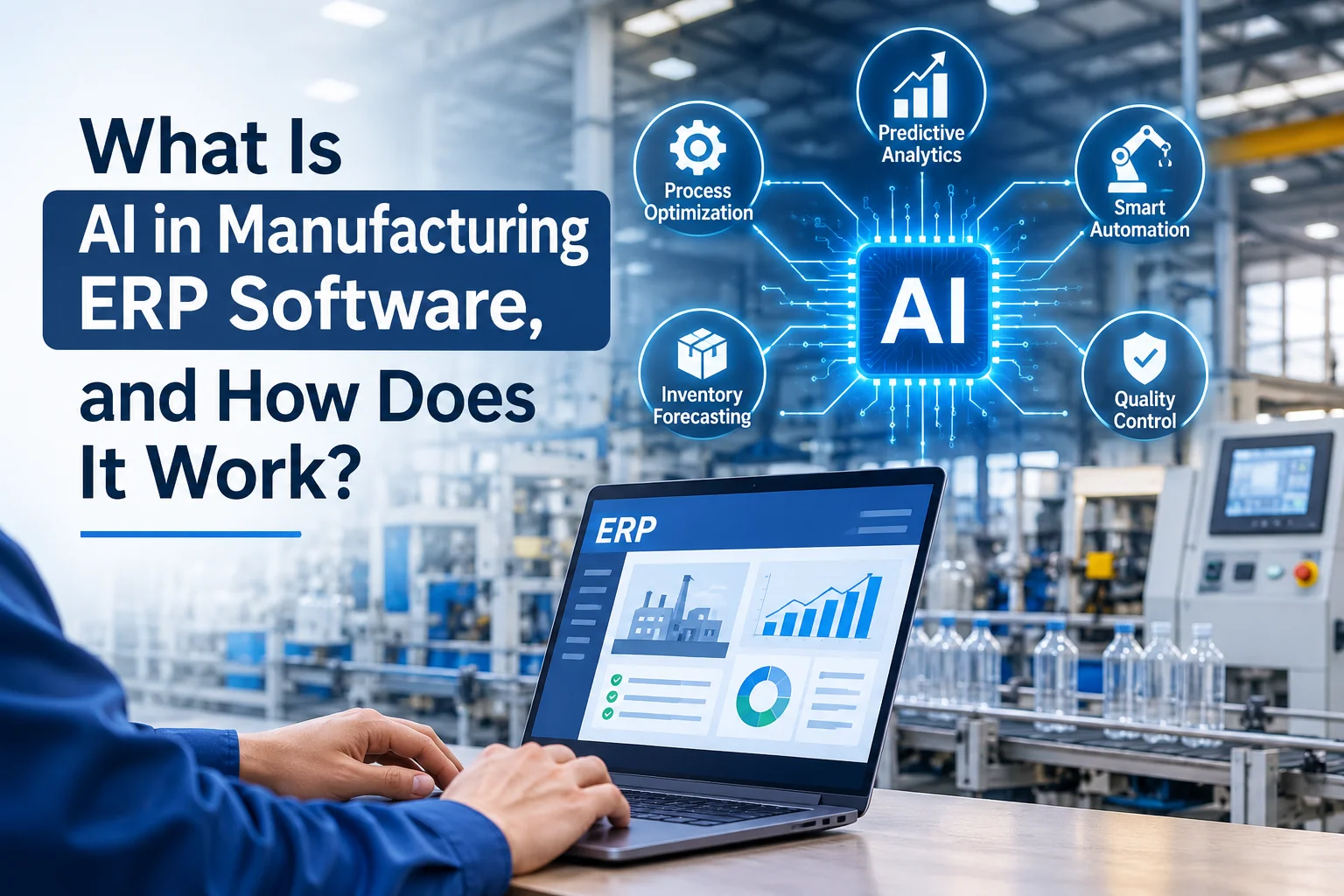
Manufacturing businesses handle large amounts of data related to production, inventory, quality, procurement, and customer orders. Managing this information efficiently is essential to maintain productivity and control costs.
AI-powered ERP systems combine traditional enterprise resource planning capabilities with intelligent technologies that analyse data, identify patterns, and support better business decisions. Instead of relying entirely on manual monitoring and historical reports, manufacturers can use AI to anticipate problems and improve daily operations.
What is AI in Manufacturing ERP Software?
AI in Manufacturing ERP software refers to the use of technologies such as machine learning, predictive analytics, and natural language processing to improve manufacturing and business processes.
Traditional ERP systems collect, organise, and process operational data. AI-enabled ERP systems can go a step further by using this data to generate predictions, identify unusual patterns, and recommend actions.
For example, an ERP system may record inventory levels, while its AI capabilities can analyse historical usage and current demand to estimate when materials will need replenishment.
How Does AI Work in Manufacturing ERP Software?
AI typically works by analysing data collected across different business functions. Its effectiveness depends on data quality, system integration, and the suitability of the AI models used.
Here is how the process generally works:
1. Data Collection
The ERP system gathers information from production records, inventory transactions, purchase orders, sales forecasts, and connected machines.
2. Data Analysis
AI models examine this information to identify trends, relationships, and unusual patterns that may not be immediately obvious to employees.
3. Prediction and Recommendations
Based on the available data, the system can forecast demand, estimate equipment failure risks, or suggest improvements to production schedules.
4. Action and Monitoring
Employees review recommendations and take appropriate action. Depending on the system and configured permissions, certain routine tasks may also be automated.
Key Applications of AI in Manufacturing ERP
AI can support several important manufacturing activities:
- Demand forecasting: Analyses historical sales and other relevant factors to estimate future demand and support production planning.
- Predictive maintenance: Uses equipment data to identify potential failure patterns and help schedule maintenance before unexpected breakdowns occur.
- Inventory optimisation: Helps forecast material requirements, identify excess stock, and reduce the risk of shortages.
- Quality management: Detects unusual production patterns and, when connected to suitable inspection systems, helps identify potential product defects.
- Production scheduling: Evaluates factors such as machine capacity, material availability, and order priorities to recommend efficient schedules.
- Cost analysis: Identifies patterns in material consumption, production expenses, and waste to highlight opportunities for improvement.
Benefits of AI in Manufacturing ERP Software
When implemented effectively, AI can help manufacturers achieve:
- Improved operational efficiency and resource utilisation.
- Better planning through data-driven insights.
- Reduced downtime and material wastage.
- Faster identification of potential production issues.
- More informed and timely decision-making.
However, these benefits are not automatic. They depend on reliable data, appropriate implementation, employee training, and regular monitoring of AI-generated recommendations.
Conclusion
AI is making Manufacturing ERP software more intelligent by helping businesses move from simply recording operational data to predicting potential challenges and recommending practical improvements.

.webp)