Sign up with Google
 Sign in with Zoho

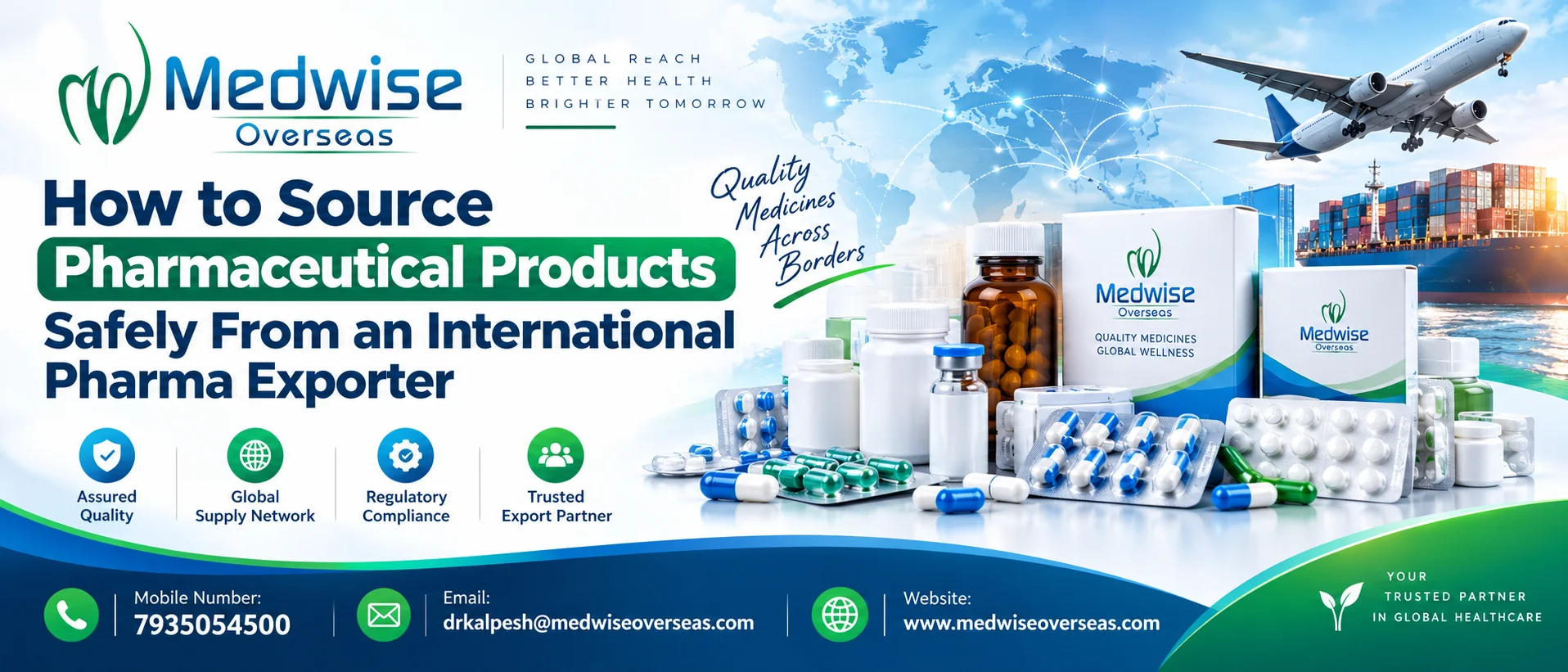
Sourcing pharmaceutical products internationally requires more than finding a supplier with a competitive quotation. Buyers need to verify the manufacturer or exporter, product quality, regulatory documentation, manufacturing standards, storage conditions, traceability, and shipment controls before placing commercial orders.
For businesses evaluating a Pharmaceutical Company In Ahmedabad, safe sourcing starts with supplier qualification and continues through product verification, documentation review, quality agreements, logistics planning, and post-shipment monitoring.
WHO states that Good Manufacturing Practices are designed to ensure pharmaceutical products are consistently produced and controlled according to quality standards appropriate to their intended use. GMP covers areas such as production, testing, personnel, premises, materials, documentation, contract manufacturing, and product complaints.
This guide explains the practical steps international B2B buyers can follow when sourcing pharmaceutical products from India or other global markets.
What Is an International Pharmaceutical Exporter?
An international pharmaceutical exporter is a company that supplies pharmaceutical products from one country to buyers, distributors, healthcare organizations, or commercial partners in another country.
Depending on its business model, the exporter may be:
- A pharmaceutical manufacturer
- A marketing company
- An authorized distributor
- A sourcing organization
- A contract manufacturing partner
- An export-focused pharmaceutical business
Not every exporter manufactures products directly. This makes it important for buyers to identify the actual manufacturing site behind each product.
For example, an Indian Pharmaceutical Company may manufacture products internally, use approved contract manufacturers, or operate through a combination of manufacturing and distribution arrangements.
Why Is Supplier Verification Important?
Supplier verification helps confirm who is responsible for manufacturing, quality, documentation, and international supply.
The pharmaceutical supply chain may involve manufacturers, exporters, logistics providers, distributors, and importers. If these responsibilities are unclear, tracing a batch or addressing a quality issue can become difficult.
Before starting business, buyers should verify:
- Legal company name
- Registered address
- Contact details
- Manufacturing or sourcing role
- Relevant licences
- Actual production facility
- Quality contacts
- Export experience
When working with a Pharmaceutical Company In Ahmedabad, buyers should clearly establish whether the company is the manufacturer, exporter, marketing authorization partner, distributor, or sourcing representative for the product.
1. Verify the Manufacturing Facility
The first question should be simple:
Where is the product actually manufactured?
If the exporter manufactures the product, review its facility credentials.
If the company uses Contract Manufacturers Pharmaceuticals, identify the third-party manufacturing facility and verify whether it is appropriately authorized for the required dosage form and product category.
Check information such as:
- Facility name and location
- Manufacturing licence
- Product scope
- Dosage-form capability
- GMP status
- Production capacity
- Quality-control facilities
- Quality-assurance system
A professional exporter should be able to provide appropriate manufacturing-source information according to applicable commercial and regulatory requirements.
2. Understand GMP Before Selecting a Supplier
Good Manufacturing Practice is a fundamental part of pharmaceutical supplier evaluation.
WHO defines GMP as a quality-assurance system that ensures pharmaceutical products are consistently produced and controlled according to appropriate standards. WHO also notes that quality cannot simply be tested into finished products; it must be built into the manufacturing process.
GMP controls areas such as:
- Starting materials
- Manufacturing processes
- Premises
- Equipment
- Personnel
- Training
- Hygiene
- Quality control
- Documentation
- Packaging
- Labelling
- Complaints
Buyers should verify the specific GMP status applicable to the facility and products they plan to source instead of treating a general "GMP-certified" claim as sufficient evidence.
3. Review Product Specifications Before Ordering
A product name alone does not provide enough technical information for pharmaceutical procurement.
Buyers should obtain and review applicable specifications before placing commercial orders.
Depending on the product, specifications may cover:
- Active ingredient
- Strength
- Dosage form
- Appearance
- Identification
- Assay
- Dissolution
- Related substances
- Microbial limits
- Fill volume
- Packaging configuration
- Storage requirements
- Shelf life
Quality-control procedures are designed to confirm characteristics such as pharmaceutical identity and purity through appropriate laboratory methods.
Specifications should therefore be agreed before supply begins, particularly for recurring or large-volume orders.
4. Check the Certificate of Analysis
A Certificate of Analysis, often called a CoA, provides batch-specific laboratory information.
A CoA may include:
- Product name
- Batch number
- Manufacturing date
- Expiry or retest information
- Test parameters
- Specifications
- Actual results
- Approval information
However, a CoA should not be treated as the only proof of quality.
A credible sourcing assessment should also examine the manufacturer's quality system, laboratory controls, batch documentation, validation practices, and traceability.
For critical supply arrangements, buyers may also choose independent testing according to applicable regulations and internal procedures.
5. Evaluate QA and QC Systems
Quality Assurance and Quality Control perform different but complementary roles.
A reliable Pharma Manufacturing Company should have clearly defined responsibilities between production and quality functions.
The quality team should also have authority to investigate issues and make appropriate batch-disposition decisions rather than being driven only by commercial deadlines.
6. Establish Complete Batch Traceability
Pharmaceutical buyers should be able to trace supplied products back through the supply chain.
Important records may include:
- Batch number
- Manufacturing site
- Manufacturing date
- Raw-material references
- Quality-control results
- Packaging records
- Release records
- Storage information
- Distribution details
Traceability becomes especially important when products are supplied across multiple countries.
If a complaint, recall, deviation, or regulatory inquiry occurs, accurate records allow the affected batch to be identified more efficiently.
7. Review Packaging and Storage Requirements
Pharmaceutical quality can deteriorate if products are stored or transported incorrectly.
Packaging should protect products from relevant environmental conditions such as:
- Moisture
- Light
- Oxygen
- Contamination
- Excessive heat
- Physical damage
WHO defines good storage practices as part of quality assurance intended to maintain medical-product quality through adequate storage controls.
Before shipment, buyers should confirm:
- Recommended storage temperature
- Humidity considerations where applicable
- Light protection
- Packaging material
- Carton configuration
- Shipping conditions
- Warehouse requirements
Products requiring specific temperature ranges may need additional logistics controls.
8. Confirm Export and Import Documentation
Different countries have different requirements for importing pharmaceutical products.
Documents may include, depending on the product and destination:
- Commercial invoice
- Packing list
- Certificate of Analysis
- Certificate of origin
- Manufacturing licence information
- GMP documentation
- Product specifications
- Free-sale or pharmaceutical-product certificates where applicable
- Shipping documents
- Regulatory dossiers
- Stability information
Do not assume that documentation accepted in one country will automatically satisfy another country's requirements.
This is particularly important when comparing Drug Manufacturers In India for supply to multiple international markets.
9. Understand Destination-Market Regulations
The exporter is only one part of the compliance process.
The importing company should determine which registrations, approvals, licences, product dossiers, labelling standards, and import permissions are required in its own market.
WHO notes that cross-border pharmaceutical trade creates quality-assurance challenges and has developed international norms, standards, and instruments to support medicines traded nationally and internationally.
Before placing an order, confirm:
- Whether the product can legally be imported
- Whether registration is required
- What labelling rules apply
- Which documents authorities require
- Who holds regulatory responsibility
- Whether pre-shipment approvals are needed
Never treat export availability as proof that import approval is automatic.
10. Assess Production Capacity and Supply Reliability
A supplier may meet quality expectations but still be unsuitable if it cannot support required volumes.
Ask about:
- Minimum order quantity
- Maximum production capacity
- Typical batch size
- Lead time
- Production scheduling
- Raw-material availability
- Seasonal constraints
- Backup production arrangements
- Repeat-order capability
For long-term sourcing, buyers should evaluate actual supply reliability rather than accepting projected capacity without discussion.
A strong supplier relationship should be able to support both current demand and realistic future growth.
How Should Buyers Evaluate Pharmaceutical Exporters?
Use this checklist before finalizing a new supplier.
International Pharma Sourcing Checklist
Verify:
- Company credentials
- Manufacturing source
- Applicable licences
- GMP status
- Product specifications
- Certificate of Analysis
- Manufacturing capacity
- QA and QC facilities
- Batch traceability
- Packaging standards
- Stability and shelf-life data
- Storage conditions
- Export documentation
- Regulatory support
- Lead time
- Minimum order quantity
- Change-control procedures
- Complaint procedures
- Recall system
- Destination-country compatibility
For strategically important products, consider conducting an audit or obtaining additional quality documentation before final supplier approval.
Manufacturer vs Exporter vs Contract Manufacturer
Understanding these roles prevents confusion.
One organization can sometimes perform more than one of these roles.
However, B2B buyers should always identify who is responsible for manufacturing, testing, release, export, and regulatory documentation.
Common Pharmaceutical Sourcing Mistakes
Choosing mainly on price
Low pricing can be attractive, but procurement decisions should also consider quality, consistency, documentation, supply reliability, and regulatory suitability.
Failing to verify the manufacturer
If an exporter does not manufacture directly, identify the actual manufacturer before approving the product.
Requesting documents after production
Define required documentation before ordering. Missing certificates or regulatory paperwork can delay shipment or import clearance.
Ignoring storage conditions
Medicines can be affected by unsuitable storage or transportation. Confirm logistical requirements before dispatch.
Assuming GMP solves every issue
GMP is fundamental, but buyers must still assess the product, manufacturing site, documentation, market requirements, capacity, and supply chain.
Not planning for quality complaints
Agree in advance how complaints, deviations, recalls, replacements, and investigations will be handled.
What Should a Quality Agreement Include?
For substantial or recurring business, a written quality agreement can clarify responsibilities.
Topics may include:
- Specifications
- Manufacturing responsibilities
- Testing
- Batch release
- Documentation
- Deviations
- Change control
- Stability
- Packaging
- Product complaints
- Recalls
- Regulatory communication
- Record retention
- Audits
This is particularly useful when manufacturing, exporting, and importing responsibilities are shared between multiple organizations.
FAQs
1. How do I safely source products from a Pharmaceutical Company In Ahmedabad?
Verify the company, manufacturing site, applicable licences, GMP status, product specifications, CoA, QA/QC systems, batch traceability, stability information, packaging, storage requirements, export documentation, production capacity, and destination-market requirements before placing significant commercial orders.
2. How can I verify an Indian Pharmaceutical Company before importing products?
Review the legal company details, manufacturing or sourcing role, relevant licences, manufacturing facility, GMP information, product specifications, quality documents, export history, and contact details. For significant supply relationships, consider additional supplier qualification, audits, or independent verification where appropriate.
3. Are contract-manufactured pharmaceutical products safe to import?
Contract manufacturing itself does not determine product quality. Products can be appropriately manufactured when the contract facility operates under suitable licences, GMP requirements, specifications, quality systems, testing controls, and documentation. Buyers should identify and qualify the actual manufacturer rather than assessing only the exporting company.
4. What documents should an international pharma exporter provide?
Required documentation varies by country and product. Common documents can include a Certificate of Analysis, product specifications, manufacturing or GMP information, invoice, packing list, certificate of origin, storage instructions, stability information, and regulatory certificates required by the importing country.
5. What is the difference between a pharma manufacturer and an exporter?
A pharma manufacturer physically produces pharmaceutical products. An exporter manages international supply from one country to another. Some companies perform both activities, while others source products from approved manufacturers. Buyers should determine the exact role of each organization in their supply chain.
6. Why is GMP important when choosing Drug Manufacturers In India?
GMP helps ensure medicines are consistently produced and controlled according to defined quality standards. It covers manufacturing processes, materials, equipment, personnel, documentation, quality control, packaging, and other critical areas. However, GMP should be evaluated together with product-specific and market-specific requirements.
7. What should I check before placing a large pharmaceutical export order?
Before a large order, confirm product specifications, manufacturing source, GMP status, quality documentation, capacity, batch size, lead time, packaging, shelf life, storage conditions, import requirements, shipping documentation, payment terms, complaint procedures, and how manufacturing or specification changes will be communicated.
Building a Safer International Pharmaceutical Supply Chain
Safe pharmaceutical sourcing requires structured supplier qualification, not simply a quotation and product catalogue. Buyers should understand who manufactures the product, how quality is controlled, what documentation is available, how products are stored and transported, and whether the supply meets destination-market requirements.
When selecting a Pharmaceutical Company In Ahmedabad, evaluate quality systems, manufacturing capability, regulatory support, transparency, and long-term supply reliability together.
Medwise Overseas supports pharmaceutical products and international supply requirements for global markets. Businesses looking to source pharmaceutical products from India can connect with Medwise Overseas to discuss product requirements, quantities, documentation, packaging, and destination-market needs.