Sign up with Google
 Sign in with Zoho

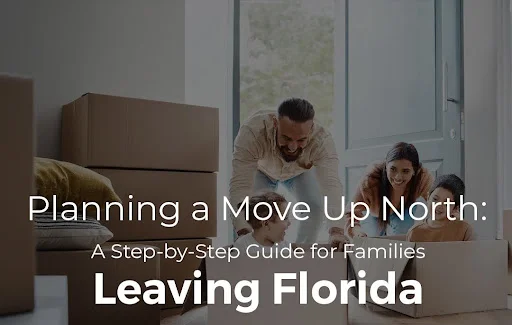
Most people planning global relocations to Canada start in the wrong place. They begin by getting quotes, when the first decision that actually matters is what they are taking at all.
Everything else follows from that single answer. The volume of your belongings determines whether you need a full container, a shared one, or a handful of barrels. That determines the cost. The cost determines whether shipping to Canada from Miami by sea or moving your goods overland by road makes more sense. And all of it determines when your paperwork needs to be filed.
This guide sets out the six steps in the order they genuinely need to happen, whether you are moving a one-bedroom apartment to Toronto or an entire household to Vancouver.
Step one: decide what actually travels with you
Before you speak to a single international freight forwarder, walk through your home and sort everything into three groups: what goes, what gets sold or donated, and what goes into storage.
This matters more for a move to Canada than most people expect, for two reasons. First, volume is the single biggest cost driver in Canada relocation services — you are paying for space, so every item you decide not to ship reduces the quote directly. Second, Canadian customs relief for personal effects generally applies to goods you have owned, possessed, and used before arriving. Items bought new shortly before the move may not qualify, which makes a pre-move shopping spree an expensive habit.
A practical rule: if you would not pay to ship it across an ocean, do not ship it across a border either. Bulky low-value furniture, appliances that may not match Canadian electrical standards, and anything you have not used in a year are usually better replaced on arrival.
Step two: choose how your belongings will travel
Once you know your volume, you can make the decision that shapes the rest of the move. Global relocations to Canada from Florida have two viable routes, and unlike a transatlantic move, both are genuinely competitive.
By sea
Ocean freight containers sail from Miami to Canadian ports, commonly Halifax or Montreal for eastern destinations, with west coast routings serving British Columbia. Container shipping tends to offer better economics on larger volumes, and it is the standard approach when a vehicle is travelling alongside household goods.
By road
Because Canada shares a land border with the United States, your belongings can also travel the entire distance by truck. For Ontario and Quebec in particular — the provinces closest to the major US highway corridors — overland transport can be faster door to door, with no port handling at either end.
Price both before deciding. Volume, destination province, whether a vehicle is included, and how firm your delivery date is will usually make one option clearly better. Assuming sea freight because that is what “international moving” normally means is a common way to overpay on an Ontario move.
Choosing your shipment size
Within ocean freight, three options cover almost every household:
Rather than estimating volume yourself, ask for a load plan. Experienced providers use load-planning software to calculate volume and stowability before equipment is booked, which matters enormously for non-palletised household goods and avoids discovering on loading day that a 20ft container was never going to be enough.
Step three: start your paperwork before you fly
This is the step that costs people money when they get it wrong, and it is genuinely counter-intuitive.
Canada allows settlers and returning residents to import owned, used personal and household effects free of duty and most taxes. To claim it, you complete Form BSF186 — the Personal Effects Accounting Document, still widely known as Form B4 — in person at the CBSA office at your first point of arrival in Canada.
Almost everyone arrives by air, weeks before their shipment does. So at the moment you land in Toronto or Vancouver with two suitcases, you must also declare everything still sitting in a Miami warehouse. Those are your goods to follow, listed separately on the continuation sheet BSF186A.
The practical consequence: your complete inventory needs to exist as a written document before you board your flight. Arriving without it and hoping to add the shipment later is where duty-free claims get refused.
Which relief category applies depends on your circumstances:
• Settler (9807.00.00) — moving to Canada to establish residence for the first time
• Former resident (9805.00.00) — a Canadian returning after living abroad
• Beneficiary (9806.00.00) — importing goods inherited from an estate
• Seasonal resident (9829.00.00) — maintaining a seasonal home in Canada
Alcohol and tobacco sit outside this relief entirely and are subject to their own allowances and provincial rules.
Step four: work backwards from your arrival date
Relocation timelines fail when they are planned forwards. Start from the date you need your belongings in Canada and work back.
A realistic sequence for shipping to Canada from Miami looks like this:
• 8–10 weeks out — survey completed, volume confirmed, mode and container size decided
• 6–8 weeks out — booking confirmed, sailing or departure date secured
• 4 weeks out — full written inventory prepared for customs
• 3–4 weeks out — professional packing, crating for fragile items
• 2–3 weeks out — cargo delivered to the origin warehouse for consolidation
• Departure — container loaded and documentation lodged
• On arrival in Canada — customs clearance, then inland delivery to your address
Vessels do not wait. Every sailing has a stack date — the cut-off by which cargo must be physically at the terminal — and missing it by a day means waiting for the next departure.
Step five: pack for the journey, not the driveway
Whether your goods travel by sea or road, they will be in motion for days or weeks. Household items that are boxed rather than properly braced will shift the entire way.
For genuinely fragile items — televisions, mirrors, glass tabletops, artwork, marble — crating is frequently the difference between an insurance claim that pays and one that does not. Marine and transit policies commonly treat crating as the expected standard of protection for fragile goods, which means breakage on an uncrated television may not be covered. Providers with on-site crating facilities can build these to fit rather than forcing items into standard boxes.
Label everything clearly, keep an itemised inventory as you pack, and photograph high-value items before they go into the container. All three make customs, insurance and unpacking considerably easier.
Step six: plan the destination side properly
Canada’s geography makes the final inland leg a much larger variable than in most global relocations. A container discharged in Halifax and one destined for Prince George are entirely different movements.
Give your forwarder the final delivery address and postal code at the quotation stage, not just the province. Delivery to downtown Toronto and delivery to Labrador City are not remotely comparable, and pricing it late produces unwelcome surprises.
Season matters too. Winter affects the inland leg far more than the ocean leg. Deliveries into northern communities, parts of Newfoundland and Labrador, and northern Manitoba and Saskatchewan can face weather-related delays and restricted road access. Anything sensitive to freezing — electronics, liquids, musical instruments, artwork, wine — deserves a conversation about protection or timing before a container sits in a Manitoba yard in January.
If a vehicle is travelling with you, treat it as a separate planning track. Vehicle imports generally run through the Registrar of Imported Vehicles (RIV) programme, and the first question is admissibility rather than cost — not every US-market vehicle can be imported, and that is determined by make, model and year. Confirm this before booking freight, not after.
What determines the cost of your move
There is no single price for a move to Canada, but the variables are predictable enough to plan around:
• Volume — the dominant factor. Every cubic foot you remove reduces the quote.
• Mode — ocean freight versus overland trucking, priced against your specific destination.
• Destination province and postal code — the inland leg can rival the main freight cost for remote addresses.
• Services included — packing, crating, consolidation, storage, and destination delivery each add cost.
• Vehicle inclusion — changes both the container requirement and the documentation.
• Timing — peak moving season and tight deadlines reduce flexibility and options.
The most useful thing you can do to control cost is settle Step One properly. Everything downstream is priced off that decision.
Frequently asked questions
What form is needed to move household goods to Canada?
Form BSF186, the Personal Effects Accounting Document, formerly known as Form B4. Items arriving later are listed as “goods to follow” on the BSF186A continuation sheet. Both are presented in person at your first point of arrival in Canada.
Do you pay duty on personal belongings moving to Canada?
Settlers and returning former residents can generally import owned, possessed, and used personal and household effects free of duty and most taxes, provided the goods are properly declared. Alcohol and tobacco are excluded from this relief.
Is it faster to ship by sea or truck from Florida to Canada?
It depends on destination. Overland trucking is often quicker door to door for Ontario and Quebec, while ocean freight generally offers better economics on larger volumes and is standard when a vehicle is included. Price both for your specific destination.
How far in advance should a move to Canada be booked?
Begin planning eight to ten weeks before your intended departure. Survey, volume confirmation, mode selection and booking all need to happen before the packing stage, and sailings have fixed stack dates that cannot be extended.
Can you ship a car to Canada from Miami?
Yes, though vehicle imports generally run through the Registrar of Imported Vehicles programme and admissibility is determined by the vehicle’s make, model and year. Confirm the vehicle can legally be imported before booking freight.
What is the cheapest way to move a small amount of belongings?
For small consignments, barrels or an LCL consolidation are usually the most economical options. A full container becomes better value per cubic foot once you are shipping the contents of a three-bedroom home or a vehicle.
The bottom line: decide first, quote second
The families whose moves go smoothly are rarely the ones who found the cheapest quote. They are the ones who worked through the steps in order — deciding what travels, choosing the right mode and container size, preparing customs paperwork before flying, booking against a realistic timeline, packing properly, and planning the destination leg with a real address rather than a province.
Do that, and a relocation from Florida to Canada becomes a well-trodden logistics exercise rather than a source of stress. Speak to a licensed freight forwarder early enough that both ocean and overland options can be properly compared — on this particular route, that comparison alone often changes the plan.