Sign up with Google
 Sign in with Zoho
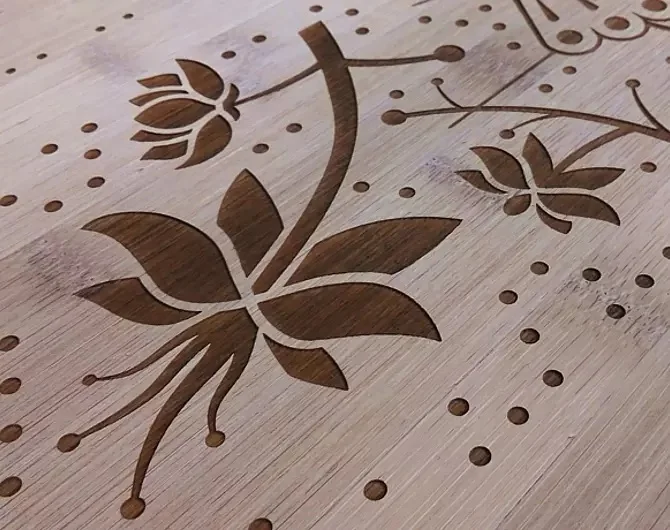
You have measured everything carefully, checked the drawing twice and sent the file for laser cutting. When the finished pieces arrive, however, the tab will not slide into the slot, two panels feel unexpectedly loose or the assembled product sits slightly out of alignment. The drawing looked perfect, so what went wrong?
This is a common challenge when a design moves from a computer screen into a physical material. Digital dimensions are exact, but real materials and cutting processes introduce small variations that can influence the final fit. Understanding kerf, actual material thickness and design tolerances can help prevent these frustrating surprises.
A Perfect Digital Drawing Does Not Guarantee a Perfect Fit
Design software allows you to specify a 6 mm slot as exactly 6 mm wide. In the physical world, however, the sheet you are cutting may not measure exactly 6 mm and the cutting process itself removes a small amount of material. Those differences may be tiny individually but become noticeable when two components need to fit together closely.
This matters particularly for products such as display stands, boxes, signage, prototypes and flat-pack assemblies. If several pieces depend on tabs, slots or interlocking joints, even a small dimensional difference can affect the complete assembly. Designing for fabrication therefore requires more than matching numbers on a screen.
What Is Kerf in Laser Cutting?
Kerf is the width of material removed by the laser as it follows the cutting path. A laser does not create a cut with absolutely zero width. The beam removes a narrow section of material, which means the finished dimensions can differ slightly from the original line shown in the design file.
The amount of kerf can vary depending on factors such as the material, thickness and cutting setup. This is why someone preparing files for laser cutting Melbourne projects should not simply assume the cutting line has no physical effect on the finished dimensions. Kerf becomes particularly important when parts need to connect accurately.
Why Kerf Matters for Tabs and Slots
Imagine you are designing a display with tabs that slide into matching slots. If both are drawn using exactly the nominal material thickness without considering the cutting process, the resulting connection may not behave as expected. It could be too loose, too tight or require force that damages the material.
The required fit also depends on what the product needs to do. A display designed to remain assembled may benefit from a different fit than something intended to be taken apart regularly. Instead of asking whether a joint is simply "accurate", consider how tight or loose that connection should feel during real use.
Material Thickness Is Not Always the Number on the Label
Another common mistake is assuming that the stated sheet thickness is identical to its measured thickness. A material sold as a particular nominal thickness can have some variation in its actual dimensions. That difference may not matter for a decorative panel but can become important when one piece needs to slot precisely into another.
Before finalising interlocking parts, it can be useful to confirm the actual material that will be used for production. This is especially important if the design depends heavily on thickness. Building an entire assembly around an assumed measurement can create problems if the production sheet differs from that assumption.
Different Materials Behave Differently
Acrylic, timber, MDF and other laser-cut materials do not all behave in exactly the same way. Their manufacturing processes, surface characteristics and dimensional consistency can differ, while the cutting response can also vary according to material type and thickness.
This is why dimensions that worked well for one material should not automatically be copied into another version of the same product. If you change the material or thickness during development, revisit the joints and critical dimensions as well. A small test piece can often reveal more than relying on the original drawing alone.
What Are Design Tolerances?
Tolerance describes the amount of acceptable variation around a specified dimension. In custom fabrication, expecting every physical measurement to match a digital drawing with absolute mathematical perfection is not realistic. The important question is how much variation the finished product can accept while still working as intended.
Not every dimension needs the same tolerance. A decorative cut-out may allow more variation than a slot holding two structural pieces together. Identifying critical dimensions during the design stage helps focus attention on the areas where fit actually matters rather than treating every line in the drawing as equally sensitive.
Test the Connection Before Cutting the Full Batch
One of the most practical ways to avoid fit problems is to test critical joints before committing to a larger production run. If a project contains repeated tabs and slots, a small test piece containing several slightly different dimensions can help establish which fit works best with the chosen material.
This can be particularly valuable before ordering through an online laser cutting service. Uploading a production-ready file is convenient, but convenience does not remove the need to test important dimensions. A simple prototype can prevent the same unsuitable joint from being repeated across dozens or hundreds of components.
Do Not Make Every Joint as Tight as Possible
A very tight fit can initially feel like a sign of precision, but it is not always desirable. If two components need excessive force to assemble, edges can chip, thin sections can break or the product may become difficult for customers or staff to put together.
Think about who will assemble the finished item and how often it needs to come apart. A retail display assembled once may have different requirements from a reusable exhibition stand that travels between events. The intended use should influence the tolerance rather than designing every connection around the tightest possible fit.
Watch for Errors That Build Across Several Parts
A small difference in one component may barely be noticeable. When an assembly contains several connected pieces, however, dimensional differences can accumulate. By the time the final panel is added, holes may no longer line up or the overall structure may sit differently from the original drawing.
This is sometimes called tolerance accumulation or tolerance stack-up. It is worth considering when designing boxes, frames and multi-part assemblies where several dimensions depend on one another. Testing the complete assembly can uncover issues that are impossible to identify by checking each individual component in isolation.
Good File Preparation Makes a Difference
Before submitting a file for cutting, inspect more than the overall dimensions. Look for duplicated lines, overlapping geometry, open paths and tiny features that may not behave as expected in the chosen material. Confirm the intended scale and make sure critical dimensions have been designed with the fabrication process in mind.
It also helps to communicate what the parts are supposed to do. Knowing that two pieces need to slide together, remain permanently assembled or be repeatedly removed provides useful context. A fabrication drawing becomes more meaningful when the functional requirements behind those dimensions are understood.
Conclusion: Design for the Material, Not Just the Screen
When laser-cut parts do not fit, the problem is not always an incorrect drawing or an inaccurate machine. Kerf, actual sheet thickness and acceptable manufacturing tolerances all influence how a digital design becomes a physical object. These factors become particularly important when components need to interlock or align closely.
For anyone planning custom laser cutting, the safest approach is to consider fabrication while the design is still flexible. Confirm the material, identify critical dimensions and test important connections before moving into a larger production run. A few small adjustments at the prototype stage can prevent an entire batch of beautifully cut parts that simply do not fit together.