Sign up with Google
 Sign in with Zoho

Quick Answer
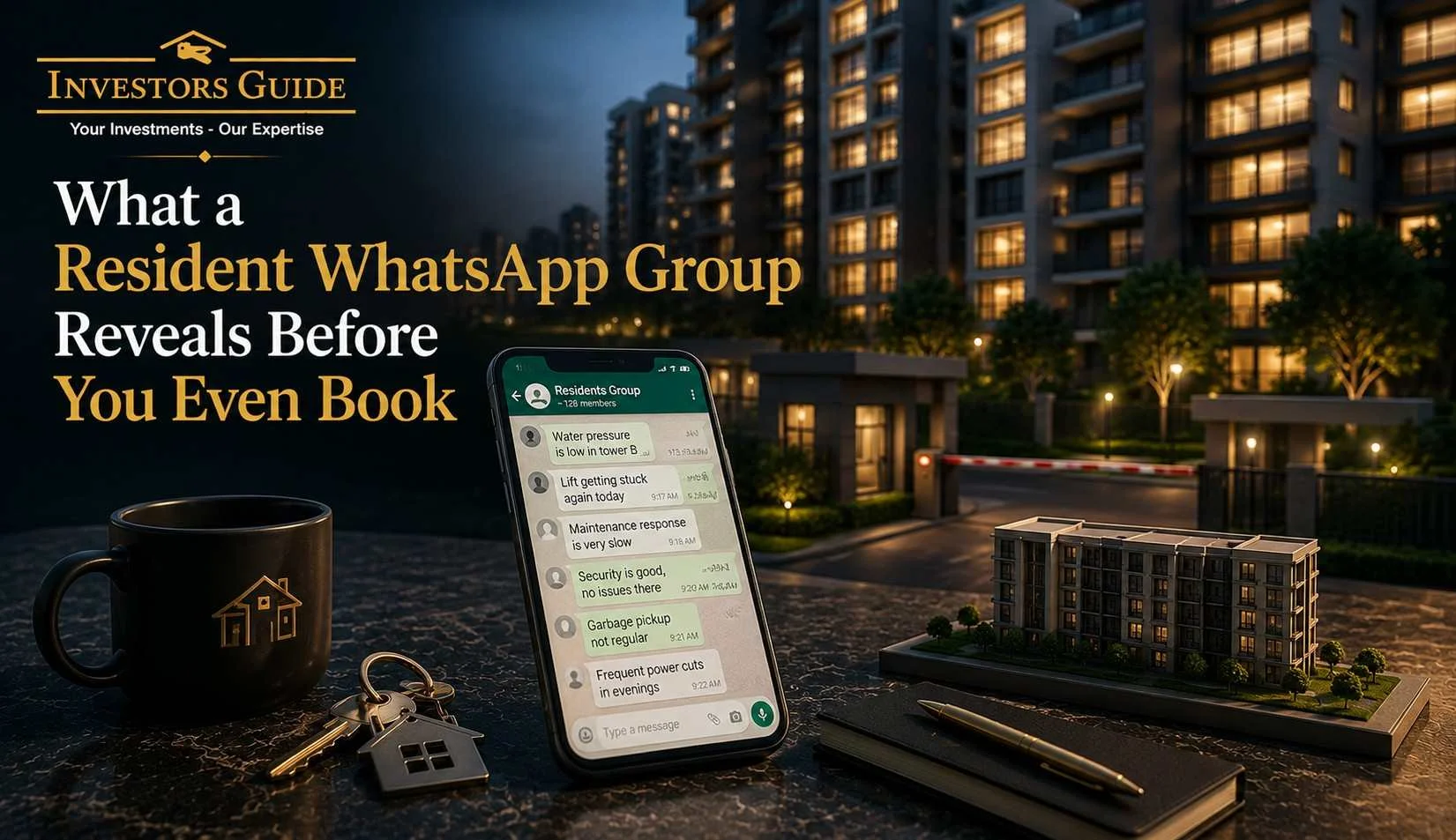
Before you sign anything, there's a research step almost nobody puts on their due-diligence checklist: getting into a project's resident WhatsApp group. It sounds informal, even a little unusual, but a five-minute scroll through real conversations between people who already live somewhere tells you things no brochure, sales pitch, or site visit ever will — construction delays as they actually happened, maintenance disputes, security issues, and what daily life is genuinely like. Most buyers only discover this channel exists after possession. A real estate consultant in Gurgaon who works these micro-markets regularly can often get you into these groups, or at least connect you with residents willing to talk, before you've committed a single rupee.
Why This Channel Reveals What Marketing Never Will
Every piece of official project communication — the brochure, the sales pitch, the promotional video — is written with a single goal: to make you want to buy. That's not dishonest, but it is inherently one-sided. A resident WhatsApp group has no such incentive. The people posting in it aren't trying to sell you anything; they're trying to solve their own problems, coordinate with neighbours, or vent about something that's genuinely bothering them.
That difference in incentive is exactly why this channel is so valuable. It's not curated, it's not reviewed by a marketing team, and it captures the ordinary, unglamorous texture of daily life — the kind of detail that never survives the editing process for a brochure but matters enormously once you're actually living somewhere.
What to Actually Look For
Scrolling a resident group without a plan wastes the opportunity. Here's what a structured read actually surfaces.
1. How construction delays were handled, in real time
If the project had possession delays, the group almost certainly discussed them as they happened — not the polished, after-the-fact version a developer might offer later. Look for how residents describe communication from the developer during the delay: were updates timely and honest, or did residents feel left in the dark? This tells you more about how a developer handles problems than any marketing claim about "on-time delivery."
2. Maintenance and society management friction
Every community has some level of maintenance friction — that's normal. What matters is the pattern. Recurring complaints about the same issue over months, unresolved billing disputes, or persistent security lapses are a different signal than one-off grumbling about a delayed repair.
3. Actual day-to-day livability details
Things like water pressure on higher floors, how reliable power backup actually is during outages, whether promised amenities like a gym or pool are functional or perpetually "under maintenance," and how noisy common areas get — these are the details that shape daily satisfaction far more than the headline amenity list ever does.
4. How disputes with the developer or RWA get resolved
If there's ever a disagreement between residents and the developer or resident welfare association, the tone and outcome of that conversation tells you a lot about how seriously concerns get taken once the sale is complete and the developer's leverage has shifted.
5. General sentiment and community tone
Beyond specific complaints, just read the overall tone. Is it a community where people seem engaged and generally satisfied, occasionally frustrated by normal issues? Or is there a persistent undercurrent of regret and frustration running through most conversations? That broad sentiment is hard to fake and hard to find anywhere else.
How to Actually Get Access
Resident groups are usually private by design, which is exactly what makes them valuable — but there are legitimate ways in.
- Ask the developer's sales team directly whether they can connect you with an existing resident for a reference conversation — many are willing to do this, and hesitation to connect you with even one resident is itself informative.
- Visit the project in person and ask residents directly, in the parking area or common spaces, whether they'd be open to sharing their experience. Most people are more candid in person than they realize.
- Check local real estate forums and social media groups for the sector or project name, where residents sometimes post organically outside the official group.
- Work with someone who already has these relationships. Professionals who've closed multiple deals in a given micro-market often maintain informal contact with residents across several projects, and can shortcut what would otherwise take weeks of independent outreach.
Reading Between the Lines for Newer or Still-Filling Projects
This research method works differently depending on how far along a project actually is. A community that's just started filling up won't have years of maintenance history to review — but even a small, active group can reveal a lot about how construction wrapped up and how the developer is handling early handover issues.
For more established communities, the picture is richer simply because there's more history to draw on. A completed, occupied project like Laburnum Victory Floors on Golf Course Extension Road, for example, would have several years of genuine resident experience baked into its community conversations by now — covering everything from how the low-rise structure has actually performed day to day, to how maintenance costs have trended, to how promptly issues get addressed. That kind of accumulated, unfiltered feedback is precisely what a brochure can never replicate, no matter how detailed it tries to be.
The broader principle holds regardless of the specific project: the more lived history a community has, the more reliable its resident feedback becomes as a due-diligence source — which is exactly why this research step matters more, not less, the closer you get to actually signing.
Frequently Asked Questions
Q: Why is a resident WhatsApp group useful for pre-purchase research? A: Unlike marketing material, resident conversations aren't curated to persuade — they reflect genuine, ongoing experiences with construction quality, maintenance, and daily livability, making them a uniquely candid source of information before you commit to a booking.
Q: How do I get access to a project's resident group before buying? A: Ask the developer's sales team for a resident reference, speak with residents directly during a site visit, check local real estate forums, or work with a professional who already has established relationships with residents across the micro-market.
Q: What specific things should I look for in resident conversations? A: How construction delays were communicated, recurring versus one-off maintenance complaints, real day-to-day livability details like water pressure and power backup, how disputes get resolved, and the overall sentiment and tone of the community.
Q: Does this research method work for newly launched projects? A: Less comprehensively, since there's limited history to review, but even early conversations about handover and initial issues can reveal useful signals about how a developer manages the transition to occupancy.
Q: Is resident feedback a substitute for formal due diligence? A: No. It's a valuable supplementary source that reveals lived experience marketing material won't, but it doesn't replace RERA verification, title checks, or a formal site visit.










.webp)

 copy.webp)